Core Benefits of an After School Program with Homework Support
For busy working families, the hours between school dismissal and dinner can feel like a race against the clock. After a long workday, walking through the door only to face hours of battle over worksheets, math problems, and reading logs drains everyone’s energy. Enrolling your child in an after school program with homework support transforms those hectic evening routines into quality family time.
When children finish their school assignments in a supportive, structured environment before heading home, the dynamic of the entire household shifts. Some of the core benefits include:
- Significant Stress Reduction: Parents transition back into being cheerleaders and listeners rather than evening taskmasters.
- Academic Consistency: Completing tasks daily under educators' watchful eyes ensures assignments never fall behind.
- Subject Mastery: Children get help in real time right when they encounter a tricky question, preventing frustration from cementing misconceptions.
- Social Development: Working alongside peers models positive academic behaviors, helping children learn that everyone encounters challenges and works through them together.
How an After School Program with Homework Help Builds Confidence
Homework friction often stems from a child feeling overwhelmed or isolated by challenging material. In a high-quality homework club, positive reinforcement takes the place of anxiety. Dedicated educators meet students where they are, using individualized pacing to break intimidating tasks into manageable steps.
A structured homework routine empowers kids to become self-directed learners by turning everyday assignments into opportunities for personal pride. When children realize they have the guidance to conquer difficult math problems or reading passages, self-doubt melts away. They return to their regular classrooms eager to raise their hands, participate, and show what they know.
Fostering Independent Study Skills and Time Management
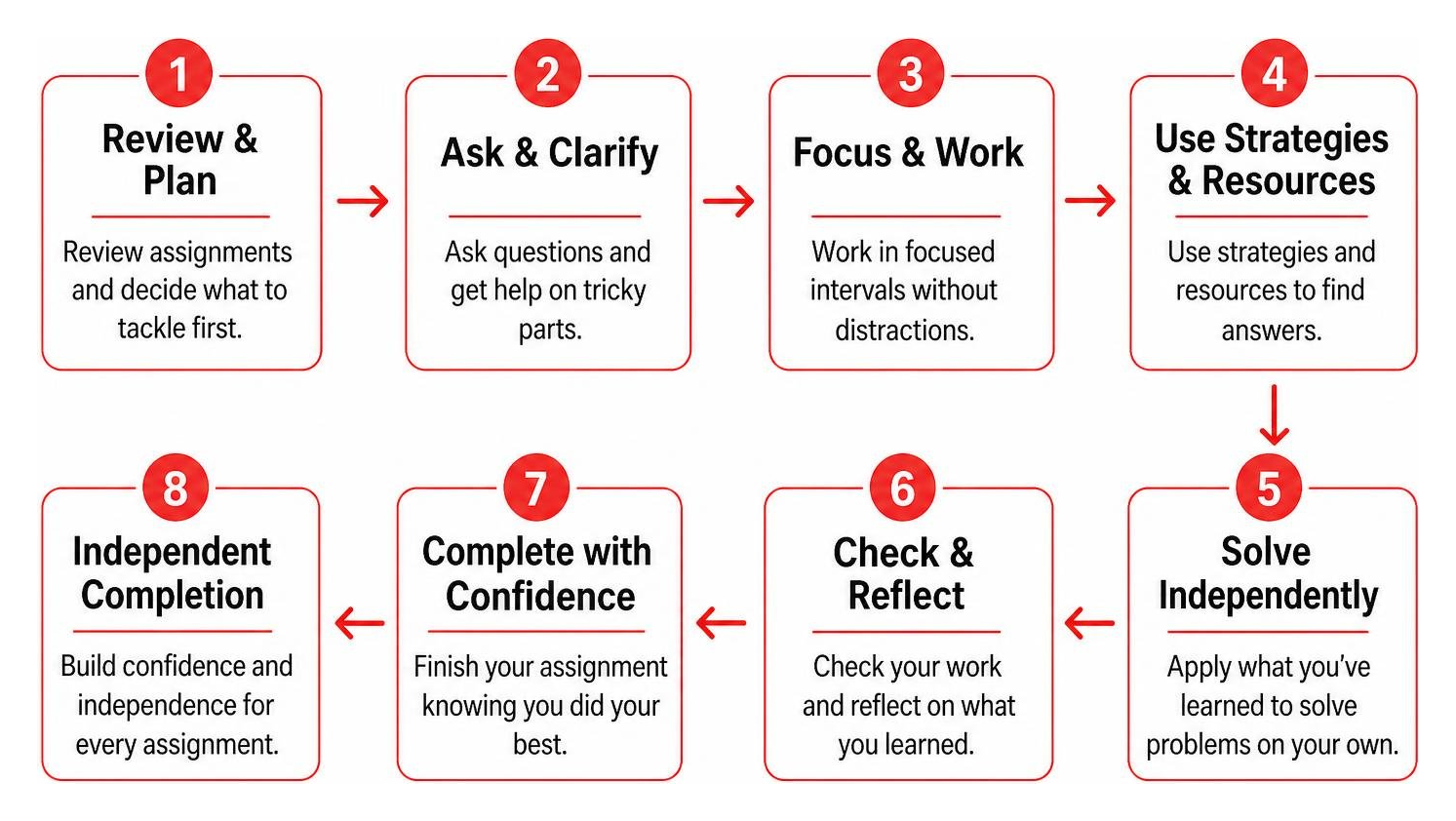
Beyond simply checking off worksheets, structured after-school programs instill executive functioning skills that last a lifetime. Educators coach students through essential habits:
- Task Prioritization: Reviewing the assignment sheet first and deciding what to tackle before moving on.
- Active Listening and Questioning: Learning how to ask specific, thoughtful questions when stuck rather than giving up.
- Focus Intervals: Discovering how to work productively for dedicated periods without digital distractions.
- Independent Problem-Solving: Using resource materials, dictionaries, and graphic organizers to find answers autonomously.
Comparing Key Features Across Homework Club Models
Not every homework club operates the same way. Some focus strictly on quiet study, while others integrate project-based clubs, faith-based mentorship, or extensive enrichment curricula.
| Program Feature | Traditional Drop-In Study Center | Academic & Enrichment Academy | Holistic Child Development Center |
|---|---|---|---|
| Staffing & Supervision Focus | Large-group monitoring | Small-group instruction | Personalized care & developmental guidance |
| Pacing Model | Self-paced / Drop-in | Tiered / Curriculum-aligned | Individualized care & milestone tracking |
| Enrichment Integration | Limited or unguided | Studio arts, digital tools | Arts, physical play, STEM, life skills |
| Daily Meals & Nutrition | Light snack | Afternoon snack | Fresh daily meals and snacks |
| Family Communication | Minimal | Periodic report cards | Seamless communication via Procare updates |
Curriculum, Digital Tools, and Personalized Pacing
Across the broader after-school landscape, modern homework assistance frequently pairs human guidance with adaptive learning software. For example, some academic learning centers utilize third-party platforms like IXL to help educators track student practice in phonics, reading comprehension, or math drills.
Other community tutoring programs provide targeted 30-minute one-on-one sessions using digital language tools or e-books. Specialized enrichment programs often use dynamic pacing—allowing students who need extra practice to take their time while encouraging others to explore advanced learning materials at their own speed.
Blending Study Time with Creative Enrichment and Recreation
Children are not built to sit quietly at desks for eight straight hours. The most effective programs balance academic focus with vibrant, hands-on activities that foster whole-child growth.
- Studio Art and Music: Creative expression gives developing brains a refreshing reset while reinforcing concepts like geometry, symmetry, and rhythm.
- Structured Physical Play: Active games on the playground release built-up energy, promote gross motor coordination, and teach teamwork.
- Community and Life Skills: Programs blend study with collaborative projects, cooking, and character-building rewards to help children develop everyday problem-solving skills.
- Enriching Activities and Field Trips: Community centers often round out the calendar with celebrations, birthdays, holiday festivals, and year-round field trips (including weekly summer field trips) to spark curiosity.
To explore how academic readiness intertwines with hands-on activities, discover our full suite of educational programs.
What to Look for in a Structured Homework Support Environment
When evaluating an after-school environment, look closely at the physical atmosphere and group dynamics. A quality facility provides dedicated, quiet study zones distinct from the recreation and play spaces.

A predictable daily routine anchored by gentleness, honesty, respect, and a mild, supportive religious or moral grounding alongside academic readiness ensures that children feel safe and emotionally settled. Look for centers that emphasize clear expectations, personalized care, and positive guidance models. When educators treat every child and family like part of their own, children naturally grow curious, confident, and kind.
Staff Training, Safety Standards, and Attendance Policies
Safety, warm care, and professional supervision should always be non-negotiable. When touring potential providers, parents should check that facilities adhere strictly to state licensing guidelines, including staff screening, developmental safety standards, and program oversight established by regulatory bodies such as the Wisconsin Department of Children and Families.
Attendance structures vary widely depending on provider models:
- District-Sponsored Programs: Public school clubs often offer structured care requiring a set minimum of days per week to maintain enrollment.
- Drop-In Centers: Certain community libraries and youth facilities offer flexible, appointment-based slots that accommodate changing family schedules.
- Comprehensive Licensed Centers: Year-round licensed childcare facilities provide predictable, reliable after-school care routines that give working parents peace of mind.
Selecting the Best After School Program with Homework for Your Child
As you compare local options, consider how well the program serves your day-to-day logistics and values:
- Location and Transit: Does the center offer convenient pick-up options or free local transportation within its designated service radius?
- Transparent Pricing: Are tuition rates straightforward, without surprise add-on fees for snack provisions or study supplies?
- Parent-Teacher Collaboration: Does the center view parents as teammates? Look for centers that provide seamless communication via Procare updates for families, keeping you connected with timely program notices.
- Special Needs Support: Ensure the program offers inclusive support for children with exceptional or special needs, tailoring the physical and academic setting to fit every child's unique journey.
Frequently Asked Questions About After-School Homework Clubs
What grade levels and age groups do after-school homework clubs typically serve?
Most after-school homework clubs cater to elementary students (grades 1–5) and middle schoolers (grades 6–8), as these are the crucial years when homework volume increases and study habits form. High-quality early childhood centers also bridge the transition from kindergarten readiness into primary grades, ensuring early elementary students build strong phonics and basic math habits from day one.
How do programs support students with diverse learning needs and English learners?
Top-tier programs use differentiated instruction, multisensory learning aids, and bilingual digital tools to accommodate different learning styles. Experienced educators adjust reading levels, provide visual graphic organizers, and offer quiet spaces for students needing sensory adjustments. Inclusive centers warmly welcome children with exceptional or special needs, crafting individualized pacing plans so every child can thrive without feeling rushed.
Are after-school homework programs flexible with pickup times and attendance?
Yes, many programs provide convenient afternoon pickup arrangements that support working parents. While some school-district clubs require minimum weekly attendance to maintain a spot, licensed childcare centers focus on offering dependable after-school care routines designed to give working families peace of mind.
Conclusion
Finding the right after-school homework club turns tense evening battles into moments of shared family joy. When your child is supported by caring educators who prioritize whole-child growth, intentional play, and a mild, supportive religious or moral grounding alongside academic readiness, they return home with meaningful academic progress, high confidence, and a genuine love for learning.
Our mission is: “To nurture each child’s unique potential through personalized care, an engaging curriculum, and a supportive environment for academic, social, emotional, and physical growth.” Our vision is: “To be a leader in Early Childhood Education, ensuring that every child and family thrives through compassionate care, personalized learning, and community support—fostering a love for learning that lasts a lifetime.”
The Parrett family founded Humbled Hearts as an in-home childcare program in 2014, and today we operate an early childhood education facility at 6003 N. Teutonia Ave, Milwaukee, WI 53209. We are a Wisconsin DCF-licensed group childcare facility licensed for up to 60 children, providing personalized care, fresh daily meals and snacks, and free local transportation within our designated service radius.
For families seeking full care pathways across all ages:
- Ages 4 weeks–1 year:$400/week full-time | $300/week part-time
- Ages 2–3 years:$380/week full-time | $290/week part-time
Give your child the after-school support they deserve while reclaiming your family evenings. Learn more about our nurturing after school program, or Apply Today to schedule a visit and join our Humbled Hearts family! Feel free to Contact us directly.