How to Choose Daycare Programs for Infants
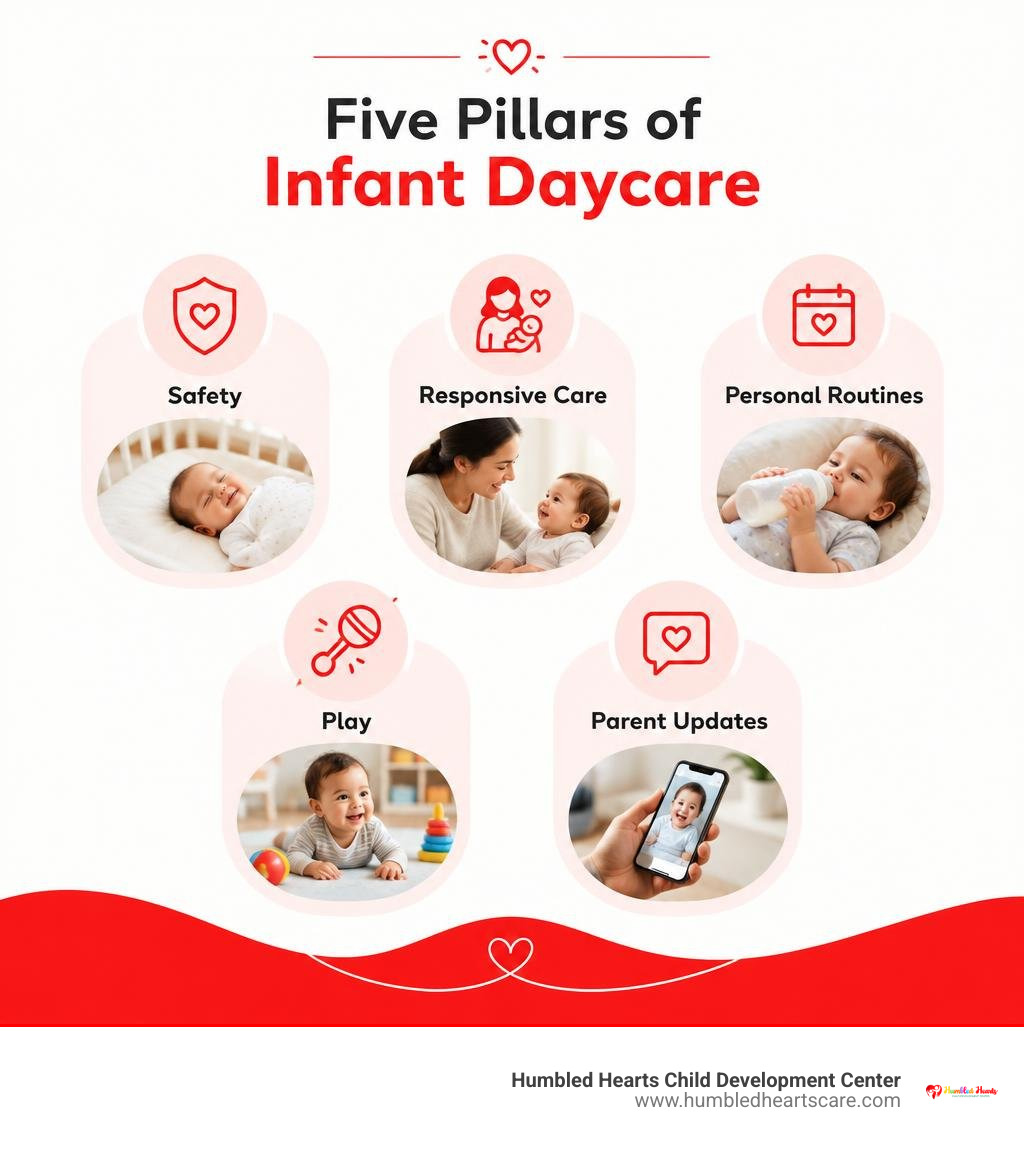
Start with the care your baby will receive each day. Look for trained caregivers who respond to your baby’s cues, follow safe sleep practices, and make time for one-on-one play. Ask how the program handles your baby’s feeding and nap routine, keeps the room clean, and shares updates with you. Then tour the space to see how caregivers interact with infants.
A good fit should work for your family, too. Check hours, cost, and how staff will partner with you as your baby grows. Ask for a written tuition breakdown, what the weekly rate includes, and whether any additional fees apply. High-quality daycare programs for infants also help families understand how early experiences shape brain development, emotional security, and social skills. Responsive relationships help babies feel secure and supported, so pay close attention to how staff respond to babies during your visit.
What Are the Core Developmental Benefits of Daycare Programs for Infants?
Handing your baby over to someone else’s care can feel overwhelming. Yet, enrolling your baby in high-quality childcare offers significant developmental benefits for their growing mind and body. Look for relationship-based care that combines warm interactions with age-appropriate play and learning.
One major benefit is social-emotional growth. A caring infant program can offer opportunities to notice other babies and practice early social interaction. Being around peers allows babies to observe facial expressions, practice early communication gestures, and build emotional security in a shared environment.
Infant programs can also support early language development. Early educators narrate routines, sing songs, read board books, and respond to babies’ sounds. These back-and-forth exchanges—often called serve-and-return communication—give babies opportunities to practice responding with sounds, expressions, and gestures. At Humbled Hearts, songs, books, and responsive interactions support early communication and connection.
| Developmental Area | Activities Families Can Share at Home | Activities to Ask About at Daycare |
|---|---|---|
| Social & Emotional | Bonding with family members and responding warmly to cues. | Responsive caregiver relationships and opportunities to notice other babies. |
| Language & Communication | Talking during familiar routines, singing, and reading together. | Talking during care routines, interactive songs, and expressive reading. |
| Thinking & Movement | Age-appropriate toy exploration and supervised floor play. | Sensory exploration, supervised tummy time, grasping toys, and open-ended play. |
Essential Components of High-Quality Infant Care and Curriculum
An infant curriculum is not about worksheets or rigid schedules. Instead, an effective curriculum for babies is woven naturally into their daily rhythms of eating, diapering, playing, and resting. It centers on responsive caregiving, in which educators treat every interaction as a meaningful learning opportunity.
Ask how the classroom environment supports exploration. Look for safe, age-appropriate materials that let babies explore textures, grasp objects, and move at their own pace.
At Humbled Hearts Child Development Center, we integrate sensory exploration, language development, and emotional nurturing into our comprehensive early learning programs. By recognizing each baby's unique cues, we support natural curiosity while helping them feel safe, valued, and understood.
The Parrett family founded Humbled Hearts as an in-home childcare program in 2014; those family-owned roots continue to shape our care. Our approach emphasizes gentleness, honesty, respect, and predictable daily routines, with mild, supportive religious or moral grounding alongside academic readiness.
Our mission is: “To nurture each child’s unique potential through personalized care, an engaging curriculum, and a supportive environment for academic, social, emotional, and physical growth.”
Weekly tuition: For ages 4 weeks–1 year, tuition is $400 full-time or $300 part-time. For ages 2–3 years, tuition is $380 full-time or $290 part-time.
Designing Safe, Cozy, and Stimulating Environments in Daycare Programs for Infants
Babies thrive in environments that balance physical safety, cozy comfort, and sensory discovery. To ensure peaceful sleep and minimize sudden disturbances, nurseries should feature low-stimulus sleeping zones equipped with dedicated individual cribs.
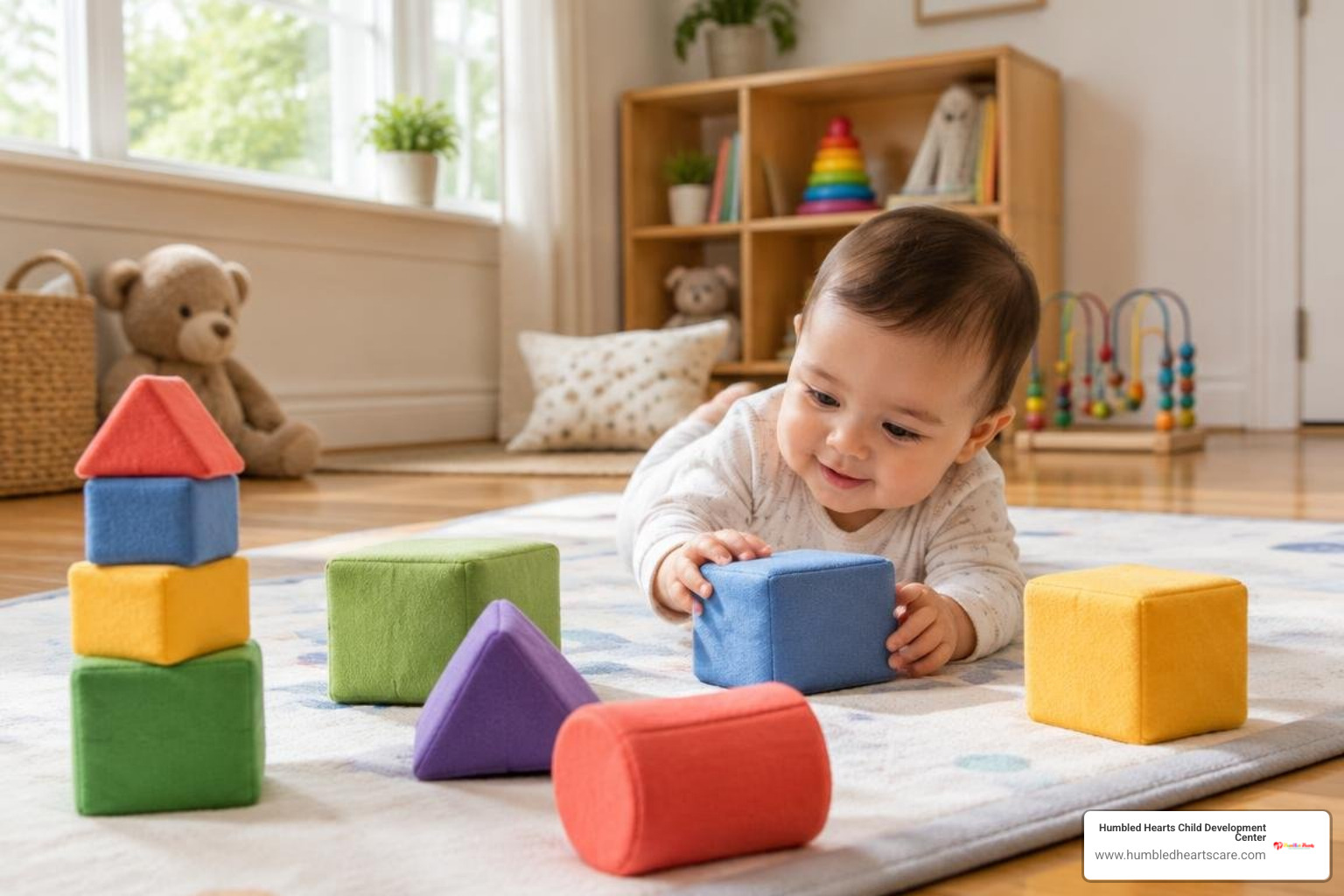
Classrooms need dedicated play areas with firm, hygienic mats for daily tummy time, helping infants develop neck, back, and core strength. Soft climbing structures, wooden grasping rings, textured sensory balls, and low mirrors encourage fine motor skills, such as grasping, and gross motor skills, such as reaching and crawling.
Look for consistent cleaning and hygiene practices:
- Sanitized surfaces: Toys, mats, and changing tables cleaned and disinfected throughout the day.
- Shoe-free zones: Infant play spaces kept free from outside dirt and contaminants.
- Safe sleep spaces: Empty cribs used according to current infant safe sleep guidance.
Personalized Care Routines in Daycare Programs for Infants: Feeding, Napping, and 1-on-1 Bonding
Infants do not operate on a standard 9-to-5 schedule, and high-quality daycare programs for infants reflect this reality. Responsive infant care adapts to each baby's individual feeding and sleep patterns rather than forcing a rigid group routine.
Caregivers offer feeds on demand, adhering carefully to each family's preferences for prepared formula or breastmilk storage and handling. Nap times happen when a baby shows tired cues—like eye rubbing or yawning—with each baby placed in their assigned crib for sleep.
One-on-one bonding is at the heart of daily care:
- Eye contact and facial mirroring: Caregivers look at babies and reflect their expressions during diapering and feeding to offer reassurance and connection.
- Responsive conversation: Caregivers describe what they are doing and respond to babies’ sounds and gestures to support trust and early language skills.
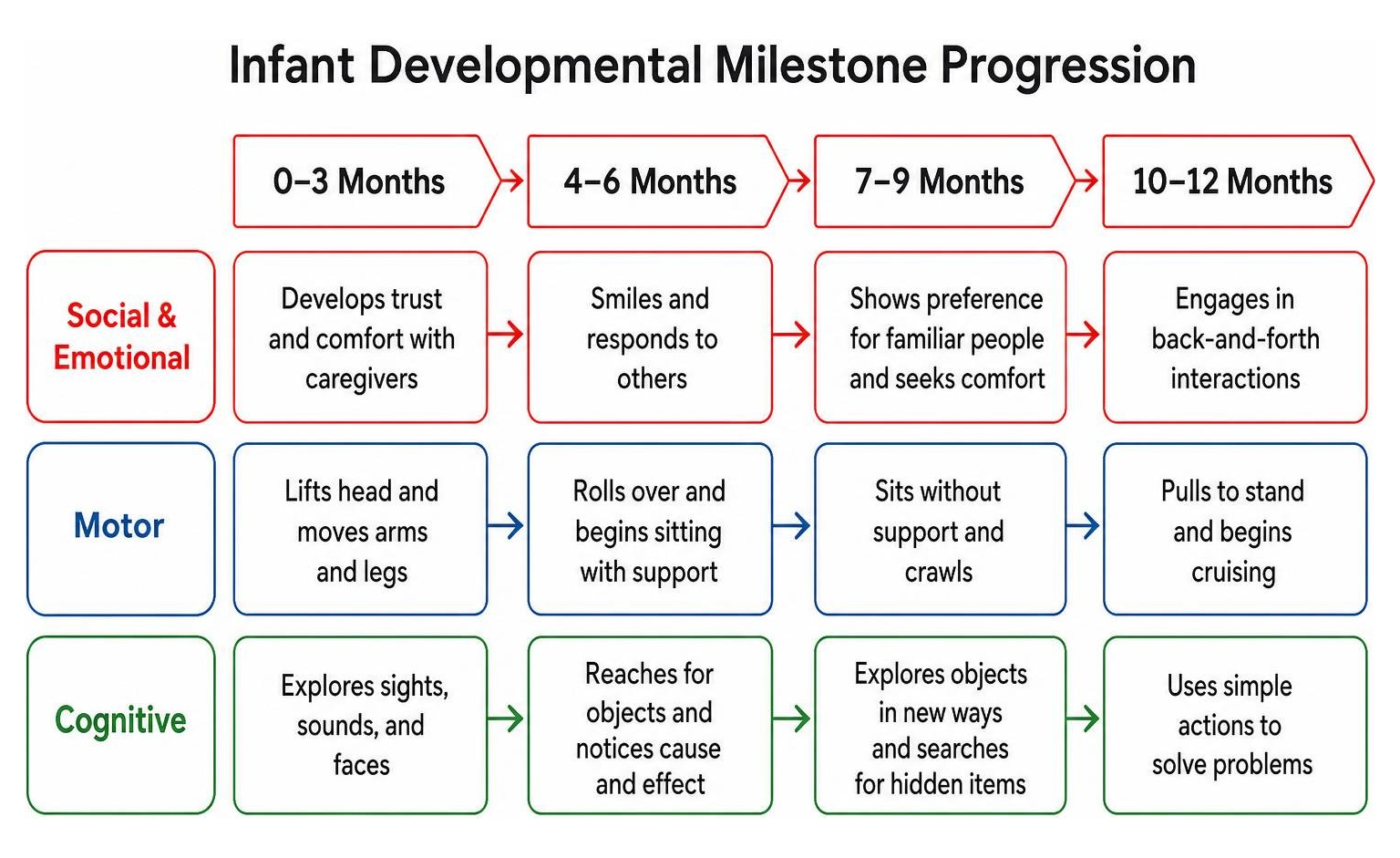
- Gentle physical guidance: Educators help babies practice reaching, rolling, sitting, and grasping during play.
Parent-Teacher Communication and Inclusive Community Practices
Entrusting your baby to a care center requires clear, transparent communication. Modern centers use real-time digital apps alongside personal handoffs to keep you connected throughout the workday. At Humbled Hearts, parents and teachers stay connected through Procare updates and work together on care plans and developmental milestones.

Daily digital updates typically track:
- Exact bottle feeding times and ounce amounts
- Solid food introduction logs and reactions
- Diaper changes and consistency notes
- Nap start and wake times
- Milestone photos, videos, and daily learning anecdotes
Beyond basic logistics, a nurturing program celebrates the cultural identity of every family. Our infant and toddler daycare offers individualized support for children with exceptional or special needs, working with families to understand each child’s needs. Humbled Hearts also provides fresh daily meals and snacks and celebrates birthdays, holidays, and themed enrichment.
Key Questions and Qualifications to Look for When Touring an Infant Center
Touring a facility in person is the best way to evaluate whether an infant program meets your family's standards. Observe how caregivers speak to the babies: Are they down on the floor at eye level? Do they comfort crying infants promptly and calmly?
Look for licensed educators with specialized credentials in early childhood development, pediatric CPR, and first-aid certifications. You should also consider how the center supports long-term continuity of care, offering a seamless path as your child grows and prepares to transition into preschool.
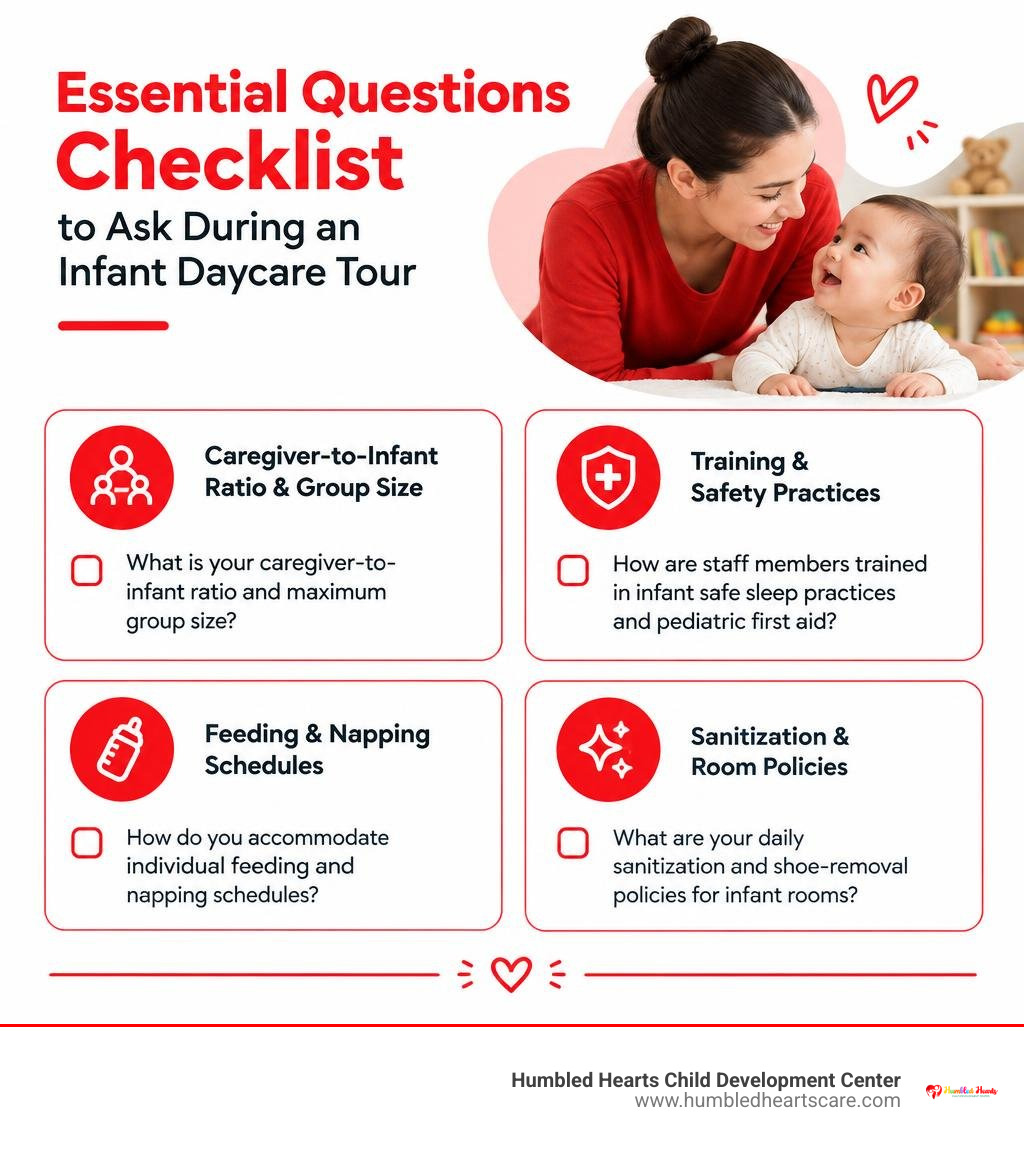
Key Questions to Ask on Your Tour:
- What is your caregiver-to-infant ratio and maximum group size?
- How are staff members trained in infant safe sleep practices and pediatric first aid?
- How do you accommodate individual feeding and napping schedules?
- What are your daily sanitization and shoe-removal policies for infant rooms?
- How do educators communicate daily updates, milestones, and emergencies to parents?
- What opportunities do you provide for open-ended, sensory, and motor play throughout the day?
Frequently Asked Questions About Infant Daycare
At what age can babies start attending infant daycare?
Starting ages vary by program. Humbled Hearts welcomes infants beginning at 4 weeks of age. If you are planning your return to work, reviewing our childcare admissions process early helps secure a placement that aligns with your family's schedule.
How do infant daycare programs accommodate individual feeding and nap schedules?
Quality centers adapt routines to each baby’s needs. Teachers and parents work together to understand each baby's feeding intervals, soothing preferences, and sleepy cues. Whether your baby drinks pumped breastmilk or formula, teachers label, store, and warm bottles individually, following safe health guidelines and feeding on demand.
What specific qualifications should infant daycare teachers possess?
Infant caregivers should possess formal education or credentials in Early Childhood Education (ECE) or Child Development, along with background clearances and up-to-date certifications in Pediatric CPR and First Aid. Look for staff who undergo ongoing professional development in infant brain development, safe sleep guidelines, and responsive caregiving.
Conclusion
Choosing the right childcare setting is a major family milestone. A nurturing, well-designed infant program provides more than safe supervision—it offers a collaborative community where your baby's social, emotional, and physical well-being can flourish.
At Humbled Hearts Child Development Center, located at 6003 N. Teutonia Ave, Milwaukee, WI 53209, we provide personalized care tailored to each baby's specific rhythms. Our whole-child approach blends sensory-rich play, safe environments, and close family partnerships to give your little one a warm beginning. Humbled Hearts is a Wisconsin DCF-licensed group childcare facility licensed for up to 60 children.
Our vision is: “To be a leader in Early Childhood Education, ensuring that every child and family thrives through compassionate care, personalized learning, and community support—fostering a love for learning that lasts a lifetime.”
If you are ready to partner with a team dedicated to your baby's growth, apply today or visit Humbled Hearts Child Development Center to schedule a tour.