Finding Milwaukee After-School Programs That Fit Your Family
Milwaukee families can choose from school-based care, homework help, arts and science, technology, engineering, and math (STEM) classes, sports, and free evening programs for teens. Start with your child's age, then compare programs near home or school. Check the cost, hours, pickup rules, and enrollment steps before you apply.
The right fit offers more than a place to spend the afternoon. It can give your child time to learn, make friends, and build confidence. This guide will help you compare options and find care that works for your family's schedule and budget.
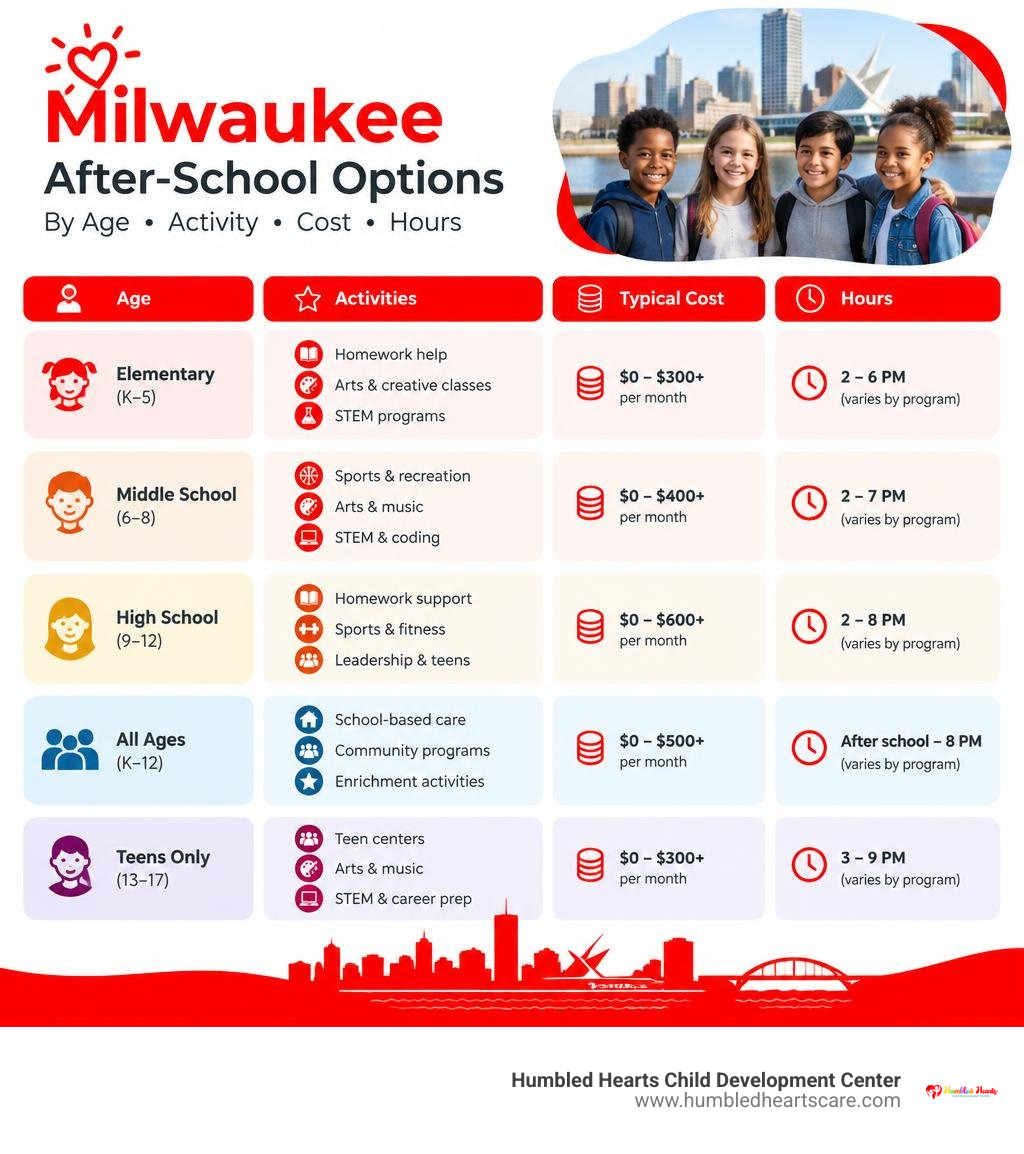
Finding dependable after-school care is one of the most critical decisions local parents make each school year. According to the U.S. Census Bureau, approximately 57 percent of children between the ages of 6 and 17 participate in at least one after-school activity. In a vibrant city like Milwaukee, options range from intensive academic tutoring to creative arts, athletics, and community-driven teen centers.
Whether you are looking for homework support right after the final bell or a safe, engaging space where your child can thrive until dinner, understanding the local landscape will help you choose with confidence. For many families, the search begins with a simple question: which programs are close enough to home or school to fit the daily routine? Parents often weigh the convenience of on-site school care against the specialized instruction available at dedicated learning centers and community hubs.
Milwaukee's after-school landscape is shaped by the needs of working families, the availability of grant-funded school programs, and a strong network of neighborhood organizations. Some programs offer help catching up in school and opportunities to explore new subjects, while others focus on creative expression, physical activity, or leadership development. The best choice depends on your child's interests, your work schedule, and the level of structure your child needs after a full day of school.
As you compare options, consider how each program communicates with families. Strong programs share daily updates, welcome parent questions, and create consistent routines that help children feel secure. Parents and teachers work as a team, sharing observations and agreeing on ways to support each child's learning, routines, and well-being. A high-quality after-school setting should feel like an extension of the supportive environment your child already knows, with staff who take time to understand each child's personality and learning style.
Types of Milwaukee After School Programs Available for Local Families
Every child has unique interests, learning styles, and emotional needs. Fortunately, the range of milwaukee after school programs offers pathways tailored to academic growth, creative expression, athletic development, and life-skill preparation.
Academic Enrichment and STEM Milwaukee After School Programs
For students who need an extra boost in the classroom or those who crave advanced challenges, academic-focused programs offer homework support and learning activities; ask each provider about staff qualifications.
- Targeted Math and Literacy Tutoring: Programs throughout Greater Milwaukee provide specialized instruction in core subjects. Local options include tutoring and math and reading support. Ask providers which ages they serve and whether instruction is individual or group-based.
- STEM Enrichment: Humbled Hearts includes hands-on STEM enrichment in its school-age program. If your child is interested in robotics or coding, ask providers whether those activities are available.
- Homework Help and College Readiness: Washington High School’s 21st Century Community Learning Center offers math and reading support, arts programming, and college and career readiness activities for grades 9–12. Students receive help with daily assignments while also building the time-management and study skills they will need for college and career success.
| Program Type | Primary Focus | Age Eligibility | Potential Benefit |
|---|---|---|---|
| Academic & STEM | Math, reading, coding, homework help | Varies by provider; confirm eligibility | Opportunities to practice academic skills and study habits |
| Creative Arts | Music, dance, theater, visual arts | Varies by provider; confirm eligibility | Fosters self-expression, confidence, and motor coordination |
| Youth Recreation | Sports, esports, life skills, social clubs | Varies by provider; confirm eligibility | Encourages physical health, peer connection, and routine |
Creative Arts and Specialized Milwaukee After School Programs
Artistic enrichment nurtures emotional resilience, creative thinking, and fine motor development.

- Music and Performing Arts: For music and performing arts, compare providers’ age requirements and available classes, such as instrumental or vocal instruction. Children learn to read music, perform in ensembles, and develop stage presence in a supportive setting.
- Dance and Movement: For dance and movement, ask studios about minimum ages, dance styles, and how classes support coordination and confidence. Dance classes help children build coordination and confidence while giving them a healthy outlet for creative energy.
- Martial Arts and Character Building: Programs incorporating martial arts training emphasize self-control, physical balance, and respect, blending physical exercise with character education. Ask instructors how their program combines physical skills with perseverance, focus, and courtesy.
- Youth Leadership and Scouting: When comparing leadership or scouting options, ask about age eligibility and opportunities for outdoor exploration, community service, and entrepreneurship. These programs help children develop independence, teamwork, and a sense of responsibility to their communities.
Community Recreation and Evening Youth Hubs
Recreational hubs provide safe, supervised spaces for older kids and teens during peak after-school and evening hours.
Milwaukee Recreation’s Twilight Centers provide free drop-in spaces on weekday and weekend evenings where young people can spend time with friends, learn skills, and work with mentors. Check each location’s current activities and schedule. Separately, Milwaukee Public Schools’ (MPS) 21st Century Community Learning Centers offer a healthy snack or light dinner and supervised academic enrichment.
These evening hubs are especially valuable for families with non-traditional work schedules, providing structured activities during the hours when older children and teens are most likely to be unsupervised. Staff members build relationships with regular attendees, creating a sense of belonging that keeps youth engaged and connected to positive role models.
How to Evaluate Cost, Hours, and Neighborhood Accessibility
When weighing your options, balance program features against your family's daily logistics and budget.

- Tuition and Fee Structures: Milwaukee features a spectrum of pricing models. While specialized arts academies and private tutoring centers require tuition, community-based options operate for free or for nominal annual fees. Many grant-funded school sites ensure that an inability to pay never prevents a child from attending. Before enrolling, ask for a complete fee schedule that includes registration costs, supply fees, and any charges for late pickup or field trips. For families also comparing early-childhood care, Humbled Hearts’ weekly tuition for ages 4 weeks–1 year is $400 full-time or $300 part-time; for ages 2–3 years, it is $380 full-time or $290 part-time. These are early-childhood rates, not school-age rates.
- Operating Schedules: Hours vary by provider. Washington High School’s Community Learning Center serves grades 9–12 Monday–Thursday, 3:25–7:00 p.m.; Milwaukee Recreation’s Twilight Centers offer weekday and weekend evening programming. Confirm current hours and ask whether school-break, in-service-day, or summer care is available.
- Location and Safe Transportation: Consider whether the program is on-site at your child's school, within walking distance, or near your daily commute. Ask about pickup procedures, authorized adult policies, and whether the program provides transportation from your child's school. Humbled Hearts operates an early childhood education facility at 6003 N. Teutonia Ave, Milwaukee, WI 53209, and offers free local transportation within the designated service radius. Ask whether your child's school is within that radius. If you are seeking a supportive, family-focused environment that bridges early learning and school-age care, exploring our dedicated programs can help you find a reliable routine close to home.
- Staff Qualifications and Ratios: Look for programs with consistent, trained staff members who know the children by name. Low staff-to-child ratios allow for more individualized attention, which is especially important for younger children and those who need extra homework support. Ask about staff background checks, training requirements, and how long the current team has worked together.
- Daily Structure and Communication: A quality program balances structured activities with time for free play, snacks, and socializing. Ask how the program communicates with families, whether through daily notes, apps, or regular conferences, and how staff handle behavioral challenges or conflicts between children. At Humbled Hearts, daily care includes fresh daily meals and snacks, inclusive support for children with exceptional or special needs, and seamless communication via Procare, the app used for family updates. Parents and teachers work together to share progress and support each child's needs.
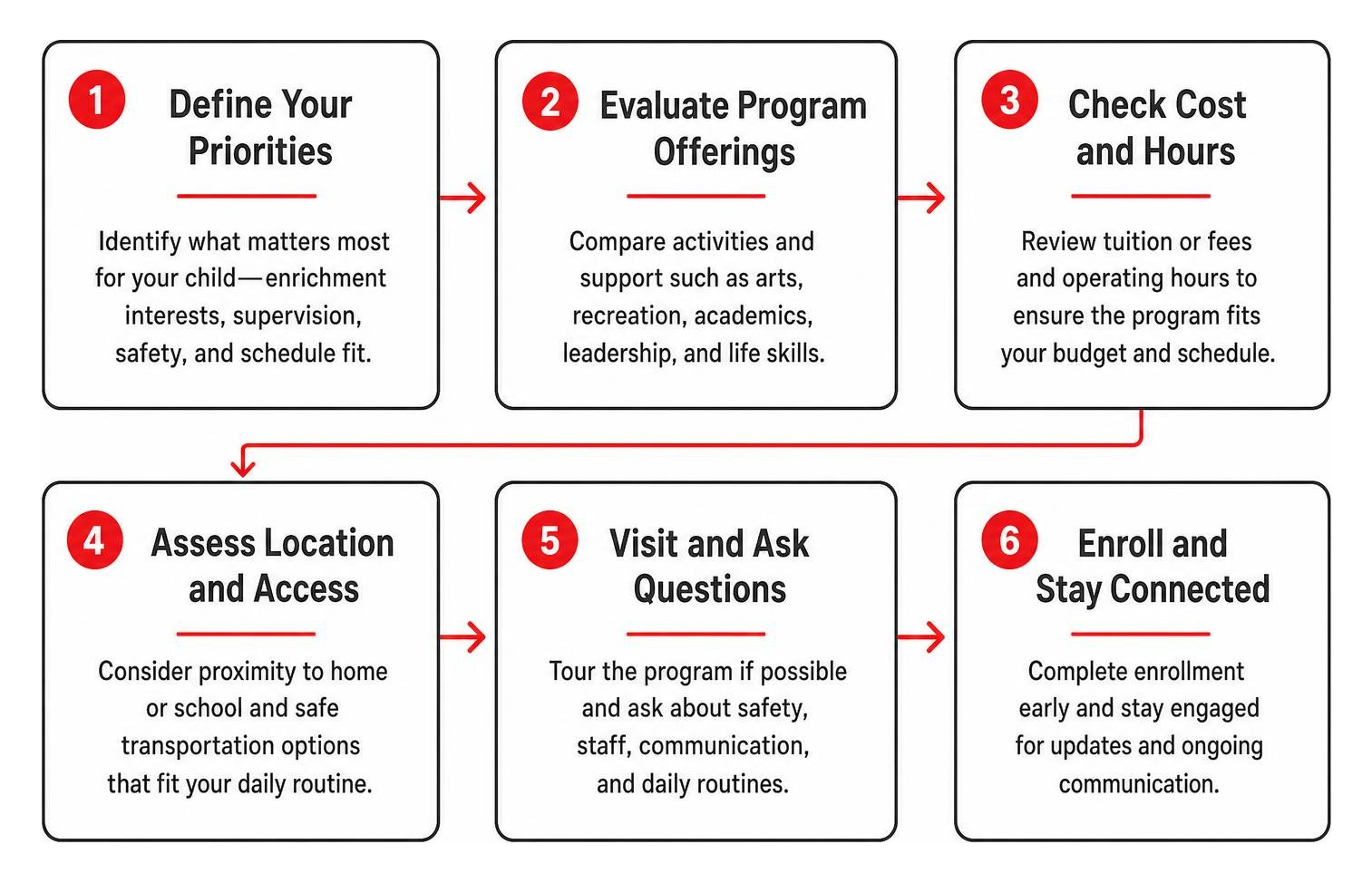
Essential Steps for Enrolling Your Child in Milwaukee Programs
Securing a spot in a suitable program requires early planning and attention to detail.
- Check Eligibility Deadlines: Ask school-based Community Learning Centers and specialty programs when registration opens. Review grade and age limits carefully, and mark application windows on your calendar so you do not miss priority enrollment periods.
- Gather Required Documentation: Prepare emergency contact information, immunization and health records, authorized pickup lists, and any fee waiver documentation. Having these items ready before you begin the application can speed up the process and reduce the chance of delays.
- Inquire About Waitlists: High-demand programs fill quickly. If a site is at capacity, ask to be placed on their active waitlist and follow up periodically. Ask whether the provider has any priority-placement rules.
- Visit the Program in Person: Tour the facility during operating hours to observe how staff interact with children, how the space is organized, and whether the environment feels welcoming and secure. Pay attention to cleanliness, safety features, and the overall energy of the room.
- Engage with Site Leadership: Meet the coordinators, tour the facility, and discuss your child's individual learning goals. Ask about daily schedules, homework support, and how the program handles food allergies or medical needs. If you have questions about personalized care, schedule time for contact with program directors to ensure the culture aligns with your values.
- Prepare Your Child for the Transition: Talk with your child about what to expect, introduce them to the staff, and consider a trial visit if the program allows one. A smooth transition helps children feel comfortable and excited about their new after-school routine.
Frequently Asked Questions About Milwaukee After School Care
Are free after-school programs available in Milwaukee?
Yes. Milwaukee Recreation’s Twilight Centers offer free drop-in evening programming for young people. Confirm each site’s age eligibility and available activities. Additionally, 21st Century Community Learning Centers in local public schools offer federally grant-subsidized care where fees are nominal or completely waived based on financial need. Ask other providers whether sliding-scale tuition or scholarships are available.
What age groups do Milwaukee after-school programs serve?
After-school eligibility varies by provider. Early-childhood care and enrichment are separate options for younger children.
- Early Childhood Care and Enrichment: Humbled Hearts offers infant/toddler care for ages 4 weeks–3 years and pre-K for ages 4–5. For younger children, ask providers about age-appropriate care, beginner literacy, movement, and social activities; infant care is not an after-school program.
- School-Age Options: Look for programs offering homework support, STEM clubs, team athletics, and opportunities to build friendships. Humbled Hearts’ school-age program serves ages 6–12. Confirm each provider's eligibility and ask how parents and teachers work together to support learning and growing independence.
- High School Options: Look for programs offering college preparation, leadership development, digital arts, recreation, and life skills. Washington High School’s Community Learning Center serves grades 9–12 and offers math and reading support, arts programming, and college and career readiness activities.
How do after-school programs support social-emotional development?
High-quality programs can support social and emotional learning—skills for understanding feelings and working with others—through group problem-solving, guided conversations about kindness and repairing harm, and peer mentorship. By interacting outside traditional classroom pressures, students can practice resolving conflicts, managing emotions, and working as a team in a secure, supervised environment. Consistent routines, caring staff relationships, and opportunities for children to share their ideas can help them feel valued and included. Parents and teachers work as a team to reinforce these skills and share observations about each child's progress.
Conclusion
Every child deserves a safe, enriching space where they can learn, play, and grow after the final school bell rings. At Humbled Hearts Child Development Center, we support whole-child growth through personalized care, strong family partnerships, and a warm, community-centered approach. Parents and teachers work as a team to help children grow curious, confident, and kind.
Family-owned since 2014, Humbled Hearts began as an in-home childcare program founded by the Parrett family. Humbled Hearts is a Wisconsin Department of Children and Families (DCF)-licensed group childcare facility licensed for up to 60 children. Our approach emphasizes gentleness, honesty, respect, predictable daily routines, and mild, supportive religious or moral grounding alongside academic readiness. Our enrichment includes year-round field trips, with weekly summer field trips, as well as celebrations, birthdays, holidays, and themed activities.
Our mission is: “To nurture each child’s unique potential through personalized care, an engaging curriculum, and a supportive environment for academic, social, emotional, and physical growth.”
Our vision is: “To be a leader in Early Childhood Education, ensuring that every child and family thrives through compassionate care, personalized learning, and community support—fostering a love for learning that lasts a lifetime.”
If you are ready to give your child an enriching, loving environment tailored to their unique potential, apply today and become part of our extended family.