Is Age 3 the Right Time to Start Nursery?
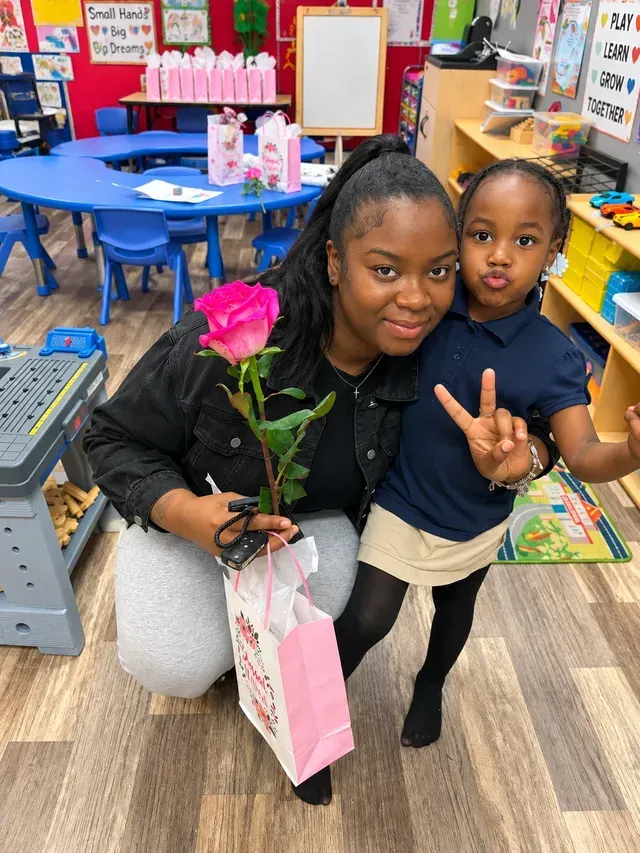
Age 3 can be a good time to start nursery. Look for a safe, play-based program where your child can practice sharing, speaking up, following a routine, and trying new things. When choosing a nursery for a 3-year-old, visit the classroom, watch how teachers respond to children, and ask how they help new children settle in. Your child does not need to have every skill mastered before starting.
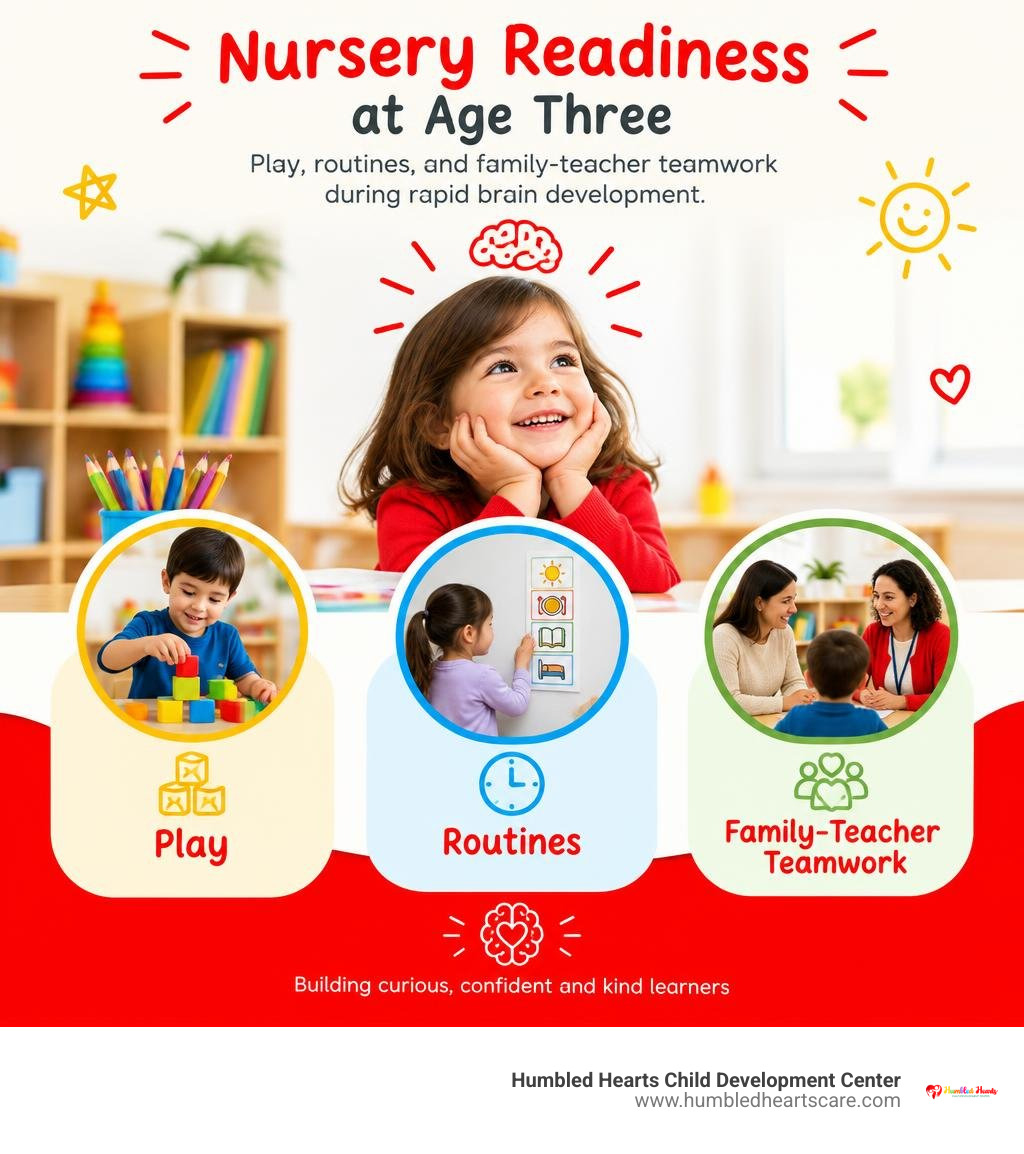
At Humbled Hearts Child Development Center, parents and teachers work as a team to support each child’s whole-child growth. A warm, predictable routine and intentional play can help a three-year-old grow curious, confident, and kind while building kindergarten readiness. A quality early learning setting gives families and teachers a shared foundation to build on together.
The Developmental Benefits of Enrolling in a 3 Years Nursery Program
Three is a magical age. Toddlers transform into expressive, imaginative little explorers who want to understand everything around them. Enrolling your child in a dedicated 3 years nursery program gives them a safe space outside the home to test their growing independence, build emotional resilience, and make their very first real friendships.
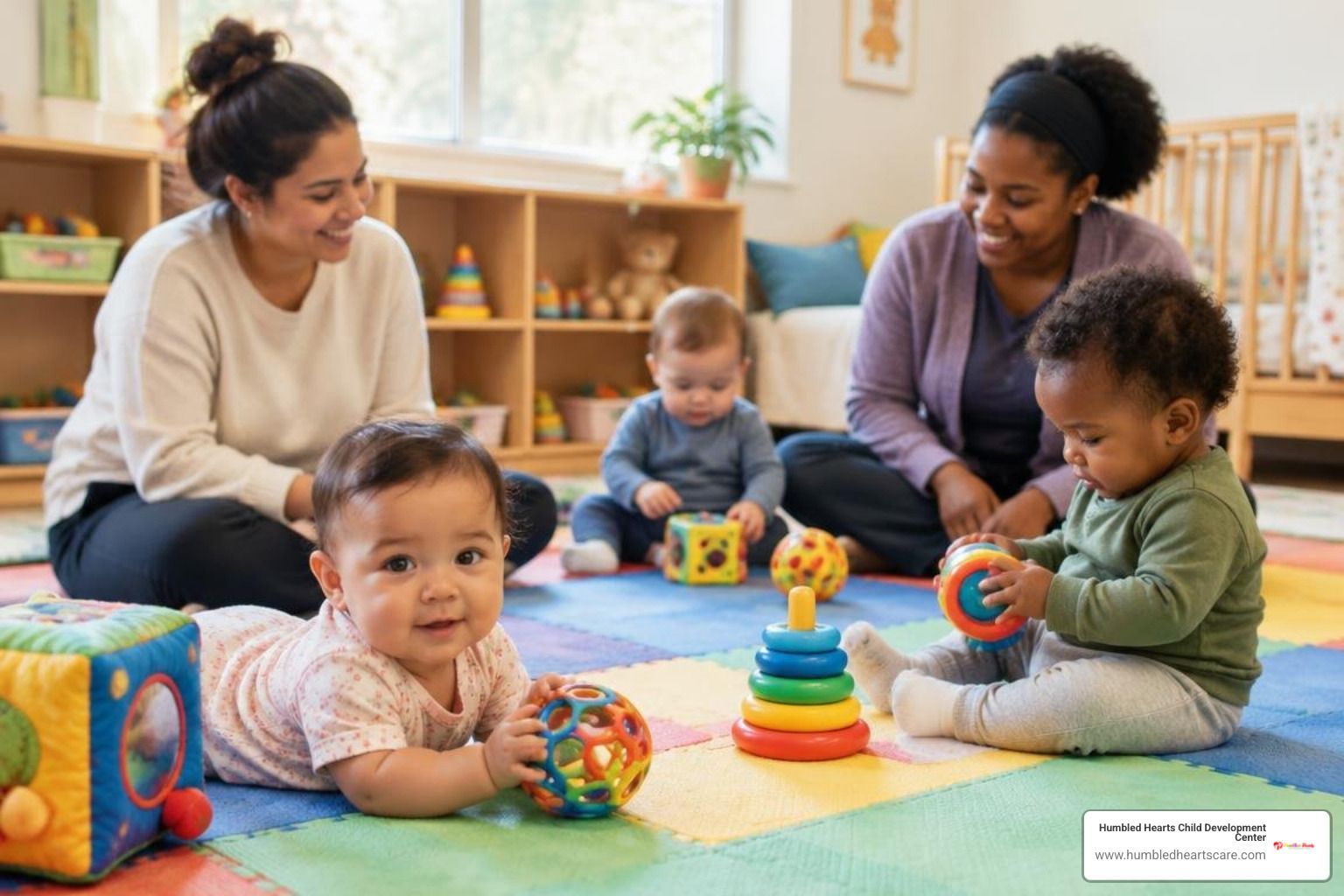
At this stage, learning is not about worksheets or rigid memorization. Instead, intentional play allows children to practice what child psychologists often call mini-diplomacy: taking turns with favorite toys, listening during circle time, and navigating early disagreements with gentle guidance.
Brain Architecture and Early Learning at Age Three
Did you know that 90% of a child’s brain develops by age five? Between birth and age three, the brain forms more than one million new neural connections every single second. By the time a child turns three, those pathways are ready to be strengthened through interactive language, sensory exploration, and structured inquiry.
In our nurturing Early Years Nursery environment, we focus on responsive interactions that turn everyday moments into cognitive leaps. When three-year-olds engage in guided storytelling, sort colorful counting blocks, or build towers together, their brains are building the architecture for:
- Expressive and Receptive Language: Rapidly expanding vocabulary through conversations, songs, and rhyming games.
- Executive Function: Learning how to focus attention, remember multi-step instructions, and practice self-control.
- Fine and Gross Motor Coordination: Threading beads, holding chunky crayons, balancing on play beams, and running outdoors.
Nursery vs Preschool vs Playgroup: Key Differences for Age 3
Parents often ask us about the difference between nursery classrooms, formal preschools, and casual playgroups. While all three support early socialization, their structure, schedule, and learning goals vary:
| Program Type | Typical Age Range | Weekly Schedule | Curriculum & Structure | Primary Developmental Focus |
|---|---|---|---|---|
| Playgroup | 18 months – 3 years | 1–3 days/week (1–2 hours per session) | Informal, parent-assisted or unstructured play | Basic social exposure and sensory play |
| Nursery Care | 2.5 – 4 years | Full-time or flexible part-time (full day) | Play-based, predictable daily routines, responsive care | Whole-child growth, independence, and social-emotional skills |
| Preschool | 3 – 5 years | Half-day or full-day academic year | Structured early learning and emergent literacy | Kindergarten readiness, foundational math, and classroom structure |
A high-quality nursery bridges the gap between home and structured schooling. If your child is ready for structured exploration, transitioning into our preschool program ensures they gain the emotional independence and academic curiosity needed for elementary school.
Evaluating Program Types and Curriculums for Three-Year-Olds
Early childhood education offers many educational philosophies, from child-led exploration to structured community models. Some families look into specialized models that combine self-directed tasks with language immersion, but the most important element for a three-year-old is a low child-to-teacher ratio and warm, responsive educators who treat every child with dignity and care.
What to Expect from a Typical 3-Year-Old Nursery Curriculum
A developmentally aligned nursery curriculum for three-year-olds blends play with early STEM concepts, music, and motor development. Rather than formal lectures, teachers introduce foundational concepts through themed exploration units.
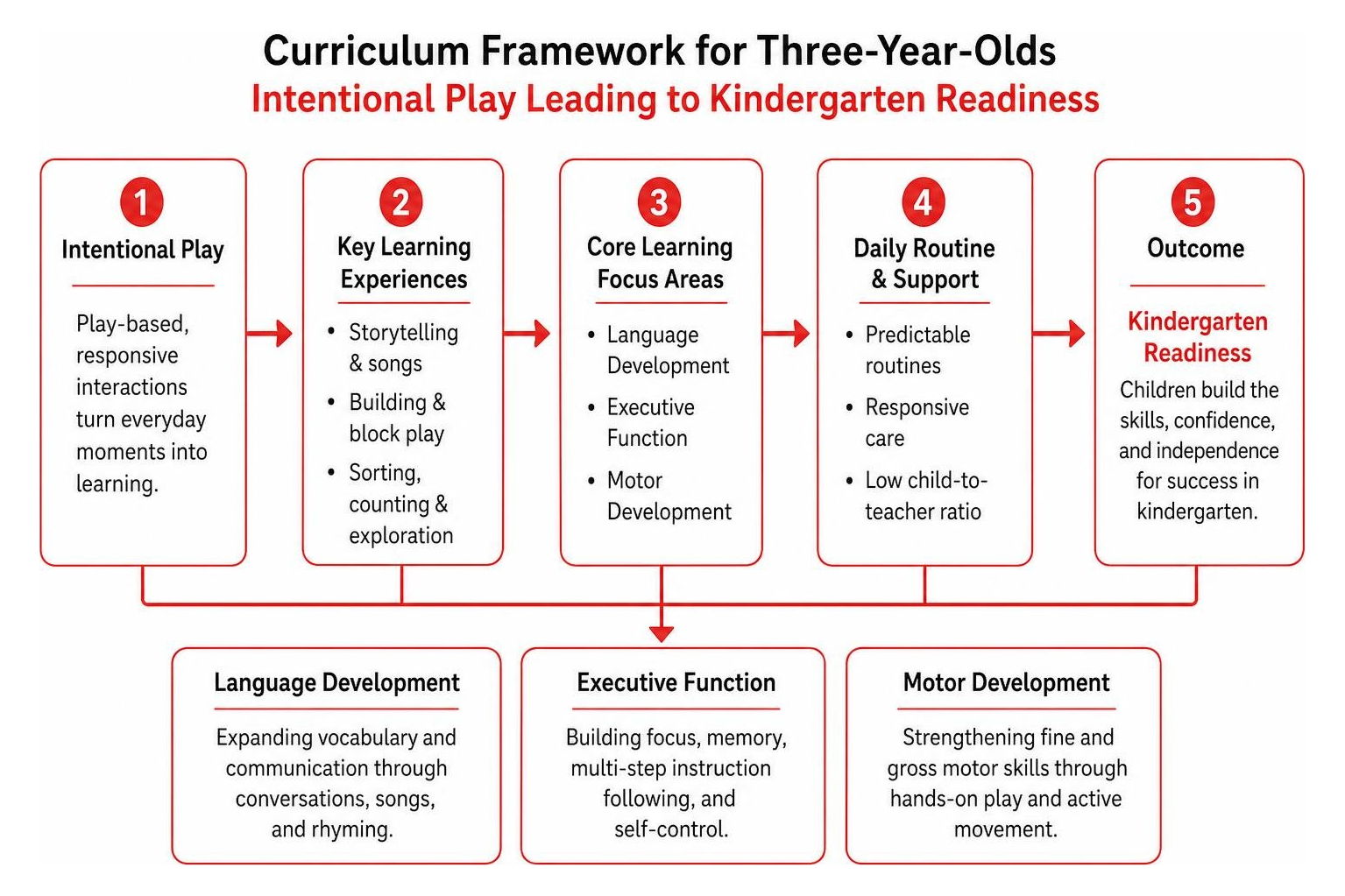
When you look at our early childhood programs, you will find balanced days that include:
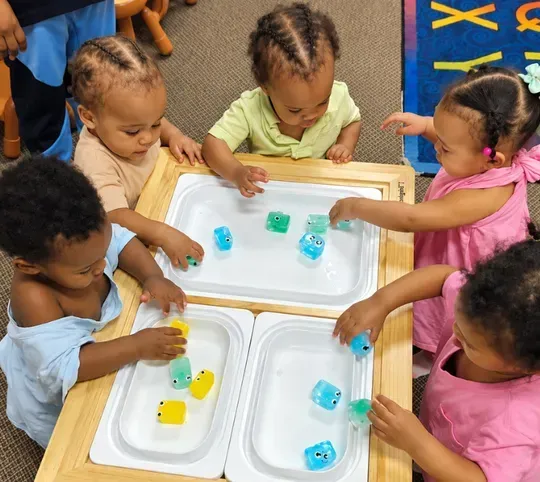
- Sensory and Creative Arts: Finger painting, playdough sculpting, and water exploration to stimulate tactile processing and creative expression.
- Phonemic Awareness and Early Literacy: Rhyme time, interactive read-alouds, and naming classroom objects to connect sounds to printed symbols.
- Pre-Math Concepts: Sorting items by shape, color, or size, and counting snack items together.
- Character and Moral Grounding: Gentle lessons on honesty, kindness, and respecting friends and teachers.
Childcare Options and Local Support
Depending on where you live, families can explore various licensed early learning environments to find the right fit for their schedule and educational goals.
In Wisconsin, families often choose a trusted State Approved Daycare Milwaukee provider that meets strict state licensing requirements while offering flexible full-time and part-time schedules for working parents.
Navigating Tuition, Subsidies, and Regional Childcare Costs
Budgeting for early education is one of the biggest priorities for working families. Childcare costs vary widely by region, facility type, and age group.
Globally and regionally, early education costs reflect local regulations and subsidies:
- United Kingdom: Full-time nursery care ranges from £800 to £2,200 per month on average in 2026, according to guides from Nurseries101. Public provisions offer government-funded 15-to-30-hour options for children starting the term after their third birthday.
- Singapore: Children enter Pre-Nursery (N1) the year they turn three, with working mothers receiving targeted subsidies.
- United States: State assistance programs such as Wisconsin Shares help qualifying families cover monthly tuition at licensed group centers.
Comparing Early Nursery Costs and Public Subsidies
We believe in complete pricing transparency so parents never encounter unexpected financial surprises. Our tuition rates reflect our commitment to safe, high-quality care:
- Ages 4 Weeks – 1 Year:$400 per week for full-time enrollment, or $300 per week for part-time enrollment.
- Ages 2 – 3 Years:$380 per week for full-time enrollment, or $290 per week for part-time enrollment.
We gladly accept Wisconsin Shares childcare subsidies and assist parents in navigating state paperwork to ensure every child can access quality early learning.
Understanding Hidden Fees and Age-Based Cost Differences
When comparing programs, parents often notice that infant care costs significantly more than nursery care for older toddlers. In fact, children under 18 months cost 15% to 25% more than children aged three and up because licensing standards require much lower teacher-to-child staffing ratios for infants.
Always ask prospective centers about additional charges that can add up quickly over the year:
- Registration and waitlist fees
- Weekly meal or snack surcharges
- Supply and diaper fees
- Activity and summer field trip costs
At Humbled Hearts, we include fresh daily meals, wholesome snacks, and enriching activities in our standard tuition so you can plan your family budget with confidence.
Step-by-Step Guide to Choosing and Enrolling in a Nursery
Finding the right early learning setting takes careful observation and open communication. You want an environment where educators collaborate with you as an active team to support your child's milestones.
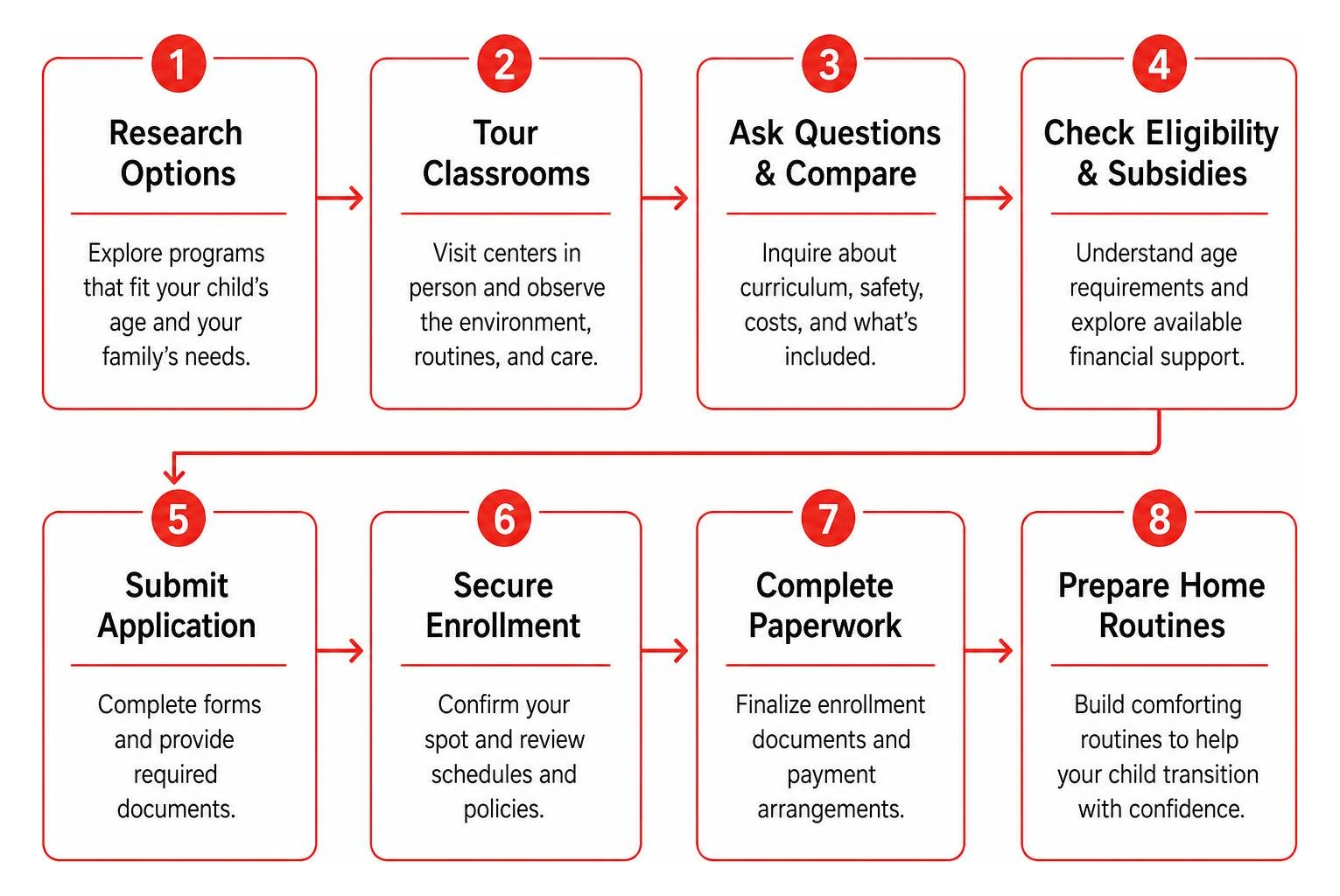
When you begin evaluating centers and planning for admissions, use this step-by-step enrollment roadmap:
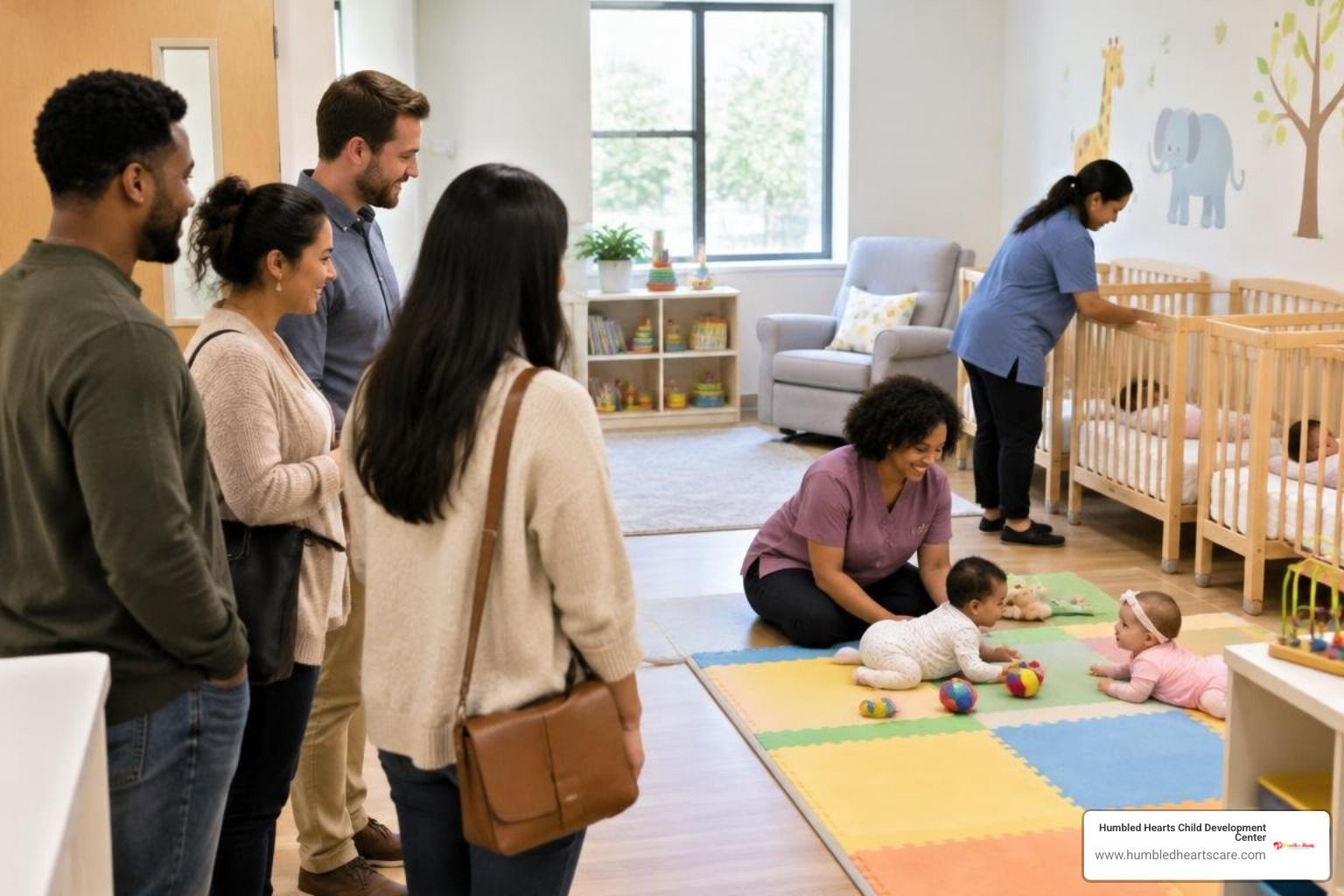
What to Look for During a Nursery Tour
Visiting in person lets you experience the classroom culture firsthand. When you tour a center, look for:
- Cleanliness and Safety: Secure entryways, sanitized toy bins, well-maintained outdoor play areas, and clean handwashing stations.
- Educator Warmth and Engagement: Teachers who sit at eye level with the children, listen patiently, and use positive, gentle redirection rather than punitive discipline.
- Predictable Daily Routines: Clear visual schedules that balance active movement, focused learning, outdoor time, and restful quiet periods.
- Open Family Communication: Ask how teachers share daily updates. Digital tools like Procare let parents receive photos, meal details, and milestone notes right on their phones.
Required Documents and Enrollment Checklist
To make the registration process as smooth as possible, gather these standard documents before your enrollment meeting:
- Child’s certified birth certificate
- Up-to-date state immunization records
- Completed emergency contact and health history forms
- Proof of residence (such as a utility bill)
- Income verification documents (if applying for state childcare subsidies like Wisconsin Shares)
Frequently Asked Questions About 3-Year-Old Nursery Care
Is nursery compulsory for a 3-year-old?
No, nursery is not legally compulsory. In most regions, mandatory schooling begins at kindergarten or age six. However, developmental specialists strongly recommend enrolling children in a group setting by age three because it builds crucial social skills, executive functioning, and foundational confidence before elementary school.
How do I know if my 3-year-old is developmentally ready for nursery?
Your child does not need to be completely independent to thrive in nursery. Key signs of readiness include being able to communicate basic needs (like asking for water or saying when they are uncomfortable), showing interest in playing near other children, and managing short separations with reassuring support. Teachers are fully prepared to help children practice potty routines, handwashing, and emotional self-regulation.
What does a typical daily schedule look like in a nursery for 3-year-olds?
A balanced daily schedule includes:
- Morning Welcome & Circle Time: Songs, weather review, and sharing stories.
- Guided Centers & Free Play: Building blocks, art tables, and sensory bins.
- Nutritious Morning Snack: Practicing table manners and conversation.
- Outdoor Exploration: Running, climbing, and cooperative games.
- Warm Lunch & Quiet Rest: A fresh meal followed by a cozy nap or quiet book time.
- Afternoon Enrichment: Music, simple STEM sorting, and outdoor play before pick-up.
Conclusion: Setting Your Child Up for Lifelong Success
Choosing the right early learning program is an investment in your child's emotional well-being, confidence, and cognitive development. The Parrett family founded Humbled Hearts as an in-home childcare program in 2014, and today we continue that legacy of treating every child and family like part of our own.
As a Wisconsin DCF-licensed group childcare facility licensed for up to 60 children, our center operates at 6003 N. Teutonia Ave, Milwaukee, WI 53209. We provide:
- Personalized care focused on whole-child growth
- Predictable daily routines rooted in gentleness, honesty, and respect
- Fresh daily meals and nutritious snacks
- Seamless family communication and milestone tracking via Procare
- Inclusive support for children with exceptional or special needs
- Year-round themed enrichment, holiday celebrations, and weekly summer field trips
- Free local transportation within our designated service radius
Our mission is: “To nurture each child’s unique potential through personalized care, an engaging curriculum, and a supportive environment for academic, social, emotional, and physical growth.” Our vision is: “To be a leader in Early Childhood Education, ensuring that every child and family thrives through compassionate care, personalized learning, and community support—fostering a love for learning that lasts a lifetime.”
Ready to see how our team can help your three-year-old thrive? Schedule a tour to meet our compassionate educators and reserve your child's place today.