Find a Daycare Accepting Subsidy in Milwaukee
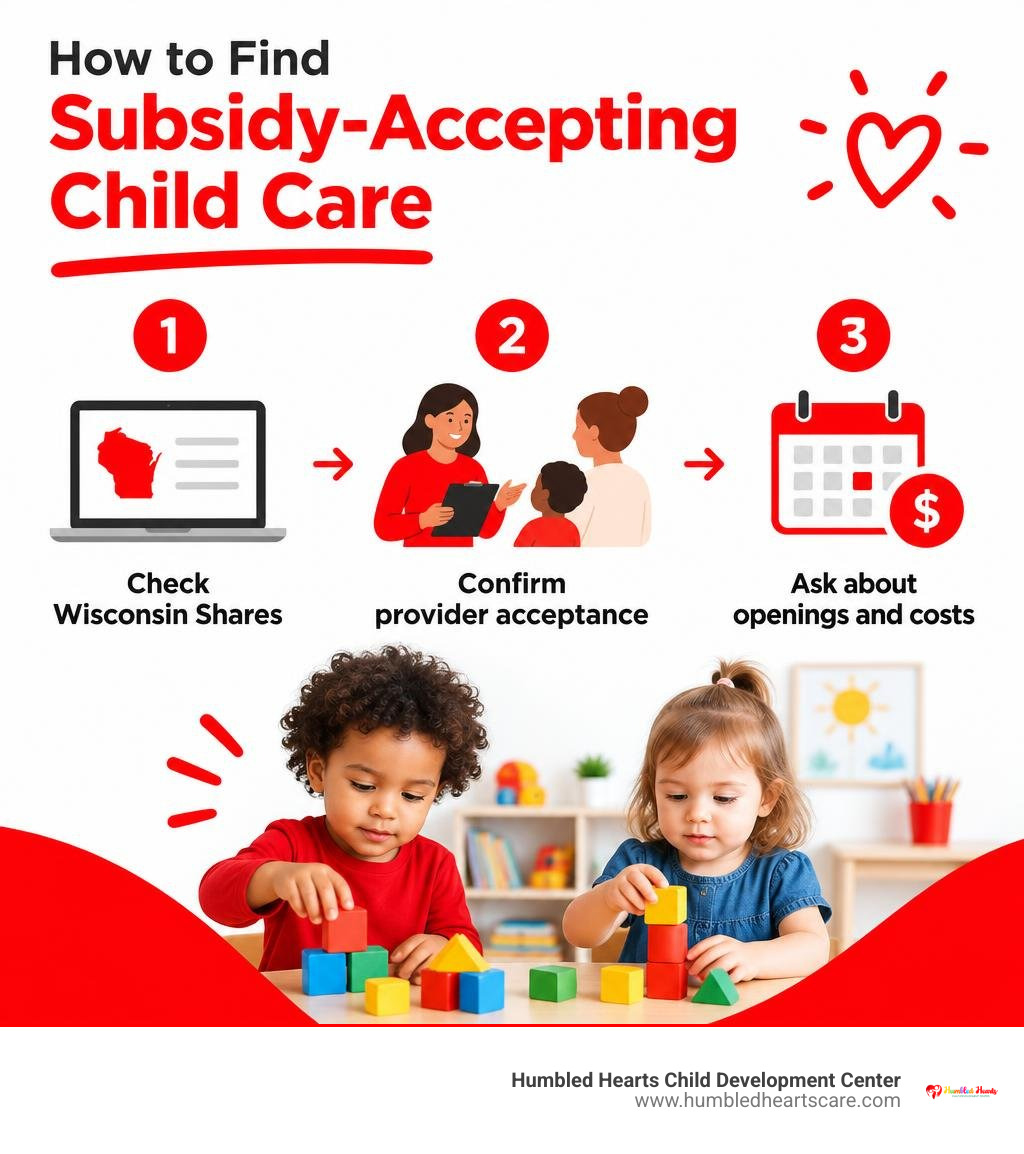
To find a daycare accepting subsidy payments in Milwaukee, start with Wisconsin Shares, which helps eligible families pay part of their child care costs. Then ask each provider whether it currently accepts Wisconsin Shares, has an opening for your child, and can cover the hours you need. Confirm your remaining tuition cost before enrolling.
Humbled Hearts Child Development Center is a Wisconsin DCF-licensed group child care facility at 6003 N. Teutonia Ave. Founded by the Parrett family as an in-home program in 2014, it pairs personalized care with a close partnership between parents and teachers. Ask the center directly about current subsidy acceptance.
7 Essential Factors to Look for in a Daycare Accepting Subsidy

Selecting an early learning environment for your child is one of the most important decisions your family will make. When navigating public child care assistance programs, finding an open slot is only the first step. You also want an environment where your child feels safe, loved, and inspired every single day.
High-quality early education builds the foundation for future cognitive, emotional, and social development. When you are searching for a provider, keep these seven key factors top of mind:
1. Verification of State Licensing and Subsidy Authorization
The first item to check is whether the facility holds an active state license and is officially authorized to accept state child care assistance funds. In Wisconsin, authorized programs meet regulatory health, safety, and background-check benchmarks overseen by the Department of Children and Families (DCF).
Choosing an accredited, state approved daycare in Milwaukee guarantees that your provider adheres to strict staff-to-child ratios, routine building inspections, fire safety guidelines, and required teacher training hours. Subsidies backed by the federal Child Care and Development Fund (CCDF) require centers to uphold these rigorous benchmarks.
2. Flexible Schedules and Operating Hours
Working families often manage varied schedules. Whether you work standard day shifts, early mornings, evenings, or rotating retail hours, your childcare provider must offer hours that align with your routine.
Some centers offer extended day schedules, weekend coverage, or specialized schedules to ensure parents can pursue their careers or education without worrying about drop-off and pick-up conflicts.
3. Comprehensive Early Childhood Curriculum and Whole-Child Development
Affordable childcare should never compromise educational quality. A quality center utilizes a structured, age-appropriate learning curriculum that supports whole-child growth across multiple domains:
- Social & Emotional Skills: Learning how to share, practice empathy, resolve peer conflicts, and express emotions constructively.
- Cognitive & Academic Milestones: Early language acquisition, early math, pre-literacy, and creative problem-solving through intentional play.
- Motor Skills: Fine motor practice via art and sensory tasks, plus gross motor development through active indoor and outdoor recreation.
Enrolling your child in an intentional, play-based preschool sets the stage for lifelong confidence and smooth kindergarten readiness.
4. Transparent Out-of-Pocket Co-Pays and Family Share Rates
State assistance programs help cover a significant portion of early education costs, but many families still have a monthly out-of-pocket "family share" or copayment. Quality centers provide clear, upfront details about their payment structures so there are never any financial surprises.
Reviewing published rates, such as typical daycare prices per week for infants, allows you to calculate your family share accurately alongside your state authorization balance.
5. Nutrition, Transportation, and Enrichment Inclusions
A well-rounded early childhood center supports parents beyond classroom walls. Look for centers that include:
- Fresh, Nutritious Meals: Balanced breakfasts, lunches, and snacks that follow USDA child nutrition standards to keep young minds focused.
- Convenient Transportation: Free local transit within a designated service radius to assist working parents with daily commuting logistics.
- Enrichment Opportunities: Themed learning weeks, milestone celebrations, holiday activities, and year-round field trips that expand your child's horizons.
From early sensory exploration in an early years nursery to interactive school-age outings, these value-added benefits create a rich childhood experience.
6. Inclusive Support for Children with Exceptional Needs
Every child develops at their own unique pace. A compassionate childcare environment embraces children of all abilities, offering individualized support and adaptive care plans for children who have developmental, sensory, or physical considerations.
Teachers and administrators who work collaboratively with speech therapists, occupational specialists, and parents ensure that every child receives the individualized care needed to thrive.
7. Consistent Parent Communication and Safety Standards
You deserve complete peace of mind while at work. High-quality centers prioritize transparent, daily updates through modern digital tools. Look for facilities offering:
- Seamless communication via Procare for real-time photo updates, diaper changes, meal tracking, and learning milestones.
- Safety Certifications: All staff members certified in Pediatric CPR, First Aid, and AED operation.
- Open-Door Culture: A collaborative relationship where teachers and parents share feedback regularly.
Explore dedicated resources for parents to learn how active parent-teacher collaboration enhances your child's daily routine.
Comparing Childcare Facility Types and Licensing Categories

Understanding the differences between licensing structures helps you find the right match for your family's needs and budget.
Choosing a Licensed Daycare Accepting Subsidy vs. Unregulated Options
States categorize early childhood settings based on facility size, safety requirements, and administrative oversight. The table below outlines key distinctions between common childcare categories:
| Feature / Requirement | Licensed Group Childcare Center | Certified / Licensed Family Child Care Home | Religious Exempt Child Day Center |
|---|---|---|---|
| Facility Capacity | Typically 9+ children (up to 60+ depending on license) | Usually up to 4–8 children in a residential home | Varies by religious institution capacity |
| State Health & Fire Audits | Regular, mandatory state safety and fire inspections | Periodic home safety and sanitation reviews | Limited; must meet basic health codes |
| Staff Background Checks | Comprehensive state and federal fingerprinting | Mandatory for provider and adult residents | Varies; basic registry checks typically required |
| Curriculum Standards | Formal early learning and kindergarten readiness plans | Play-based, mixed-age daily routines | Faith-based or values-centered programming |
| Accepts State Subsidies | Yes(when authorized by state subsidy programs) | Yes(when certified/licensed by the state) | Varies by state and individual center policy |
Choosing a licensed group facility ensures that your child benefits from dedicated classroom spaces, age-stratified peer groups, and rigorous state oversight.
Center-Based Facilities vs. Family Child Care Homes
Both center-based facilities and certified family child care homes offer distinctive advantages:
- Center-Based Care: Offers distinct, age-divided classrooms, specialized educational resources, larger social groups, and strict regulatory oversight. It is an ideal setting for preparing children for elementary school routines.
- Family Child Care Homes: Provides a smaller, home-like setting with mixed age groups, which can be comforting for infants and toddlers.
When searching for a building blocks daycare near me, evaluate whether your child will flourish best in a social, structured group classroom or a smaller residential environment.
How to Apply for Wisconsin Shares and State Child Care Assistance
The Wisconsin Shares Child Care Subsidy Program is an essential financial resource that helps working families afford high-quality childcare, early education, and afterschool programming.
Understanding Program Eligibility and Family Income Thresholds
To qualify for Wisconsin Shares, families must meet state income guidelines and engage in an approved activity, such as:
- Employment: Working a regular full-time or part-time job.
- Education & Training: Attending high school (for teen parents), completing technical college courses, or participating in designated workforce development programs.
- Wisconsin Works (W-2) & FSET: Participating in approved state work preparation activities.
- Income Thresholds: Household gross income must fall at or below the established percentage of the Federal Poverty Level (FPL) at the time of initial application.
Step-by-Step Guide to Enrolling in a Daycare Accepting Subsidy
Applying for and using your childcare subsidy is a clear, manageable process:
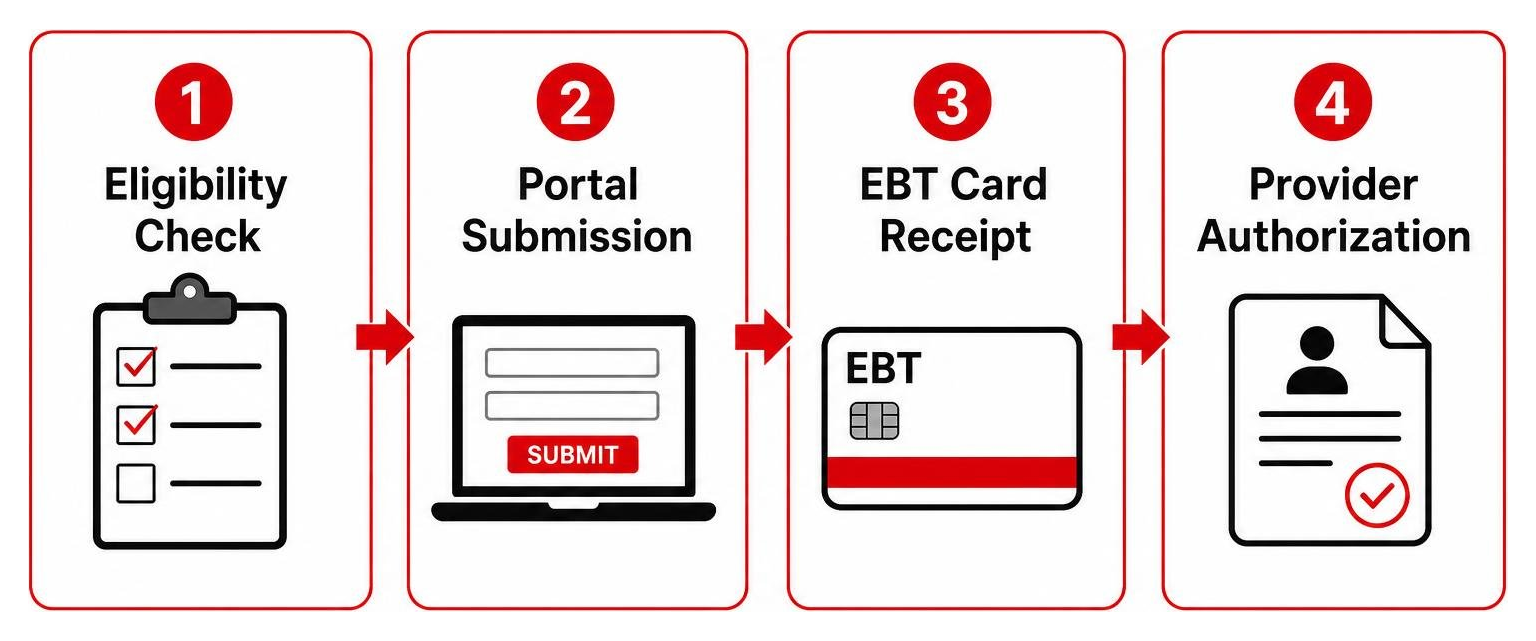
- Apply Online or by Phone: Visit your state’s public assistance portal (such as the ACCESS portal in Wisconsin) or contact your local human services agency.
- Submit Verification Documents: Provide proof of identity, household income (recent paystubs), proof of address, and verification of approved work or school hours.
- Receive Your Authorization: Once approved, your subsidy allowance is loaded onto an electronic benefit card (such as the Wisconsin MyWIChildCare EBT card) each month.
- Select Your Licensed Center: Explore top-rated infant, toddler, or infant daycare programs and confirm that the provider accepts state subsidy funds.
- Authorize Monthly Payments: Authorize your childcare subsidy balance directly to your chosen provider through the parent portal to secure your child’s enrollment.
Frequently Asked Questions About Subsidized Childcare
What is the Wisconsin Shares Child Care Subsidy Program?
Wisconsin Shares is a state-administered program designed to support low-income and working families by paying a designated portion of their monthly childcare costs. Funds are distributed monthly to parents via an electronic benefits system (MyWIChildCare), which parents then allocate directly to their authorized, licensed childcare provider.
How do I know if my local daycare accepts subsidy payments?
You can verify whether a center accepts subsidies by:
- Checking your state’s online childcare registry or contacting your local Child Care Resource & Referral (CCR&R) agency.
- Calling the childcare center directly to speak with their administrative team.
- Inquiring about subsidy authorization during your initial tour and reviewing their licensed daycare admissions process.
Can child care subsidies be used for infant care and afterschool programs?
Yes. Eligible families can apply their monthly subsidy authorization toward full-time care for infants and toddlers, as well as before- and after-school care for elementary-aged children.
Many families rely on subsidized care for enriching afterschool programs in Milwaukee, where children receive dedicated support through an after school program with homework assistance, nutritious afternoon snacks, and creative STEM activities. Subsidies can also be utilized for full-day care during school breaks and summer vacation.
Partner with Humbled Hearts Child Development Center
Finding a nurturing, high-quality childcare provider that works within your family's budget should bring relief, not stress. At Humbled Hearts Child Development Center, we believe that every child deserves a safe, loving, and academically enriching space to grow curious, confident, and kind.
The Parrett family founded Humbled Hearts as an in-home childcare program in 2014. Today, we operate a premier, Wisconsin DCF-licensed group childcare facility at 6003 N. Teutonia Ave, Milwaukee, WI 53209, licensed for up to 60 children.
Our mission is:
"To nurture each child’s unique potential through personalized care, an engaging curriculum, and a supportive environment for academic, social, emotional, and physical growth."
Our vision is:
"To be a leader in Early Childhood Education, ensuring that every child and family thrives through compassionate care, personalized learning, and community support—fostering a love for learning that lasts a lifetime."
Why Families Choose Humbled Hearts:
- Whole-Child Growth & Values: We emphasize gentleness, honesty, respect, predictable daily routines, and mild, supportive moral grounding alongside strong academic preparation.
- Transparent Tuition: For ages 4 weeks–1 year, tuition is $400/week full-time or $300/week part-time. For ages 2–3 years, tuition is $380/week full-time or $290/week part-time.
- Convenient Amenities: Fresh daily meals and snacks, plus free local transportation within our designated service radius.
- Exciting Enrichment: Year-round field trips—including weekly summer field trips—holiday celebrations, birthday recognitions, and themed curriculum weeks.
- Inclusive Environment: Compassionate, individualized care for children with exceptional or special needs.
- Real-Time Connection: Stay informed throughout the day with photo and progress updates through Procare.
We view parents and teachers as a collaborative team, treating every child and family like part of our own.
Ready to discover the difference that personalized, community-focused childcare can make? Apply today at Humbled Hearts or call us directly at 414-539-6513 to schedule your family's visit.