What Preschool Childcare Can Offer Your Child
Preschool childcare combines reliable care with early learning. Look for a safe setting where children can play, build friendships, practice new skills, and follow a predictable routine. Ask how teachers share progress with parents, support each child’s needs, and help children get ready for kindergarten.
At Humbled Hearts Child Development Center, parents and teachers work as a team to support whole-child growth. The Parrett family founded Humbled Hearts as an in-home childcare program in 2014. Today, it operates a Wisconsin DCF-licensed group childcare facility for up to 60 children at 6003 N. Teutonia Ave, Milwaukee, WI 53209. Its approach pairs personalized care with gentleness, honesty, respect, predictable routines, and gentle moral and religious guidance.
Humbled Hearts’ mission is: “To nurture each child’s unique potential through personalized care, an engaging curriculum, and a supportive environment for academic, social, emotional, and physical growth.” Its vision is: “To be a leader in Early Childhood Education, ensuring that every child and family thrives through compassionate care, personalized learning, and community support—fostering a love for learning that lasts a lifetime.”
For families comparing costs, tuition for ages 4 weeks–1 year is $400/week full-time or $300/week part-time. For ages 2–3 years, it is $380/week full-time or $290/week part-time.
Understanding the Landscape of Preschool Childcare
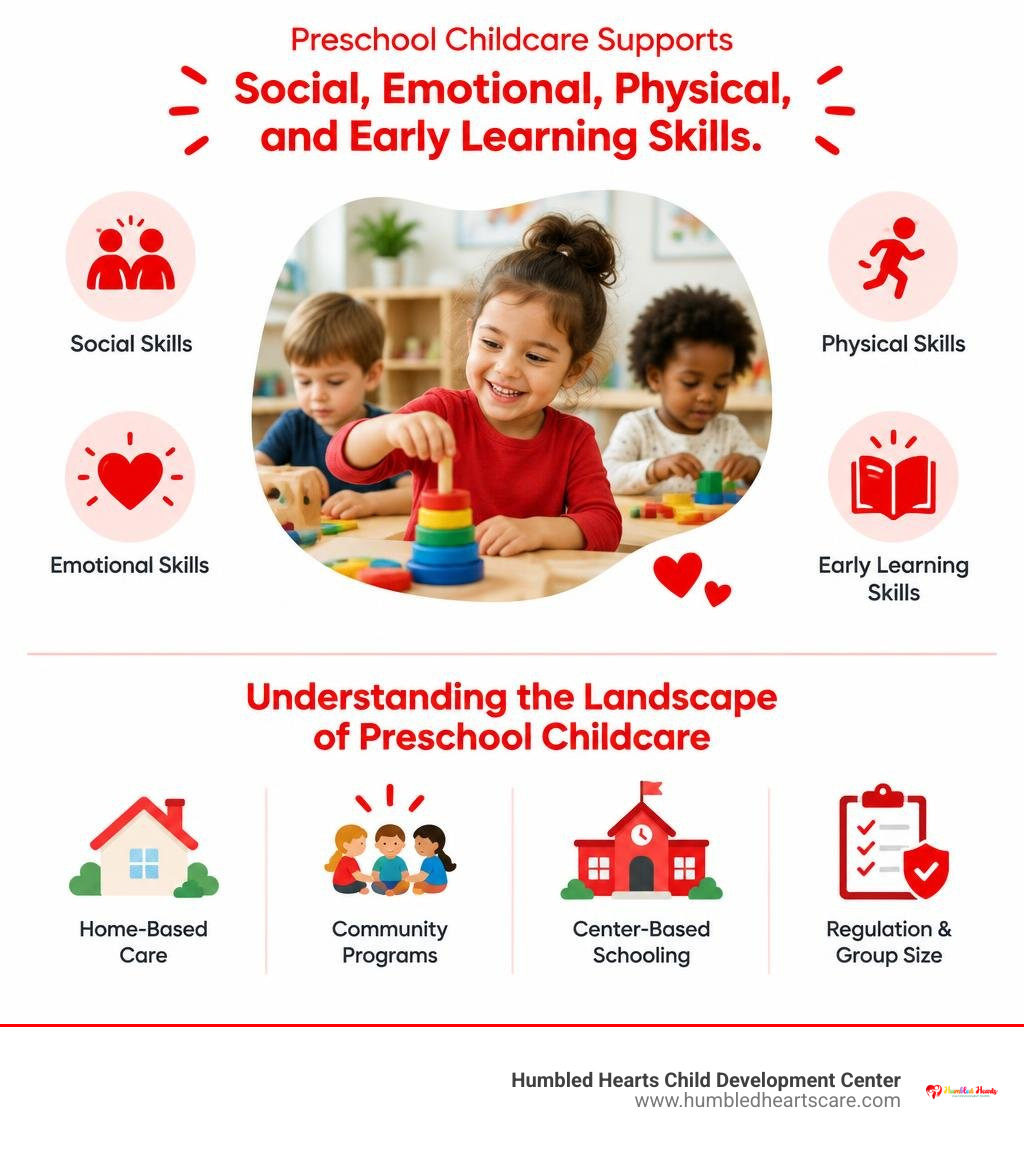
Navigating early childhood education can feel overwhelming with all the acronyms, program styles, and facility models available today. Finding the right environment means understanding how different settings operate, their class sizes, and how they are regulated. Whether you are exploring home-based environments, community programs, or center-based schooling, every setting offers distinct advantages depending on your family's schedule, values, and budget.
| Program Type | Setting & Group Size | Regulatory Oversight | Key Focus & Funding |
|---|---|---|---|
| Licensed Child Care Centers | Dedicated commercial facilities; serves larger groups divided by age | State licensing (e.g., Wisconsin DCF); strict staff-to-child ratios | Structured early learning, whole-child development, predictable full-day schedules; private pay & state subsidies |
| Family Child Care Homes | Residential homes; typically up to 5–8 children | State certification or registration; local home safety rules | Intimate, home-like setting, mixed age groups; private pay & assistance programs |
| State-Funded Preschool (Pre-K / 3-K) | Public schools or contracted community partner sites | State Department of Education & local school districts | Kindergarten readiness, universal access initiatives; state/district funded |
| Head Start & Early Head Start | Dedicated centers, schools, or home-based networks | Federal Head Start Performance Standards & state licensing | Comprehensive early learning, health, and family support; federally funded for qualifying incomes |
State-funded initiatives, such as public Pre-K and expansion initiatives across various states, aim to increase access to early learning for 3- and 4-year-olds. At the federal level, Head Start programs serve children between ages 3 and 5, while Early Head Start provides vital resources for pregnant women, infants, and toddlers under age 3. Eligibility for these federal options is primarily based on household income falling below federal poverty guidelines, participation in public assistance like TANF or SSI, or experiencing homelessness or foster care.
Evaluating Center-Based Preschool Childcare Settings
For many working parents, a licensed child care center provides the ideal blend of structured education, social interaction, and operational reliability. In a dedicated center, classrooms are intentionally designed around specific developmental milestones. Children transition smoothly from early motor exploration to hands-on literacy and math concepts alongside peers of their exact age group.
Choosing center-based early learning offers several distinct benefits:
- Predictable Operations: Dedicated centers have teaching teams and administrative support, ensuring consistent operational hours without sudden closures due to a single caregiver's illness.
- Enriched Socialization: Classrooms with similar-age peers allow children to practice sharing, collaboration, active listening, and conflict resolution during intentional play.
- Comprehensive Facilities: Dedicated facilities offer age-appropriate outdoor playgrounds, indoor gross-motor spaces, and curated learning centers (such as sensory bins, art easels, and reading nooks).
Exploring comprehensive high-quality early education programs helps parents see how structured environments lay the framework for lifelong curiosity and social confidence.

Navigating Financial Assistance and Subsidies for Preschool Childcare
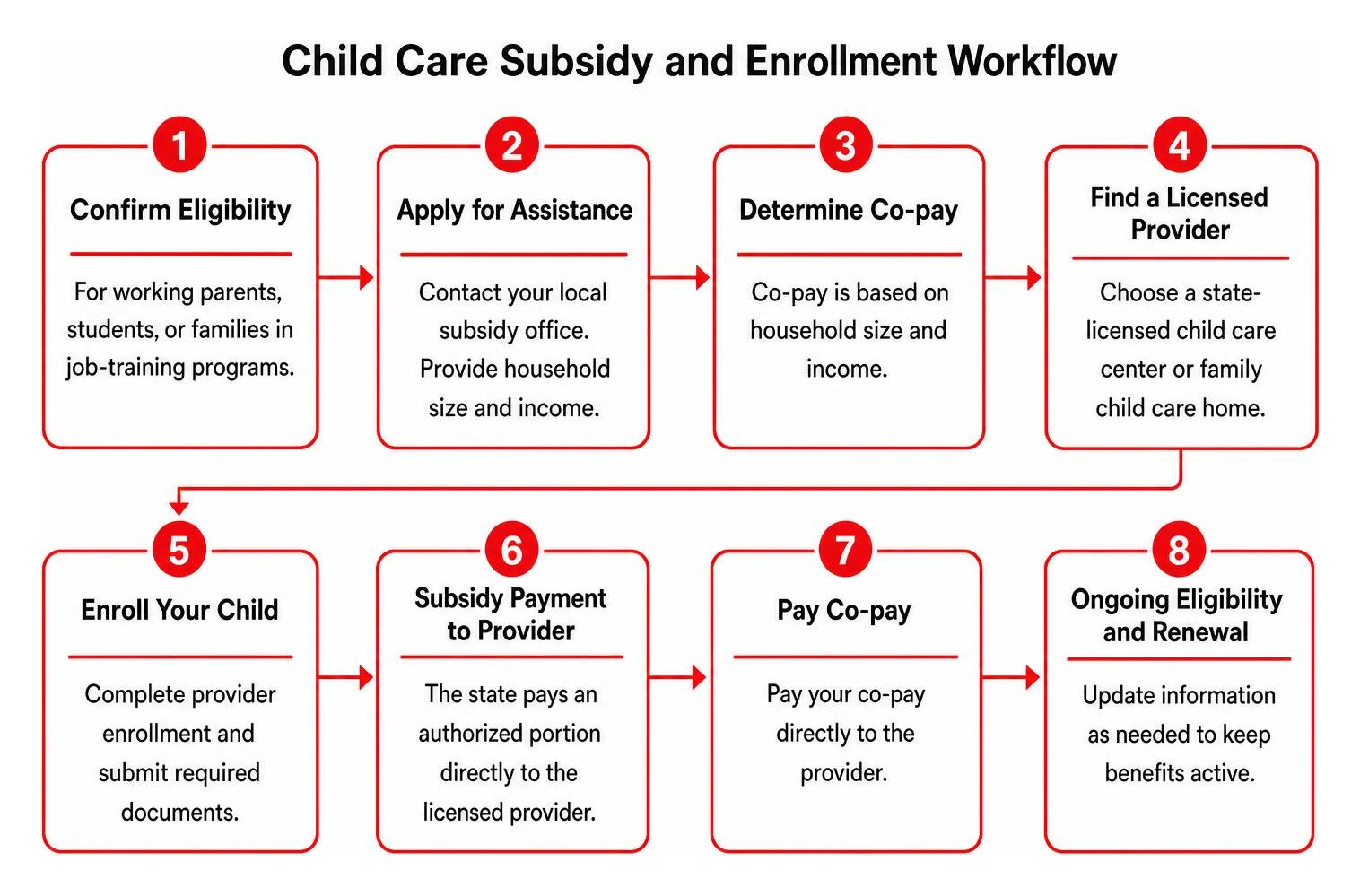
High-quality early education should be accessible to every family. Across the country, states manage Child Care Assistance Programs (CCAP)—such as Wisconsin Shares—to help working parents, students, and families in job-training programs afford licensed care.
Subsidies typically work by paying an authorized portion of child care costs directly to eligible, licensed providers, while the parent covers a modest co-pay based on household size and income. In addition to local subsidy offices, families exploring options in other states can consult state-specific portals like early learning search resources to review regional quality rating frameworks, universal preschool opportunities, and child care subsidy directories.
What to Look for in a Quality Early Learning Program
When evaluating any early childhood facility, looking past the colorful wall art to examine safety standards, teacher interactions, and educational philosophy is essential. A truly exceptional center treats parents as valued partners, ensuring open, continuous dialogue about their child’s physical, social, and emotional milestones.
When visiting centers, keep an eye out for these essential indicators:
- Warm, Responsive Teachers: Caregivers should engage at eye level, listen patiently, and use positive reinforcement.
- Organized, Safe Classrooms: Materials should be easily accessible to children, promoting independence, with clearly defined zones for quiet reading, creative art, and active building.
- Developmental Milestone Tracking: Teachers should observe and document progress in language, motor skills, and social-emotional growth, particularly during formative stages like the developmental guide for two-year-olds.
Health, Safety, and Licensing Regulations
A child’s safety is every parent's foremost priority. State licensing bodies, such as the Wisconsin Department of Children and Families (DCF), set strict rules governing every operational detail—from caregiver background checks and staff-to-child ratios to square footage requirements and emergency plans.
Key safety protocols to verify include:
- Background Checks: Comprehensive fingerprinting and background checks for all staff and regular visitors.
- Safe Sleep & Supervision: Strict adherence to safe sleep protocols for infants (firm mattresses, back sleeping, no loose blankets) and vigilant visual supervision across all age groups.
- Hygiene & Sanitation: Rigorous sanitization schedules for toys, diaper changing stations, meal areas, and frequent handwashing routines for both children and educators.
- Emergency Preparedness: Clear evacuation routes, secure door entry systems, and staff certified in pediatric CPR and First Aid.
Balanced Curriculum and Whole-Child Development
True school readiness goes beyond memorizing the alphabet; it involves building self-regulation, empathy, curiosity, and problem-solving skills. An engaging curriculum balances teacher-guided instruction with open-ended, child-led discovery.
Integrating STEAM (Science, Technology, Engineering, Arts, and Mathematics) into early education allows young minds to explore cause and effect through hands-on building, nature exploration, and sensory play. Early exposure in supportive nursery foundation stages creates a smooth bridge toward advanced problem-solving and kindergarten readiness.
Evaluating Daily Operations, Family Partnerships, and Tuition
The logistical side of child care matters just as much for a stress-free family routine. Seamless daily operations help parents stay focused at work, confident that their child is thriving in a safe, loving environment.
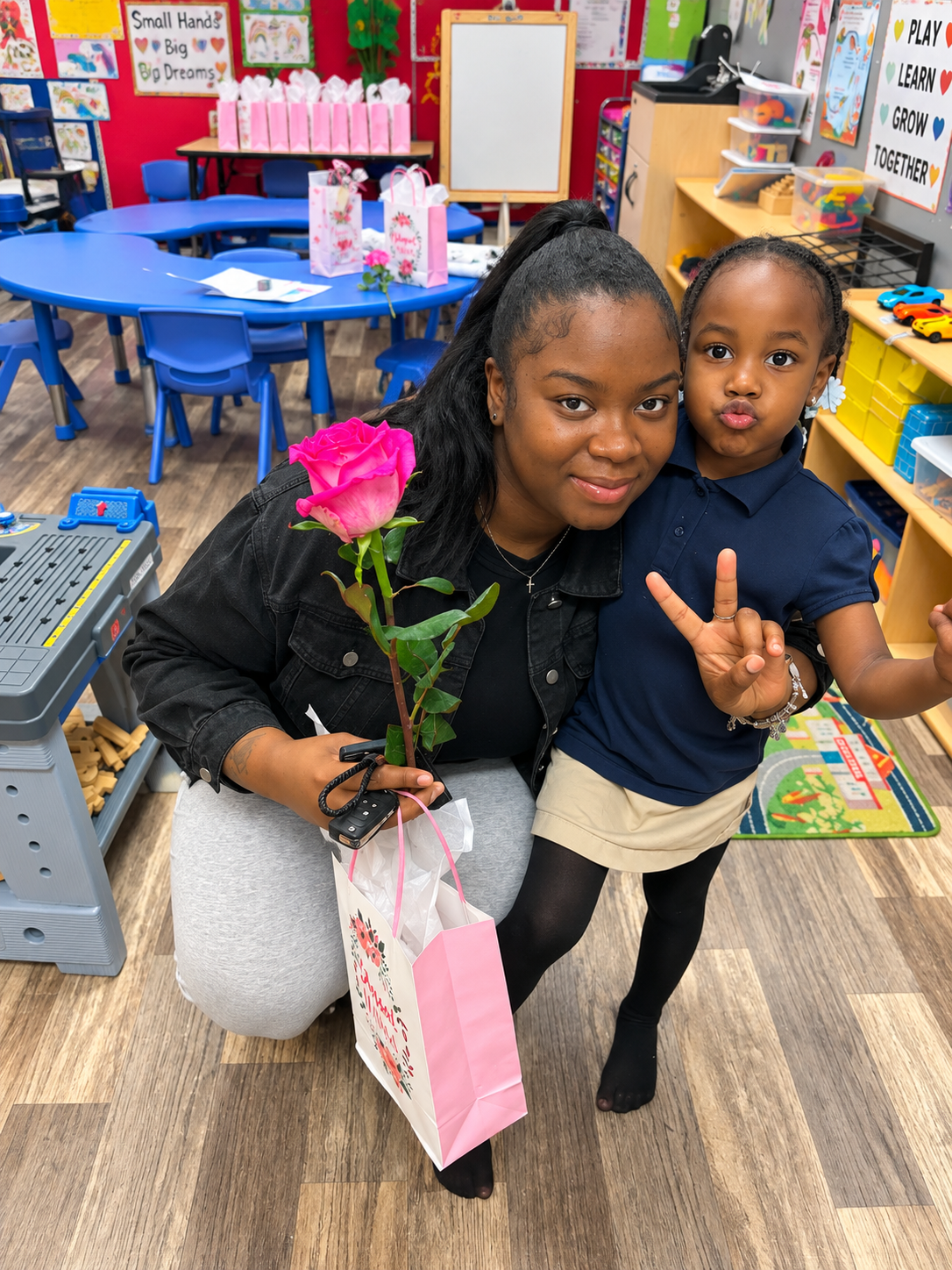
At Humbled Hearts, we believe that treating every child and family like part of our own means removing everyday stressors. We provide:
- Seamless Communication via Procare: Real-time updates, photos, milestone tracking, and direct messaging keep you connected to your child's day.
- Nutritious Meals and Snacks: Fresh daily meals that fuel active bodies and growing minds.
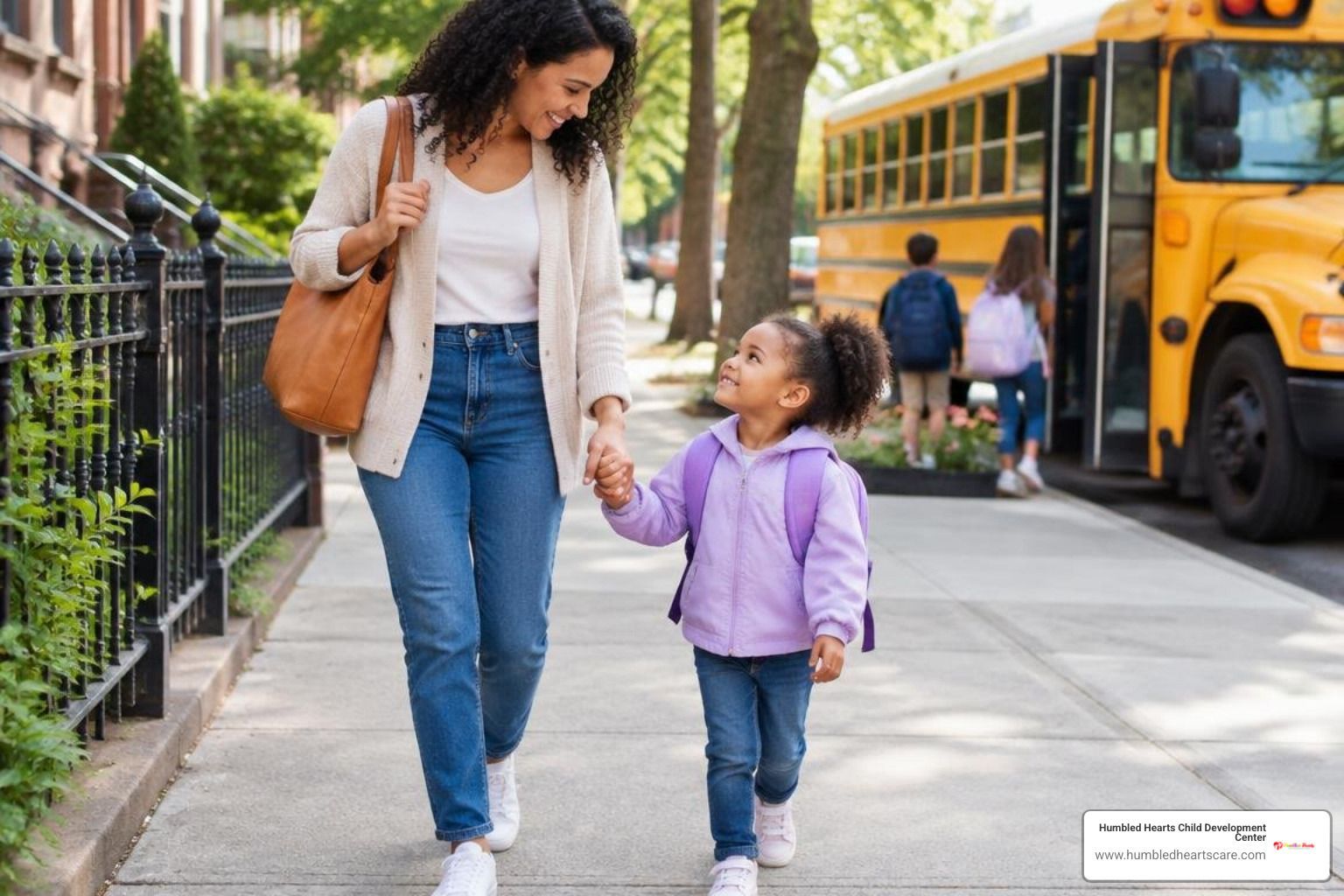
- Free Local Transportation: Safe, reliable transportation within our designated service radius to assist busy working parents.
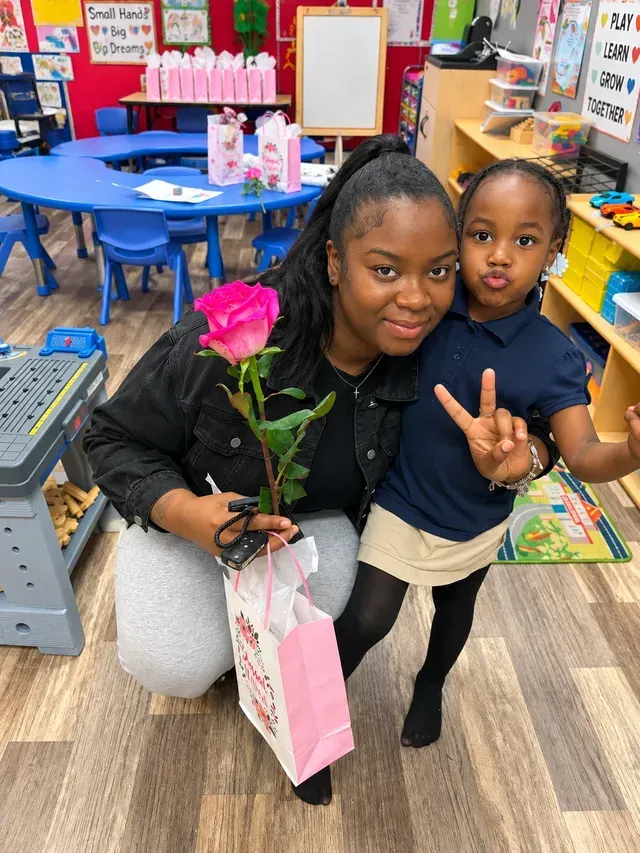
- Enriching Experiences: Year-round field trips, including exciting weekly summer field trips, holiday celebrations, birthday recognitions, and themed cultural enrichment.
- Inclusive Support: Compassionate, individualized care for children with exceptional or special needs.
As children grow, classroom routines naturally evolve to encourage independent decision-making and cooperative play, which you can see highlighted in our three-year-old classroom guide.
Transparent Tuition and Enrollment Timelines
Clear, upfront pricing helps families plan their household budgets with complete confidence. At Humbled Hearts Child Development Center, our tuition schedule reflects our commitment to high-quality, personalized care:
- Infant Care (Ages 4 Weeks – 1 Year):$400 per week full-time | $300 per week part-time
- Toddler & Preschool Care (Ages 2 – 3 Years):$380 per week full-time | $290 per week part-time
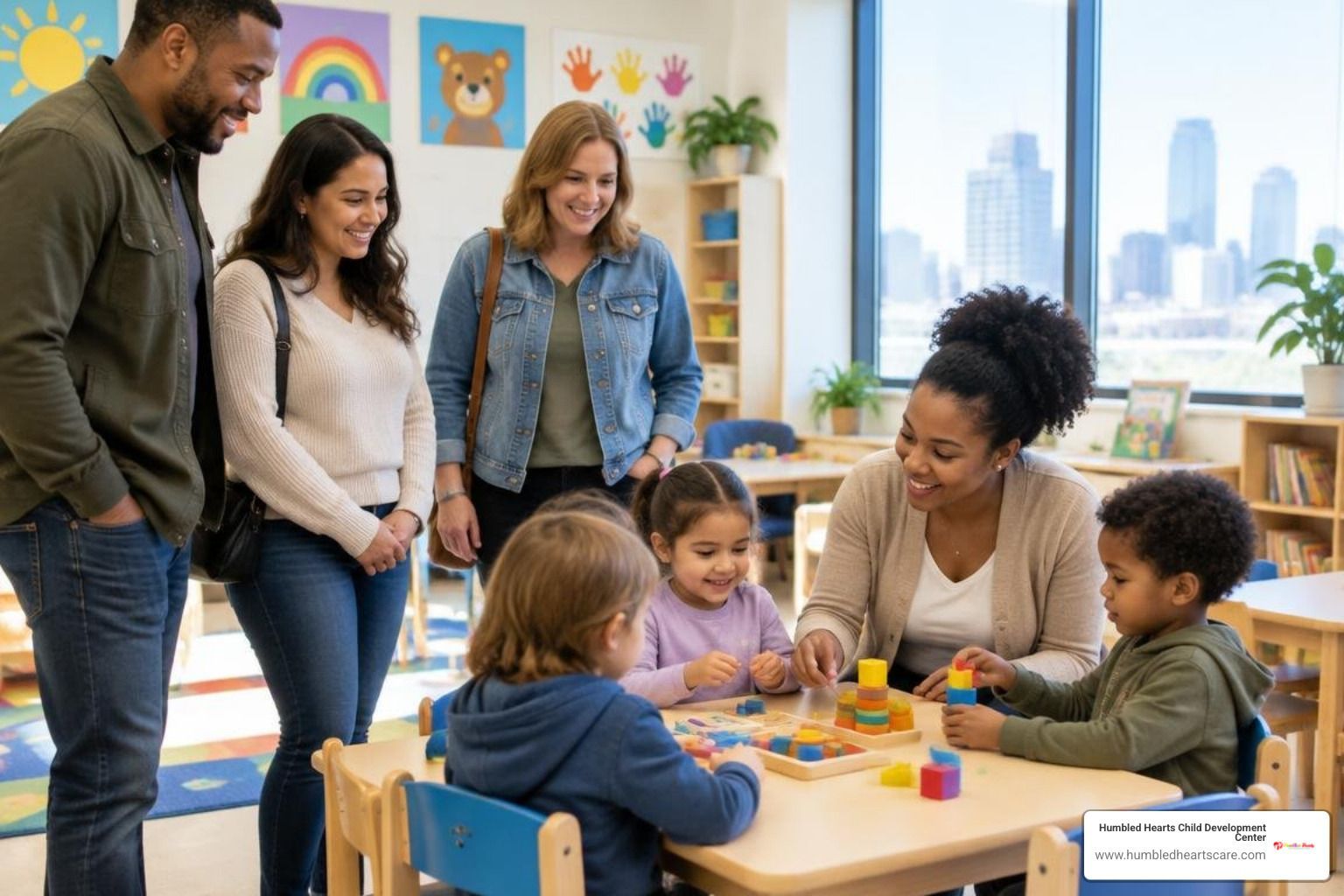
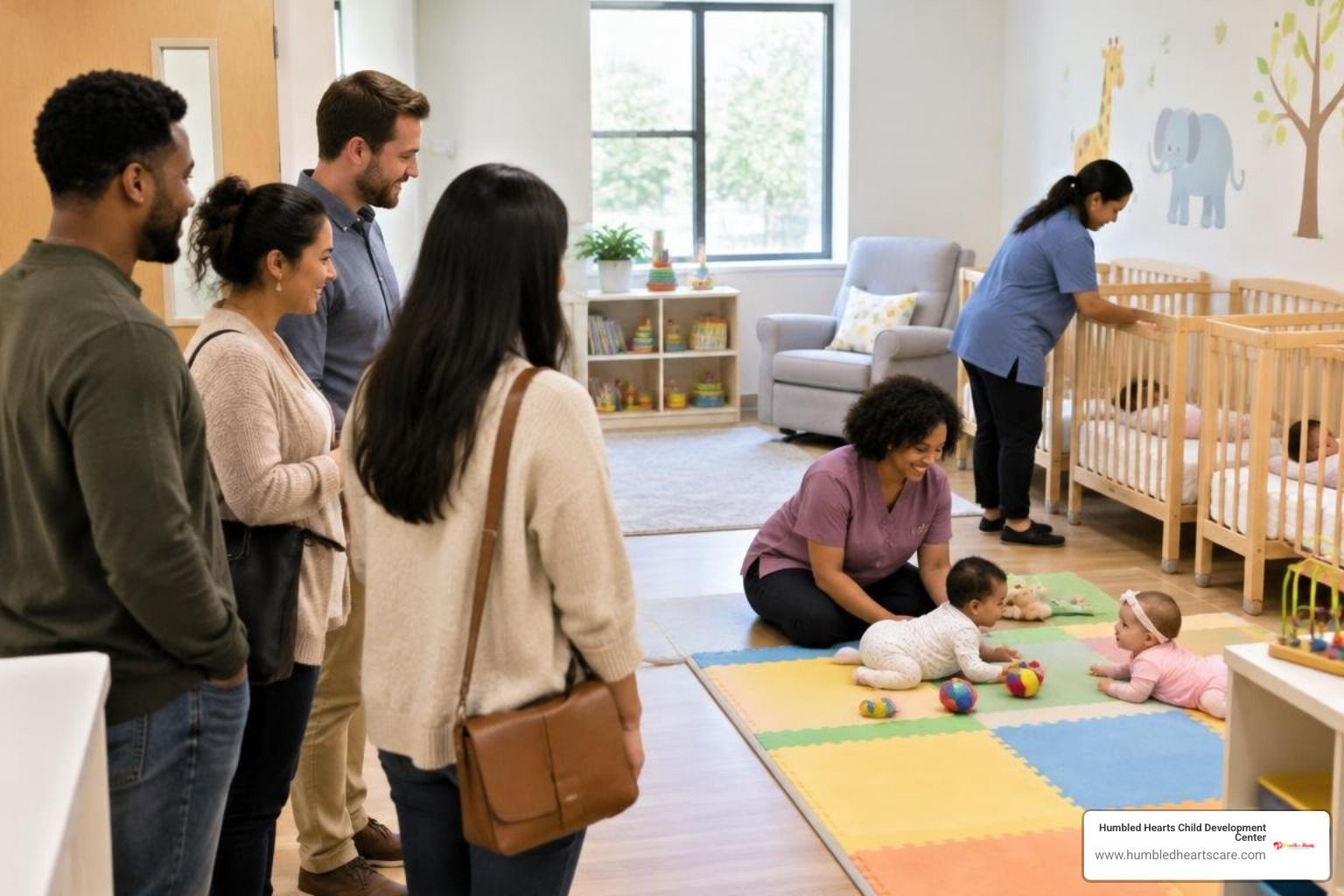
Our team is always happy to guide families step-by-step through our straightforward admissions process, helping you tour our classrooms, meet our educators, and complete registration paperwork seamlessly.
Frequently Asked Questions About Early Childhood Care
What is the ideal age to enroll a child in early learning?
Children can benefit from early education at any stage. Enrolling during infancy or toddlerhood helps establish comfortable routines and secure attachments with secondary caregivers, while starting preschool between ages 2 and 4 fosters essential social-emotional skills, cooperative play, and kindergarten readiness.
How do state assistance programs like CCAP work?
State assistance programs (such as Wisconsin Shares or other state CCAPs) help eligible families pay for early education. Once approved based on income, family size, and work or school hours, the state authorizes a monthly subsidy sent directly to an approved, licensed child care provider. Parents simply pay the remaining difference, if applicable.
How can parents assess the safety and quality of a center?
Parents can review public state licensing inspection records, verify compliance with health and safety standards, confirm teacher background checks and CPR certifications, and schedule an on-site visit to observe classroom cleanliness, supervision, and educator-child interactions firsthand.
Conclusion
Every child deserves a safe, inspiring environment where they can grow curious, confident, and kind. Founded by the Parrett family as an in-home program in 2014, Humbled Hearts Child Development Center has grown into a trusted Wisconsin DCF-licensed group facility licensed for up to 60 children, located at 6003 N. Teutonia Ave, Milwaukee, WI 53209.
Our passionate team works hand-in-hand with parents to nurture the whole child through individualized care, gentle moral grounding, enriching STEAM curricula, fresh daily meals, and free local transportation. We invite you to experience the difference a compassionate, community-focused learning family can make.
Ready to see our classrooms in action? Enroll your child at Humbled Hearts or call us at 414-539-6513 to schedule your personal tour today!