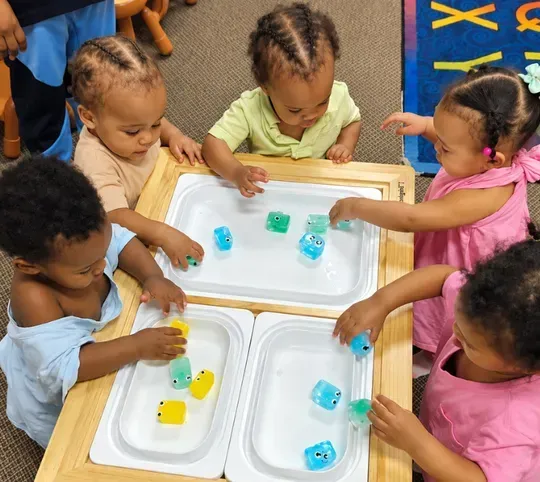
How to Choose Daycare Centers in Milwaukee
When comparing daycare centers in Milwaukee, start with licensing, cost, and fit. Ask whether the center is licensed by Wisconsin's Department of Children and Families, what tuition covers, how teachers communicate with parents, and whether its hours and support meet your child's needs. Then visit. A tour can show you how teachers and children interact and whether the daily routine feels right for your family.
Humbled Hearts Child Development Center is a DCF-licensed group childcare facility at 6003 N. Teutonia Ave, Milwaukee, WI 53209, licensed for up to 60 children. The Parrett family founded it as an in-home childcare program in 2014. Today, teachers and parents work as a team to support each child's whole-child growth through personalized care.
For ages 4 weeks to 1 year, tuition is $400 per week full-time or $300 part-time. For ages 2 to 3 years, it is $380 per week full-time or $290 part-time. These rates give you a starting point for asking what a schedule and budget would look like for your family.
Humbled Hearts' mission is: “To nurture each child’s unique potential through personalized care, an engaging curriculum, and a supportive environment for academic, social, emotional, and physical growth.” Its vision is: “To be a leader in Early Childhood Education, ensuring that every child and family thrives through compassionate care, personalized learning, and community support—fostering a love for learning that lasts a lifetime.”
The ten questions below will help you look past a price or a first impression and choose care with confidence.
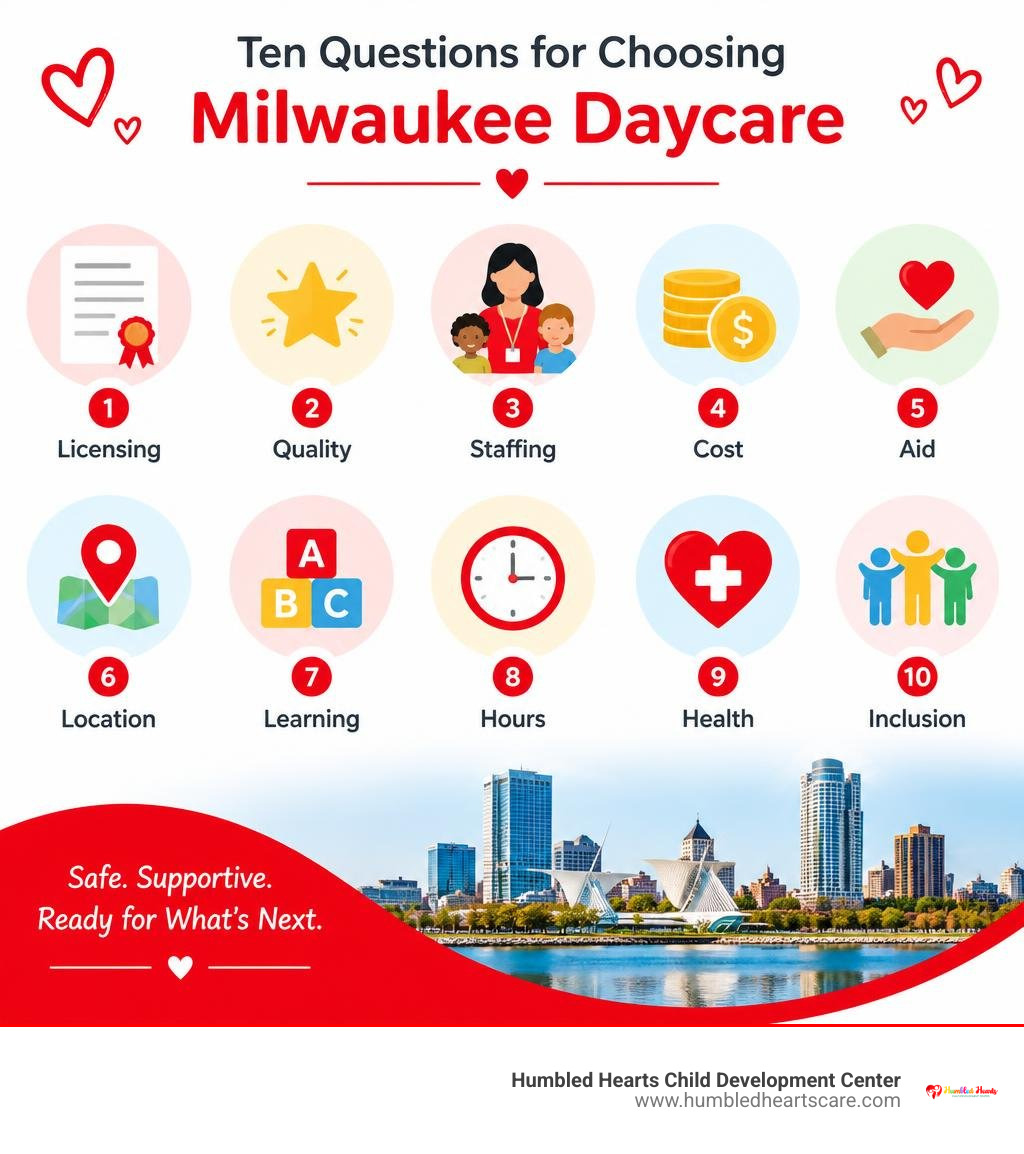
Understanding Licensing and Quality Ratings for Daycare Centers in Milwaukee
Finding the right care starts with knowing how our state oversees and evaluates early learning providers. In Wisconsin, the Department of Children and Families (DCF) governs child care operations to ensure facilities meet health, safety, and operational standards. Across Wisconsin, approximately 3,200 licensed child care providers serve around 150,000 children, with Milwaukee County accounting for more than 1,000 licensed group and family programs.

Selecting a state-approved daycare in Milwaukee guarantees that the facility operates under regular monitoring, background-checked staff, and strict safety guidelines. Wisconsin also evaluates participating providers through YoungStar, the state's five-star quality rating and improvement system. YoungStar measures provider education, learning environment, business practices, and health and wellness standards. When exploring your options, consulting resources like the state's rating guidelines will help you understand how centers earn their credentials and maintain high standards.
1. Is the Center State-Licensed and What Is Its YoungStar Tier?
The first and most critical question to ask is whether the provider holds a current group or family child care license from the Wisconsin DCF. Unregulated or unlicensed care lacks the systematic oversight required to protect young children.
A licensed group center must follow clear state rules, including:
- Regular, unannounced inspections by DCF licensing specialists
- Rigorous background checks for all staff and adult household members (for family care)
- Building safety, emergency preparedness, and sanitation protocols
- Ongoing professional development hours for teachers and directors
Beyond basic licensing, ask about their YoungStar tier. YoungStar rates programs on a 1-Star to 5-Star scale:
- 2 Stars: Meets baseline state licensing health and safety standards.
- 3 Stars: Meets licensing standards and demonstrates additional staff education and quality early learning practices.
- 4 Stars: Shows advanced educator qualifications, structured learning plans, and robust family engagement.
- 5 Stars: Highest quality, featuring educators with formal early childhood degrees, rich learning environments, and exemplary child assessment systems.
Evaluating both licensing status and YoungStar tiers ensures that your child enters an environment committed to accountability and continuous improvement.
2. What Are the Child-to-Staff Ratios and Teacher Turnover Rates?
Low child-to-staff ratios ensure that infants and young children receive responsive, personalized attention. In Wisconsin, state regulations require minimum ratios of 4:1 for infants(four babies to one educator) and 8:1 for preschoolers. These ratios keep classrooms manageable and safe while giving teachers the time needed to nurture each child's individual strengths.
However, ratios are only part of the story; teacher turnover is equally significant. In recent years, early childhood worker wages across Milwaukee have averaged around $24,500 annually, contributing to industry-wide turnover rates near 30% per year. When teachers leave frequently, young children lose the consistent, secure attachments necessary for emotional development.
Ask directors:
- How long have the lead teachers been with the program?
- How do you support your educators to maintain consistent classroom teams?
- How do teachers and parents collaborate to share daily observations and developmental milestones?
When teachers and parents operate as a collaborative team, children gain the secure foundation they need to grow curious, confident, and kind.
Evaluating Costs, Subsidies, and Neighborhood Availability
Childcare represents one of the largest monthly investments for working families in Milwaukee. In Wisconsin, the average annual cost of center-based infant care reaches $13,544, consuming approximately 15% of a typical household's median income.
The table below outlines standard regional costs across age categories:
| Age Group | Average Milwaukee Weekly Rate | State Average Weekly Rate | Typical Full-Time Schedule |
|---|---|---|---|
| Infant (4 wks - 1 yr) | $280 - $400 | $260 | Monday - Friday |
| Toddler (2 - 3 yrs) | $250 - $380 | $220 | Monday - Friday |
| Preschool (3 - 5 yrs) | $220 - $320 | $200 | Monday - Friday |
Understanding tuition structures and financial aid options helps families make sustainable, long-term plans without sacrificing the quality of their child's early education.
3. What Are the Real Costs and Tuition Structures for Daycare Centers in Milwaukee?
When budgeting for child care, always request a clear, comprehensive breakdown of tuition and incidental fees. Understanding daycare prices per week for infants and toddlers ensures you will not encounter unexpected charges for meals, registration, or enrichment activities.
At Humbled Hearts Child Development Center, we maintain complete transparency regarding our rates:
- Infants (4 weeks – 1 year): $400/week full-time or $300/week part-time
- Toddlers & Preschoolers (2 – 3 years): $380/week full-time or $290/week part-time
Ask potential providers:
- Does tuition include fresh daily meals and snacks, or must parents pack them?
- Are there extra fees for supply replenishments, field trips, or late pickups?
- What are the deposit policies and billing schedules (weekly, bi-weekly, or monthly)?
Transparent tuition structures allow you to plan your household budget with confidence.
4. Does the Center Accept Wisconsin Shares Child Care Subsidies?
For eligible working families, the Wisconsin Shares child care subsidy program offers vital financial relief. This program assists low-income families by paying a portion of their child care costs directly through the state's MyWIChildCare EBT card.
When choosing a daycare accepting subsidy payments, ask:
- Is your facility actively authorized to accept Wisconsin Shares payments?
- How do you calculate parent copayments if the subsidy does not cover full tuition?
- What is the process for logging attendance and managing monthly authorizations?
Working with a provider experienced in Wisconsin Shares navigation simplifies the enrollment process and ensures your child receives high-quality early education without financial strain.
5. Where Is the Facility Located Relative to Milwaukee Child Care Deserts?
Access to quality early learning is not evenly distributed across the city. Research indicates that approximately 60% of Milwaukee's neighborhoods qualify as child care deserts—areas where the demand for licensed slots substantially exceeds local supply. Furthermore, the total number of licensed centers in Milwaukee declined by 12% between 2019 and recent counts, dropping from 850 to roughly 750 facilities. Staffing shortages have caused about 40% of centers to operate below licensed capacity, affecting over 10,000 children.

Because roughly 70% of Milwaukee children under age five live in households where all available parents participate in the workforce, choosing a conveniently located center is paramount. Look for providers that offer geographic convenience, accessible public transit routes, or dedicated support such as free local transportation within a designated service radius to keep daily commutes manageable.
Assessing Daily Programs, Scheduling, and Age-Specific Care
The best early learning centers design their daily schedules around the unique developmental rhythms of children. A well-structured schedule balances intentional play, structured learning, physical activity, and restful downtime.
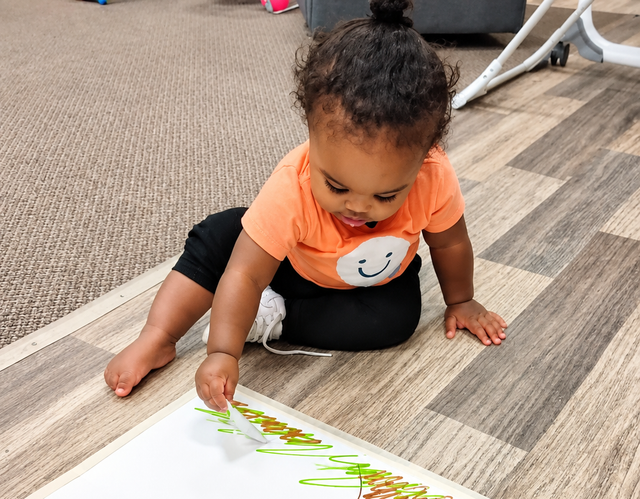
When touring centers, observe how classrooms transition between activities and whether daily schedules accommodate the practical needs of working parents.
6. What Curriculum and Early Learning Frameworks Are Used?
A strong early education curriculum emphasizes whole-child growth, supporting cognitive, social-emotional, physical, and moral development. Rather than relying solely on rigid worksheets, quality centers integrate intentional play and hands-on discovery that foster kindergarten readiness.
When reviewing comprehensive preschool programs, ask:
- Does the curriculum incorporate early STEM concepts, literacy, and creative expression?
- How are developmental milestones tracked and shared with parents?
- Does the center weave character values—such as gentleness, honesty, respect, and predictable daily routines—into classroom interactions?
A thoughtful blend of academic preparation and supportive values ensures that children develop a genuine enthusiasm for lifelong learning.
7. What Hours of Operation and Scheduling Flexibility Are Available?
Milwaukee families have diverse work schedules, ranging from standard daytime office hours to non-traditional shifts in healthcare, manufacturing, and service industries. When reviewing licensed daycare options, evaluate whether their operational schedule matches your family's routine.
Key scheduling questions to ask include:
- What are the earliest drop-off and latest pick-up times allowed?
- Are both full-time and part-time scheduling options available?
- What are the center's scheduled holiday closures and teacher in-service days?
- Is there flexibility if emergency traffic or overtime delays pickup?
Selecting a center with compatible hours prevents daily stress and ensures your child enjoys consistent, unhurried routines.
8. What Age-Specific Programs and Infant Care Options Are Available in Daycare Centers in Milwaukee?
Babies, toddlers, and preschoolers require distinctly different physical environments and care routines. For families seeking developmental daycare programs for infants, infant rooms should provide safe sleep environments, dedicated floor areas for tummy time, and individualized feeding schedules.
As children transition from infancy into toddlerhood and preschool, their classrooms should expand to include sensory bins, creative arts, language corners, and group circle spaces. Inquire about how the center manages age transitions to ensure that moving to a new classroom is a positive, supportive milestone for both child and parent.
Reviewing Health, Safety, and Individualized Child Support
A center's health and safety protocols protect your peace of mind while your child is away from home. From secure entryways to nutritious daily meals, safety encompasses every physical and emotional touchpoint of the day.
9. What Health, Nutrition, and Sanitation Protocols Are Enforced?
Inquire closely about classroom sanitation routines, illness policies, and dining standards. High-standard facilities maintain rigorous hygiene practices to prevent the spread of seasonal viruses and common childhood illnesses.
Ask providers:
- What is your protocol when a child shows symptoms of a fever or infectious illness?
- How often are toys, surfaces, and sleeping cots disinfected?
- Are meals cooked fresh daily on-site, and can the center accommodate food allergies or dietary preferences?
- Do you offer seamless communication via Procare so parents receive real-time updates, photos, and daily activity logs?
Transparent communication and high sanitation benchmarks keep children healthy and parents informed throughout the workday.
10. How Does the Center Support Children with Special Needs and Developmental Delays?
Every child learns and grows at their own pace. A high-quality daycare center embraces individualized care, offering inclusive support for children with exceptional or special needs.
When speaking with the administrative team, ask:
- How do your educators collaborate with therapists, early intervention specialists, or Milwaukee County Birth to 3 programs?
- How do you adjust classroom activities or sensory environments to support diverse developmental needs?
- How do teachers and parents partner together to create individualized learning and behavioral plans?
A nurturing, community-minded provider welcomes every child, ensuring they have the resources and encouragement required to thrive.
Frequently Asked Questions About Daycare in Milwaukee
What is the average weekly cost of infant daycare in Milwaukee?
Center-based infant care in Milwaukee typically ranges between $280 and $400 per week, depending on the facility's location, teacher qualifications, and YoungStar rating. Because infant care requires a strict 4:1 child-to-staff ratio, it carries higher tuition rates than older age groups.
How does the Wisconsin YoungStar rating system evaluate providers?
YoungStar evaluates providers using a 5-star framework based on four core categories: staff educational qualifications, learning environment and curriculum, professional business and leadership practices, and health and wellness standards. Centers must submit documentation and undergo observational evaluations to earn higher tier ratings.
When should parents in Milwaukee begin applying for daycare enrollment?
Given regional capacity constraints and child care desert conditions, families should ideally begin touring and joining waitlists 3 to 6 months before their anticipated start date. Infant spots fill up quickly, making early planning essential for securing your preferred schedule.
Conclusion
Choosing the right early childhood provider is one of the most important decisions you will make for your child's early development and your family's daily peace of mind. By asking targeted questions about licensing, staff consistency, daily routines, curriculum quality, and individualized support, you can confidently find an environment where your child will flourish.
At Humbled Hearts Child Development Center, we have been treating every child and family like part of our own since the Parrett family first founded our program in 2014. Located at 6003 N. Teutonia Ave, Milwaukee, WI 53209, our Wisconsin DCF-licensed group childcare facility is licensed for up to 60 children. We offer personalized care, whole-child growth, fresh daily meals, free local transportation within our designated service radius, year-round field trips (including weekly summer excursions), themed enrichment, and real-time Procare updates.
We would love to partner with your family to help your child grow curious, confident, and kind. Schedule a tour with Humbled Hearts Child Development Center or call us at 414-539-6513 to learn more about our programs and enrollment availability today!