Find Infant Daycare Openings in Milwaukee
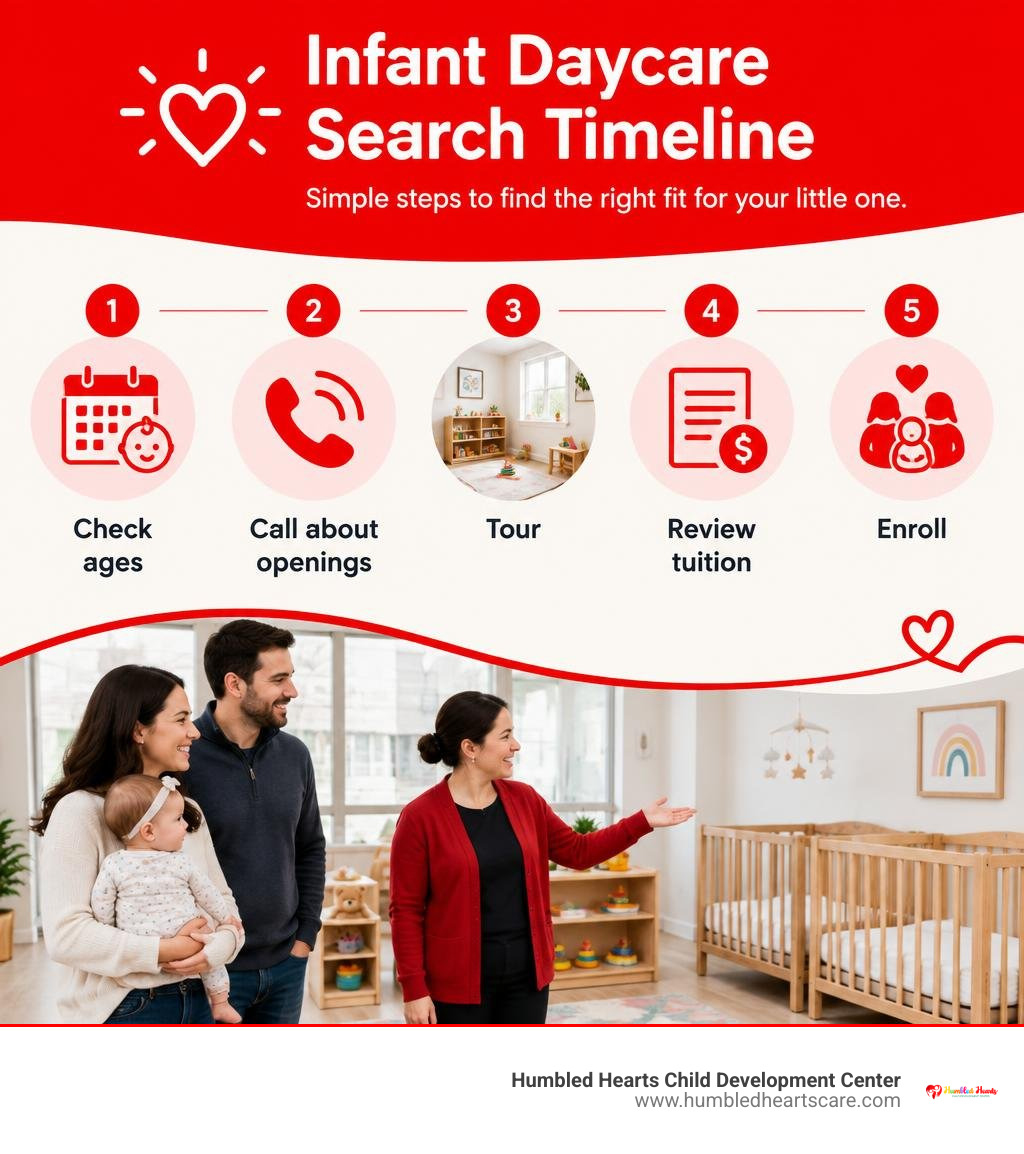
Searching for daycares accepting infants near me in Milwaukee? Check which centers take your baby's age, call to confirm an opening for the days you need, and book a tour. Ask about caregiver ratios, safe sleep, feeding routines, tuition, and how teachers keep parents informed. Many families begin by looking for daycares that accept infants near me, then narrow their list to programs that feel warm, responsive, and well organized.
Humbled Hearts Child Development Center cares for infants starting at 4 weeks at 6003 N. Teutonia Ave, Milwaukee, WI 53209. Infant tuition for ages 4 weeks to 1 year is $400 per week full-time or $300 per week part-time. For ages 2 to 3 years, it is $380 or $290 per week, respectively. Call to confirm current infant availability before visiting.
The Parrett family founded Humbled Hearts as an in-home childcare program in 2014. Today, it is a Wisconsin DCF-licensed group facility for up to 60 children. Parents and teachers work as a team to support each child's academic, social, emotional, and physical growth. Its mission centers on personalized care and engaging learning; its vision is for every child and family to thrive through compassionate care and community support, building a lasting love of learning.
Key Factors to Evaluate in Daycares Accepting Infants Near Me
Leaving your baby in someone else’s care is a major milestone for your family. Finding the right early childhood environment means looking beyond colorful walls and cozy rocking chairs. High-quality centers focus on individualized attention, rigorous health standards, and a curriculum that supports whole-child growth from the very beginning.

When you look into a quality infant care program, evaluate how the educators balance nurturing warmth with educational intentionality. Even the youngest babies benefit from intentional play—gentle sensory activities, tummy time, and responsive conversations that build early cognitive and motor pathways.
What to Look for in Daycares Accepting Infants Near Me for Safe Sleep and Nutrition
A baby's safety rests on strict adherence to sleep and feeding protocols. During your evaluations, look closely at how the classroom operates around daily care routines:
- Safe Sleep Practices: Every infant must have an individual, bare crib with a firm, fitted mattress. Make sure caregivers place babies on their backs to sleep, with no loose blankets, pillows, or plush toys nearby.
- Individualized Feeding Plans: Infants operate on unique hunger cues rather than rigid group clocks. Top programs welcome breast milk or formula bottles prepared according to parent instructions, with clear labels and sanitary storage.
- Sanitization Standards: Check that changing tables are disinfected after every single diaper change and that handwashing stations are strictly utilized.
- Daily Communication: Seamless communication via Procare or similar digital platforms allows teachers to log naps, diaper changes, and feedings in real time so you stay connected throughout the workday.
Understanding Teacher Ratios and Accreditation Standards
Low staff-to-infant ratios ensure your baby receives quick soothing, timely feedings, and personalized care. In Wisconsin, state licensing sets strict caps on group sizes and requires dedicated supervision to guarantee safety.
Accredited programs align with benchmarks established by organizations like NAEYC (National Association for the Education of Young Children). Outstanding providers require their caregivers to undergo comprehensive background checks, pediatric CPR and First Aid certifications, and ongoing training in early child development.
How Much Does Infant Daycare Cost and What Subsidies Exist?
Budgeting for infant care is one of the biggest financial considerations for growing families. According to national childcare cost data from Winnie, full-time infant care varies widely by region, often averaging between $750 and $1,600 or more per month depending on the location, schedule, and facility type.
To help families plan effectively, reputable early learning centers provide transparent infant daycare rates up front.
| Program Age Group | Full-Time Weekly Rate | Part-Time Weekly Rate |
|---|---|---|
| Infants (4 weeks – 1 year) | $400 / week | $300 / week |
| Toddlers (2 – 3 years) | $380 / week | $290 / week |
Many families qualify for state child care subsidies or financial aid that make high-quality care affordable:
- State Child Care Subsidies: Working families in Wisconsin can explore support through state funding programs. You can Apply for Wisconsin Shares Child Care Subsidy Program to offset weekly tuition costs based on household income and activity requirements.
- Flexible Spending Accounts (FSAs): Employer-sponsored Dependent Care FSAs let you set aside pre-tax dollars for eligible child care expenses.
- Child Care Tax Credits: Federal and state tax credits provide end-of-year relief for qualifying child development costs.
5 Essential Steps to Find and Tour Openings Fast
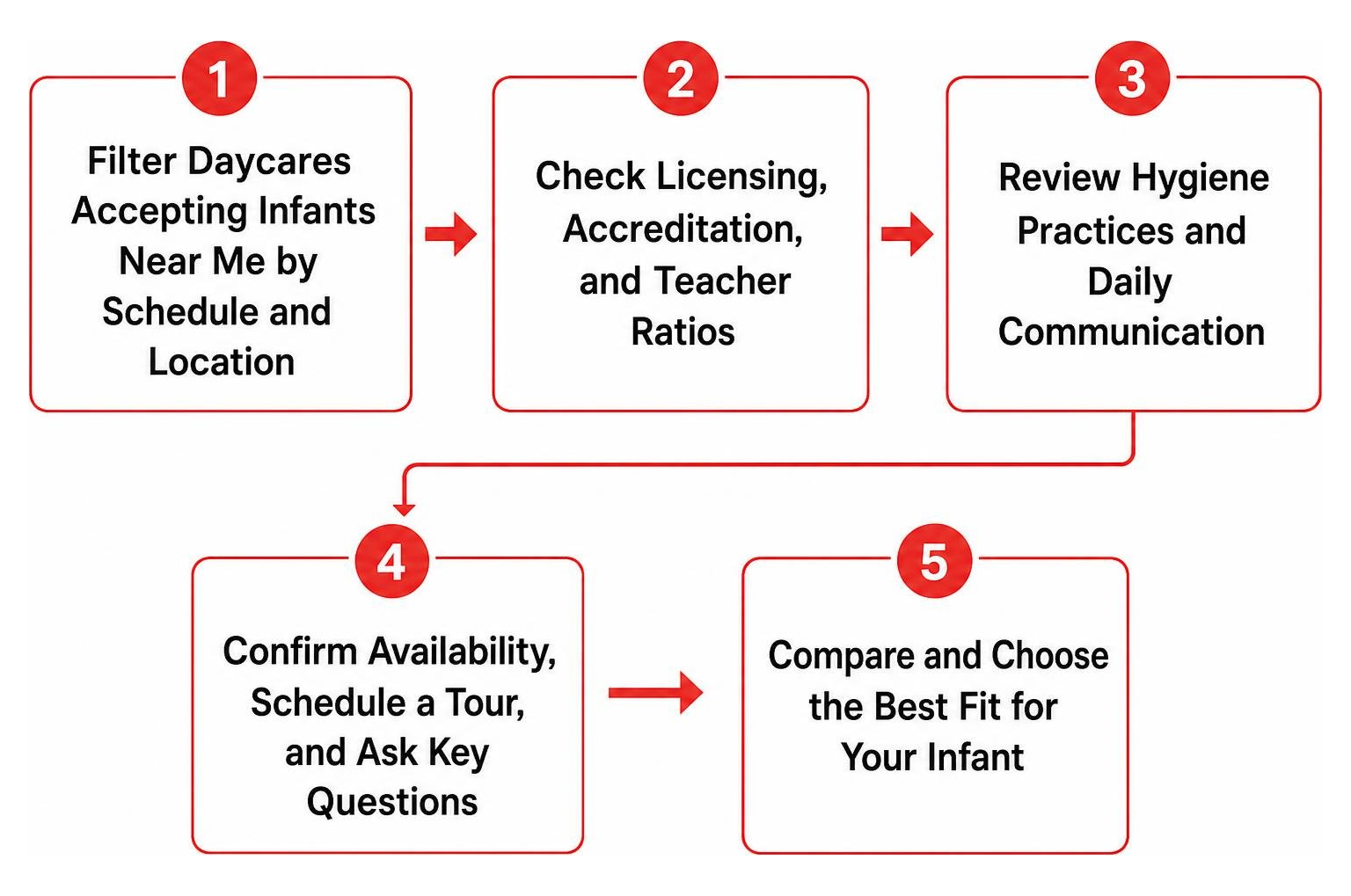
When you need an infant spot quickly, following a structured process helps you find available openings without unnecessary stress.
Many parents explore flexible daycare services to secure schedules that match their work hours and family needs.

Step 1: Filter Daycares Accepting Infants Near Me by Schedule and Location
Begin your search within a realistic radius of your home or workplace. Consider daily commute times, operating hours, and whether you require traditional full-time, part-time, or extended hour infant daycare.
Step 2: Inquire About Immediate Openings and Enrollment Waitlists
Call centers directly to verify infant openings for your baby’s exact age group. Ask about registration timelines and understand the enrollment and admissions process to ensure your paperwork and immunization records are ready for a smooth start.
Step 3: Conduct a Fast In-Person Tour and Observe Caregiver Interaction
An on-site visit gives you the clearest picture of a center’s culture and safety standards. During the tour, observe:
- Caregiver Demeanor: Are teachers speaking warmly and holding infants at eye level?
- Classroom Atmosphere: Is the room calm, clean, well-ventilated, and organized?
- Open-Door Policies: Does the facility welcome parent drop-ins and encourage collaborative partnership?
Step 4: Review Daily Routines and Enrichment Programs
Ask how teachers support physical milestones like rolling over, sitting up, and crawling. A balanced setting incorporates music, sensory play, and gentle moral grounding such as kindness, honesty, and gentleness alongside academic readiness.
Step 5: Secure Your Spot and Submit Enrollment Documents
Infant spots fill quickly due to low child-to-teacher ratio limits. Once you find a center that feels right, submit your registration fee, health history, and emergency contacts promptly to guarantee your baby's place.
How to Prepare Your Baby for the First Day at Daycare
Transitioning your baby into care is an emotional journey for the whole family. A little advance preparation makes the first drop-off smoother for everyone.
- Practice Bottle Feeding: If your baby is primarily breastfed, introduce bottles a few weeks before your start date so they become comfortable feeding from different caregivers.
- Establish a Predictable Routine: Align home nap and wake times closely with the center’s rhythm.
- Pack and Label Essentials: Label all crib sheets, extra changes of clothes, bibs, bottles, pacifiers, and sleep sacks with your baby's name.
- Establish a Loving Goodbye Routine: Create a brief, soothing drop-off ritual. A quick cuddle, a reassuring word, and a confident handoff help your child feel secure.
Frequently Asked Questions About Infant Daycare
What is the youngest age daycares accept infants?
Most standard child care centers enroll infants starting between 6 weeks and 8 weeks of age. Some specialized licensed facilities, including Humbled Hearts, welcome babies starting as young as 4 weeks old to support parents returning to work early.
Do infant daycares offer part-time or flexible schedules?
Yes, many daycares provide flexible part-time care arrangements (such as two or three days per week) alongside traditional full-time enrollment to accommodate varying family work schedules.
How do I apply for child care financial assistance for my baby?
You can apply through your state’s early childhood agency or Department of Children and Families online portal. Eligibility depends on household income, family size, and work or educational hours.
Conclusion
Finding an exceptional early childhood program gives you peace of mind while supporting your baby’s development from their earliest days. At Humbled Hearts Child Development Center, we are dedicated to treating every child and family like part of our own.
The Parrett family founded Humbled Hearts as an in-home childcare program in 2014, and today our Wisconsin DCF-licensed group childcare facility is licensed for up to 60 children. Located at 6003 N. Teutonia Ave, Milwaukee, WI 53209, we provide a warm, nurturing environment where little ones grow curious, confident, and kind.
Our team frames parents and educators as a collaborative team. We offer personalized care, whole-child growth, free local transportation within our designated service radius, fresh daily meals and snacks, and weekly summer field trips. For infants ages 4 weeks to 1 year, tuition is $400 per week for full-time care or $300 per week for part-time care.
Explore our Humbled Hearts early learning community or reach out through our direct inquiry and tour booking page to schedule your visit today. Call 414-539-6513 to secure your infant's spot.