How to Find Daycare Accepting Infants When Spots Are Scarce
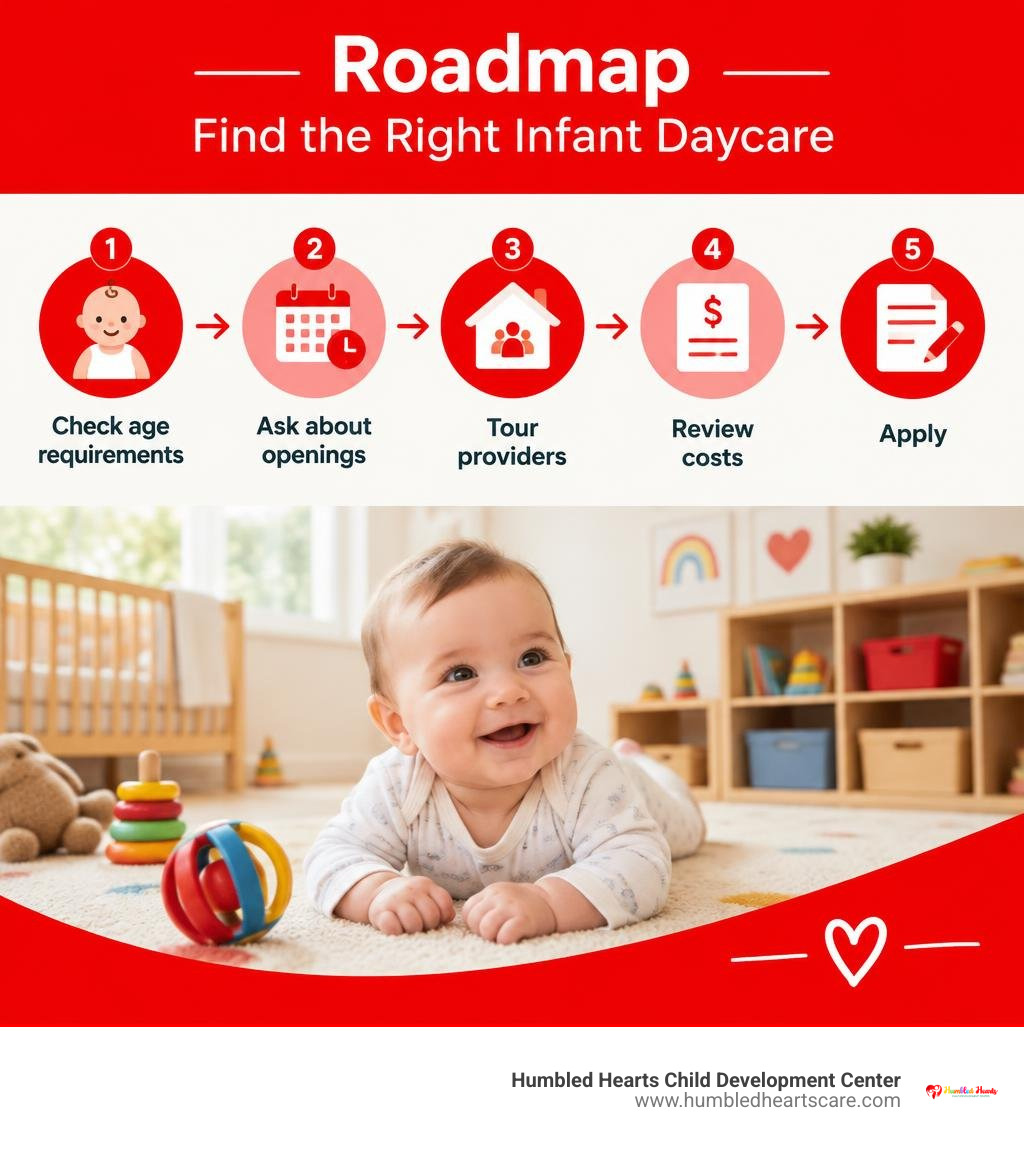
Start with programs that take your baby's age, then ask about openings and waitlists. Contact licensed centers and family childcare homes, ask when the next infant spot may open, and tour more than one option. Check the provider's license, infant sleep practices, and how teachers will share updates with you.
In Milwaukee, Humbled Hearts Child Development Center cares for infants starting at 4 weeks old at its Wisconsin DCF-licensed facility at 6003 N. Teutonia Ave. Infant tuition is $400 per week full-time or $300 part-time; for ages 2-3, it is $380 full-time or $290 part-time. The Parrett family founded Humbled Hearts as an in-home childcare program in 2014. Today, parents and teachers work together to support each child's care and growth. Ask about current availability before making plans.
Types of Infant Childcare Programs and Licensing Standards
Finding early care for a baby begins by understanding the childcare landscape. Depending on your work schedule, location, and family budget, different program structures provide distinct environments for infant care.
| Program Type | Typical Setting | Capacity & Ratios | Regulatory Oversight |
|---|---|---|---|
| Licensed Childcare Center | Dedicated early learning facility | Strict state staff-to-infant ratios (often 1:4); larger peer groups | State licensing agency inspections, background checks, strict health protocols |
| Licensed Family Child Care | Residential home | Small group setting; mixed ages (e.g., up to 8 total children) | Regulated by state or county; background checks; home safety inspections |
| Early Head Start | Center or home-based | Low child-to-teacher ratios; comprehensive family services | Federally funded and monitored; income-based eligibility guidelines |
| License-Exempt Care | In-home or religious settings | Varies by state law; often limited to few unrelated children | Minimal or no routine state inspections; voluntary compliance |
Types of Daycare Accepting Infants and Newborns
Finding a reputable daycare accepting infants requires paying close attention to minimum entry ages. Many commercial centers restrict enrollment to infants who are at least 6 weeks old, allowing time for initial immunizations and postpartum recovery. However, some programs accept younger babies. For example, some home daycares welcome newborns from birth, while specialized centers enroll babies as young as 4 weeks or 1 month old.
Families can explore multiple structural options when seeking daycare programs for infants:
- Center-Based Childcare: Facilities designed specifically for early childhood education, offering dedicated nursery classrooms, commercial sanitization systems, and structured daily routines.
- Family Child Care Homes: Residential providers offering a small, home-like setting with a single consistent caregiver.
- Early Head Start: A federally funded program providing free, high-quality early care for eligible low-income families and pregnant women with children from birth to age 3.
- Bilingual & Immersion Programs: Centers offering early language enrichment through full language immersion from day one alongside play-based learning.
Licensed vs. License-Exempt Childcare Providers
State licensing ensures that an early childhood environment meets baseline safety, square footage, and staffing standards. When evaluating a licensed daycare, parents gain the protection of unannounced inspections by regulatory agencies such as the Wisconsin Department of Children and Families, verified staff background checks (including FBI, Department of Justice, and sex offender registry checks), and mandatory CPR and First Aid training.
License-exempt arrangements—such as care provided by informal babysitters, certain recreation-based programs, or relatives caring for only one or two children—may offer schedule flexibility but lack mandatory external health, safety, and background monitoring. Choosing a licensed facility gives families clear transparency regarding fire safety, safe sleep compliance, and teacher credentialing.
Individualized Infant Learning and Development
High-quality infant care is never just passive supervision. During the first twelve months of life, a baby’s brain forms more than one million new neural connections every second. Programs focused on personalized care and whole-child growth design classroom environments that stimulate visual tracking, auditory processing, motor coordination, and social-emotional bonding through responsive, intentional interactions.
How to Evaluate Quality and Safety in Infant Care
Evaluating infant classrooms requires observing how caregivers interact with babies during daily routines. A nurturing space balances gentle, responsive interactions with strict hygiene and safety rules.

Teachers and parents serve as a collaborative team. When visiting a center, look for classrooms grounded in values like gentleness, honesty, and respect, paired with predictable daily routines that help infants feel secure and understood.
Red Flags and Health Standards at a Daycare Accepting Infants
Infant health standards must be uncompromising. When assessing potential centers, verify that the facility adheres to established pediatric guidelines and state approved daycare standards:
- Safe Sleep Practices (SIDS Prevention): Every infant must be placed to sleep on their back on a firm, flat mattress in a safety-approved crib free of loose blankets, pillows, bumpers, or plush toys.
- Sanitization and Hygiene: Changing tables must be disinfected between every diaper change with state-approved sanitizing solutions. High-touch toys, sensory items, and crib rails should be cleaned and sanitized daily.
- Supervision and Ratios: Low staff-to-infant ratios (such as 1 caregiver for every 4 infants) ensure every baby receives immediate attention when feeding, sleeping, or crying.
- Staff Certifications: Confirm that all classroom staff maintain active Pediatric First Aid and Infant CPR certifications, as well as preventive health and safety training.
Developmental Milestones and Early Learning Support
A strong infant room builds the building blocks of early learning through intentional play, sensory development, and affectionate caregiving. Look for programs that emphasize:
- Tummy Time and Gross Motor Growth: Daily, supervised tummy time strengthens neck, back, and shoulder muscles, preparing infants for rolling, sitting, and crawling.
- Language and Communication: Caregivers who talk, sing, read, and use early sign language help infants connect sounds with meaning.
- Caregiver Consistency: Consistent primary caregivers foster secure attachment, helping babies feel safe enough to explore their surroundings.
- Inclusive Developmental Support: Quality centers provide inclusive support for children with exceptional or special needs, partnering with families and early intervention therapists to help every child thrive.
Step-by-Step Strategy to Find a Daycare Accepting Infants
Securing an infant childcare slot requires a proactive, organized approach. Because infant rooms have strict legal capacity limits, spots fill up quickly.

Navigating Waitlists and Spot Availability
- Start Early: Begin your search during the first or second trimester of pregnancy. Infant waitlists can range from a few weeks to over six months.
- Cast a Wide Geographic Net: Look for providers along your daily commute route, near public transit hubs, or close to your workplace, rather than only in your immediate neighborhood.
- Check Local Openings Aggregators: Utilize regional referral resources and childcare networks to track openings in family daycares and centers.
- Inquire About Rolling Admissions: Some centers maintain rolling admissions and prioritize families who need immediate care or who are flexible with part-time schedules (such as 2 or 3 days per week).
- Follow Up Regularly: Check in with center directors every few weeks to confirm your continued interest and ask if upcoming transition dates have freed up a crib.
Financial Assistance Programs, Subsidies, and Typical Costs
Childcare costs vary widely depending on program format, location, and the age of the child. Infant care requires the lowest teacher-to-child ratios, making it the most resource-intensive age group.
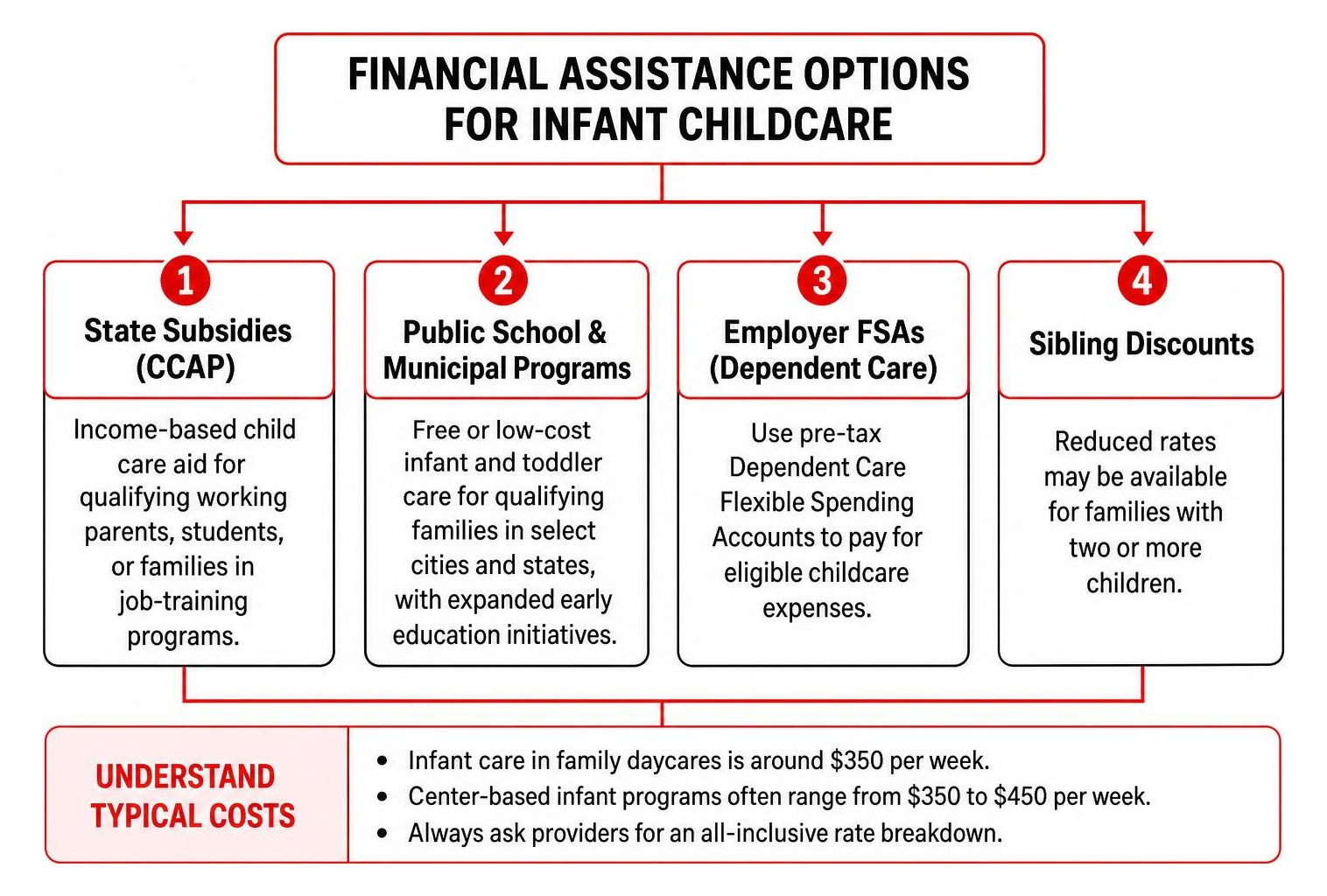
Families can explore multiple paths to make infant care affordable:
- Child Care Assistance Program (CCAP): Most states offer child care subsidies for qualifying working parents, students, or families in job-training programs. For instance, programs in Illinois and Wisconsin help offset weekly childcare costs when families select approved, licensed providers.
- Public School & Municipal Programs: Major urban areas increasingly offer expanded early education. In New York City, Extended Day and Year (EDY) programs offer free or low-cost infant and toddler care for qualifying families, while states like New Jersey fund free preschool starting at age 3 in designated districts.
- Tuition Transparency: Always ask providers for an all-inclusive rate breakdown. Center-based infant programs often range from $350 to $450 per week depending on location and services provided. Reviewing daycare prices per week for infants helps families plan their household budget effectively.
Touring Facilities and Streamlining Admissions Paperwork
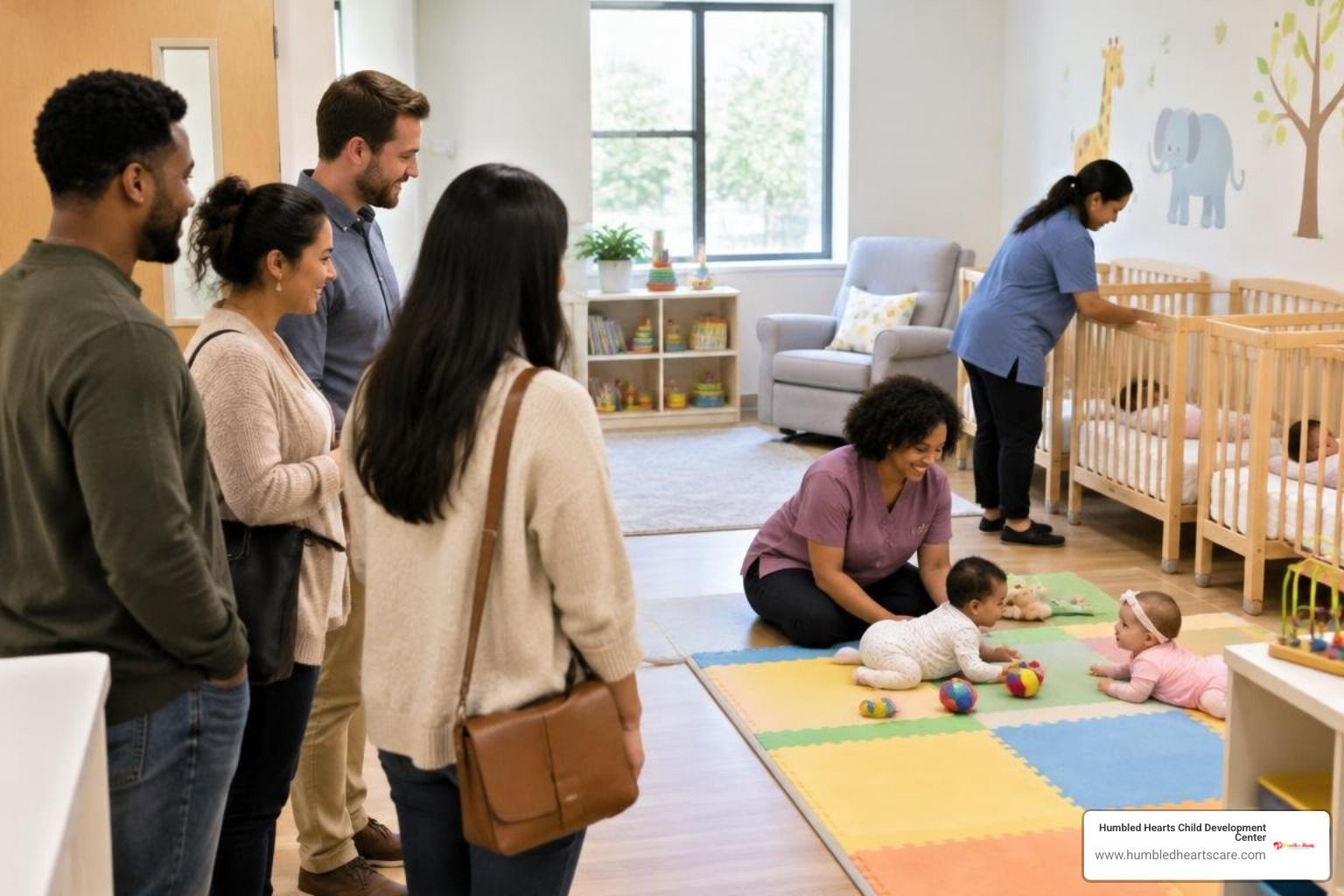
Before finalizing your child’s enrollment, schedule an in-person tour to observe the classroom dynamics firsthand:
- Observe Teacher-Child Interactions: Are caregivers down on the floor interacting with the babies, or are infants left in swings and bouncers for prolonged periods?
- Inspect Cleanliness and Security: Check for secure facility entry codes, designated shoe-free zones in the infant room, clean diapering stations, and individual, labeled storage for bottles.
- Review Daily Communication: Ask how the center shares daily feeding, nap, and diapering updates. Many modern centers use parent apps to provide real-time updates and photos.
- Prepare Medical and Enrollment Paperwork: Gather your infant’s birth certificate, immunization records, emergency contacts, and infant feeding plan in advance to complete your infant admissions packet quickly once a spot opens.
Frequently Asked Questions About Infant Daycare Openings
At what age can an infant legally start daycare?
In most states, licensed childcare centers can accept infants as young as 4 to 6 weeks old, allowing time for initial pediatric checkups. Some licensed family child care homes and specialized early learning centers accept newborns earlier, provided they meet state licensing guidelines and infant health requirements.
How does the Child Care Assistance Program (CCAP) work for infant daycare?
State-administered Child Care Assistance Programs provide financial subsidies directly to licensed, state-approved childcare centers on behalf of eligible families. Eligibility is typically based on household income, family size, and qualifying activities such as full-time employment, educational pursuits, or job training. Parents may be responsible for a modest monthly copay depending on state income brackets.
What supplies do parents need to provide for infant care?
Parents typically provide daily personal essentials, including:
- Pre-mixed bottles of formula or prepared breast milk labeled with the child's full name and date
- A package of diapers and diaper rash cream
- Two to three spare changes of weather-appropriate clothing
- Sleep sacks (swaddles with loose fabric are typically prohibited in licensed centers)
Many licensed facilities provide cribs, linens, sanitized wipes, and fresh meals once infants transition to solid foods. You can reach out directly when contacting staff for checklists to confirm specific classroom packing lists.
Conclusion: Securing Quality Care for Your Infant's Early Milestones
Finding a trusted infant daycare requires diligence, but knowing what safety standards, licensing protections, and nurturing practices to look for helps you choose the right environment for your family.
At Humbled Hearts Child Development Center, we understand that leaving your baby in someone else's care is a major milestone. Founded by the Parrett family as an in-home childcare program in 2014, Humbled Hearts has grown into a Wisconsin DCF-licensed group childcare facility licensed for up to 60 children, located at 6003 N. Teutonia Ave, Milwaukee, WI 53209.
Our mission is: “To nurture each child’s unique potential through personalized care, an engaging curriculum, and a supportive environment for academic, social, emotional, and physical growth.” We live out our vision every day: “To be a leader in Early Childhood Education, ensuring that every child and family thrives through compassionate care, personalized learning, and community support—fostering a love for learning that lasts a lifetime.”
We treat every child and family like part of our own, emphasizing gentleness, honesty, respect, predictable daily routines, and mild, supportive moral grounding alongside developmental readiness. Families at Humbled Hearts benefit from:
- Personalized Infant Care: Full-time infant care (ages 4 weeks–1 year) at $400/week or part-time at $300/week ($380 full-time / $290 part-time for ages 2–3)
- Daily Peace of Mind: Seamless communication and real-time activity and milestone updates via the Procare app
- Nutritious Dining: Fresh daily meals and snacks prepared on-site
- Convenient Access: Free local transportation within our designated service radius
- Enriching Community: Year-round celebrations, birthdays, themed enrichment, and field trips, including weekly summer field trips for older children
When you are ready to partner with a team dedicated to helping your child grow curious, confident, and kind, apply today to secure an infant spot or schedule a tour to meet our caring teaching team.