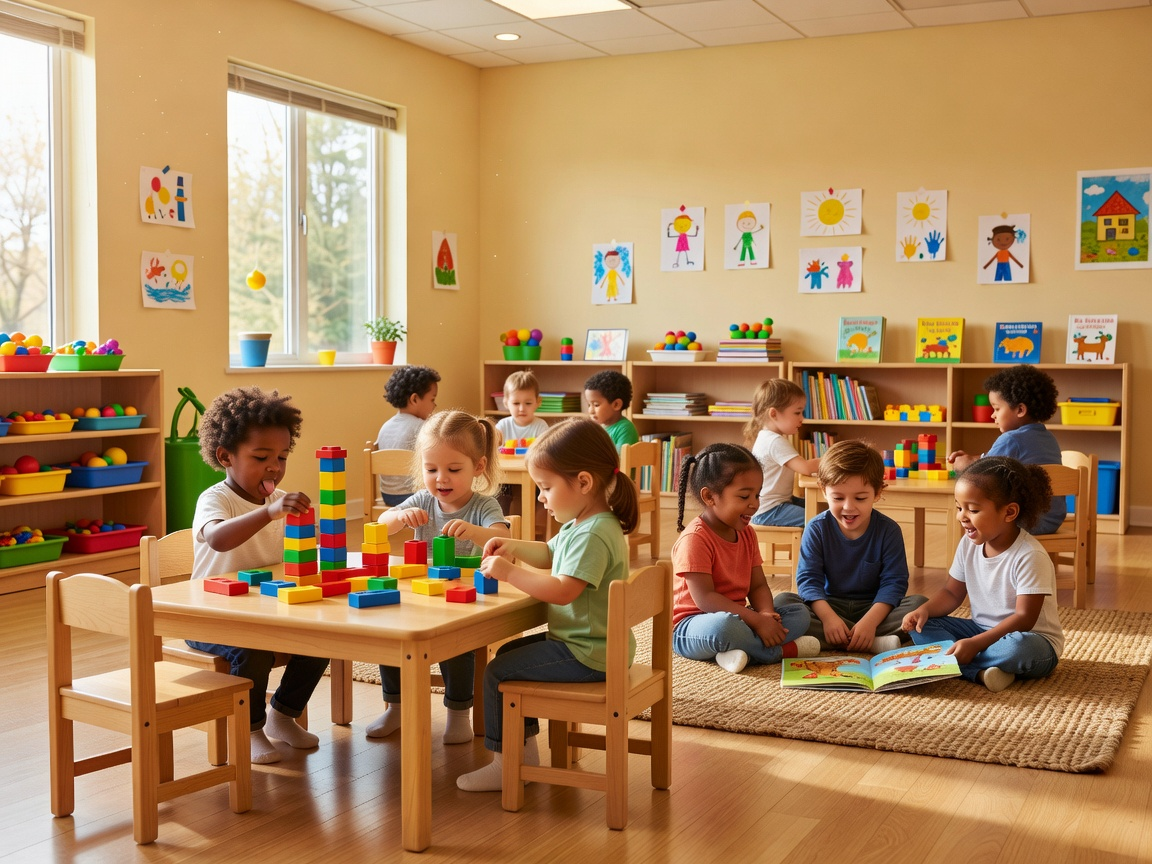
Finding Elementary Tutoring in Milwaukee
Start with the skill your child needs help with. For reading support, ask your school about small-group tutoring or local volunteer programs. For help in several subjects, compare private in-home and online tutors. If your child needs specialized support, ask how the tutor adapts lessons and works with your child's teachers.
Look for a tutor who sets a clear goal, meets with your child consistently, and shares progress with you. Parents, teachers, and tutors work best as a team. At Humbled Hearts Child Development Center, we value that same partnership in helping children build confidence and a love of learning.

Why Milwaukee Elementary Tutoring Is Critical for Young Learners
Early childhood education lays the foundation for a lifetime of curiosity and academic success. When children transition into elementary school, they encounter foundational shifts in how they learn—moving from "learning to read" to "reading to learn," and building structured math logic. In Milwaukee, targeted academic support is essential for helping young students navigate these critical milestones.
According to statewide assessment trends from the 2024 Nation's Report Card (NAEP), only 31% of fourth graders in Wisconsin are proficient in reading, and only 37% of eighth graders demonstrate proficiency in math. These benchmarks highlight how early gaps can widen over time if young learners do not receive timely, individualized intervention.
High-impact tutoring acts as a powerful bridge. Evidence across Wisconsin shows that structured, high-dosage tutoring can help elementary students gain the equivalent of an extra half-year to nearly a full year of learning. Tutoring ensures children master foundational concepts before falling behind, restoring their confidence inside and outside the classroom. Understanding local academic needs also requires examining recent school resources, as detailed in this report on Milwaukee area pandemic relief and learning recovery funding.
Addressing Reading and Math Benchmarks Through Milwaukee Elementary Tutoring
When students struggle with early literacy or math, traditional large-classroom instruction may move too quickly for their individual pacing. Structured milwaukee elementary tutoring provides the one-on-one attention necessary to diagnose specific skill deficits and reinforce key concepts.

Early elementary academic interventions focus on:
- Phonemic Awareness and Phonics: Ensuring children can connect sounds with letters and decode unfamiliar words effortlessly.
- Reading Fluency and Comprehension: Guiding students to read smoothly and understand narrative context rather than simply memorizing sight words.
- Multi-Sensory Math Strategies: Using counting blocks, visual charts, and hands-on manipulatives to make abstract addition, subtraction, and place value concrete.
- Individualized Pacing: Giving children room to ask questions, make mistakes in a safe environment, and master concepts step-by-step.
Statewide results show the power of targeted learning: during the 2025–26 academic year, 64% of participating students exceeded their reading growth targets through the Wisconsin Reading Corps, while 81% demonstrated measurable math growth through Math Corps. When instruction matches a child's learning pace, academic anxiety fades and genuine curiosity takes its place.
The Transition from Emergency ESSER Funding to Sustainable Academic Support
Over recent years, federal Elementary and Secondary School Emergency Relief (ESSER) funds played a central role in financing academic recovery. Milwaukee Public Schools (MPS) received approximately $786.42 million across three rounds of federal ESSER relief, allocating funds toward technology, out-of-school learning, mental health support, and district-wide tutoring initiatives.
As pandemic relief dollars wind down, schools and families are turning toward community-driven, sustainable educational models. Community partnerships and local volunteers have stepped up to bridge the funding gap, as highlighted in news coverage on community literacy tutoring recruitment. For parents, finding reliable, ongoing academic support means exploring diverse tutoring formats that fit their family's daily schedule.
Essential Tutoring Models and Academic Interventions in Milwaukee
Every child learns differently, and no single tutoring format works for every family. Milwaukee offers several distinct tutoring models tailored to different academic needs, budgets, and schedules.
| Tutoring Model | Typical Student-to-Tutor Ratio | Delivery Format | Key Benefits | Best Suited For |
|---|---|---|---|---|
| High-Impact In-Person / Volunteer | 1:1 or 1:2 | In-school / Community Centers | Evidence-based, structured, low-to-no cost | Foundational literacy and math benchmark recovery |
| Private In-Home / Individual | 1:1 | In-person at home | Customized curriculum, flexible pacing | Comprehensive multi-subject help and study habits |
| Online & Digital Platforms | 1:1 or small group | Virtual classroom / Whiteboard | Flexible scheduling, access to specialized tutors | Tech-savvy learners needing flexible evening hours |
| Specialized Multi-Sensory | 1:1 | Specialized centers / In-person | Multi-sensory phonics, speech/language support | Exceptional learners, Down syndrome, neurodiverse students |
High-Impact In-Person and Volunteer Literacy Programs
High-impact tutoring programs are embedded within community initiatives and school partnerships across Wisconsin. Since 2015, structured volunteer and high-impact tutoring programs have helped more than 32,600 Wisconsin students get back on track academically.
These programs pair trained community volunteers and academic coaches with elementary students for structured, 30-to-45-minute sessions several times per week. By following systematic phonics frameworks and tracking progress through regular data benchmarks, volunteer-led models help close reading gaps while building warm, supportive mentorships for young learners.
Private In-Home and Individual Academic Coaching
Private in-home tutoring gives families dedicated, one-on-one instruction tailored around their child’s classroom curriculum and personality. Private tutors can adapt lessons on the fly, guide children through daily assignments, and build organizational skills.
Core areas supported by private elementary tutors include:
- Early reading fluency, vocabulary building, and spelling
- Foundational math concepts, word problems, and number sense
- Sentence structure, handwriting, and early creative writing
- Homework routines, organization, and focus strategies
- Test-taking confidence and classroom readiness
Private coaching allows tutors to work directly with parents to reinforce what children are learning in their elementary classrooms.
Online Tutoring and Digital Learning Platforms
Digital tutoring platforms offer virtual whiteboards, interactive educational games, and real-time learning tracking. Online platforms provide access to diverse specialists without requiring travel.
Research conducted in Milwaukee Public Schools, such as the Vanderbilt research on elementary online tutoring outcomes, found that students receiving online tutoring achieved statistically significant reading gains (0.178 grade equivalents higher than non-participating peers). However, the study also revealed that technical hiccups—such as internet lag, audio issues, or device management—can disrupt learning for younger children. For elementary students, online tutoring works best when paired with active parent supervision and reliable technology.
Specialized Academic Support for Exceptional Learners and ELL Students
Children with unique learning styles, developmental delays, or English as a second language (ELL) thrive when instruction engages multiple senses.
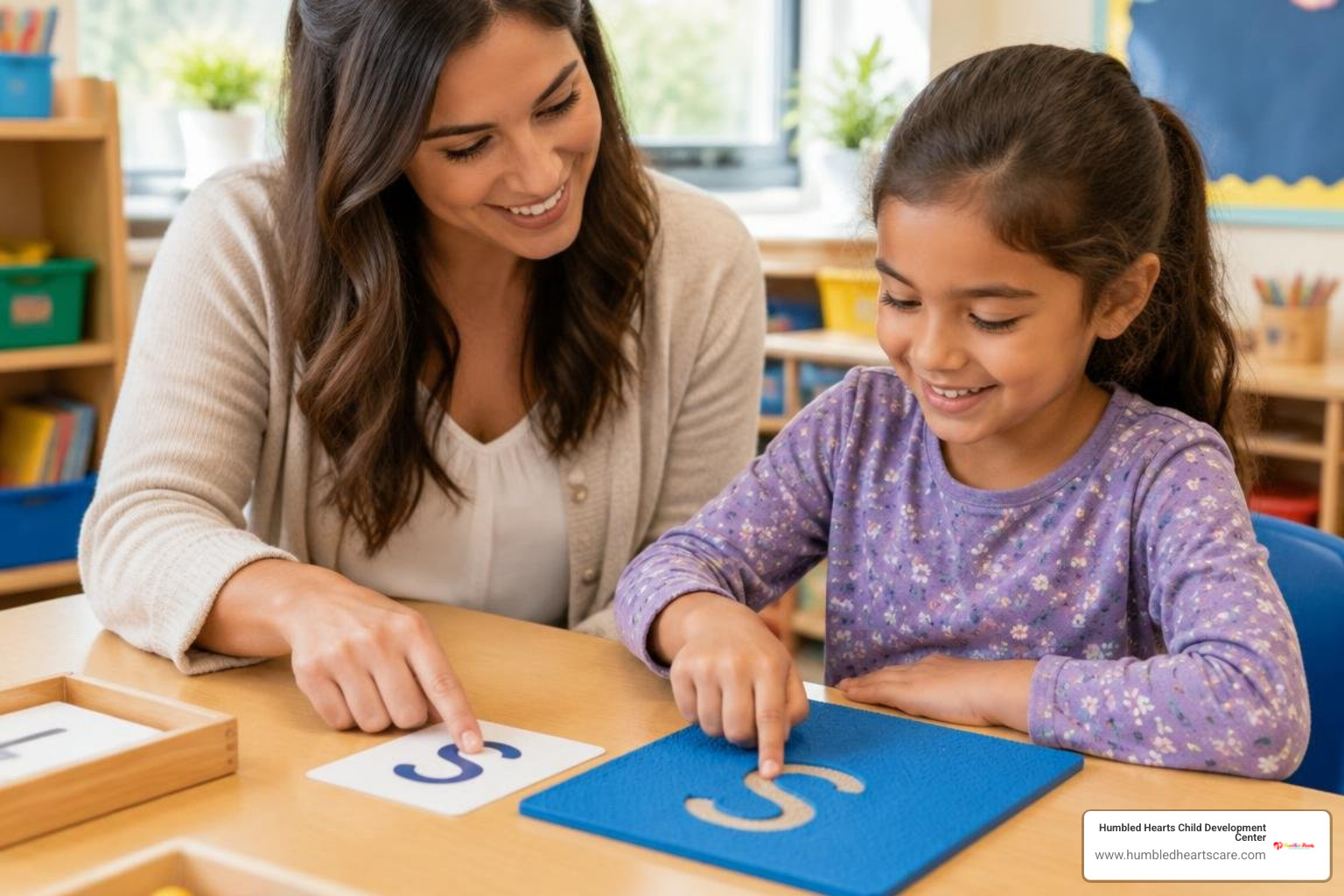
Specialized elementary tutoring incorporates:
- Multi-Sensory Phonics: Integrating visual cards, physical gestures, and tactile letter tracing to anchor phonetic rules.
- Speech and Language Reinforcement: Expanding working memory, auditory perception, and vocabulary through interactive play and conversation.
- Inclusive Accommodations: Adapting pacing and expectations to match Individualized Education Programs (IEPs) and neurodiverse learning styles.
- Family-Centered Engagement: Equipping parents with simple, playful activities they can practice at home.
When tutors and educators celebrate each child's individual strengths, learning differences become stepping stones rather than barriers.
Key Factors to Evaluate in Elementary Tutoring Services
Choosing the right academic support service involves looking beyond simple subject expertise. For busy working parents, logistics, safety, and instructional quality are equally important. Comparing established milwaukee after school programs helps families identify supportive environments that combine academic reinforcement with reliable childcare.
Consider these essential criteria when evaluating tutoring options:
- Tutor Qualifications and Background Screening: Ensure instructors are thoroughly vetted and trained in age-appropriate, positive teaching strategies.
- Instructional Pacing and Student-to-Tutor Ratios: Look for 1:1 or small-group settings where your child receives focused attention.
- Transparent Communication: Choose providers who offer regular progress updates so you always know how your child is growing.
- Convenience and Transportation: Consider whether the program integrates smoothly into your family's daily commute or offers transportation support.
High-Impact Best Practices and Scheduling Consistency
Academic growth thrives on routine. Educational research consistently shows that tutoring produces the strongest gains when delivered in frequent, regular sessions rather than occasional cram sessions.
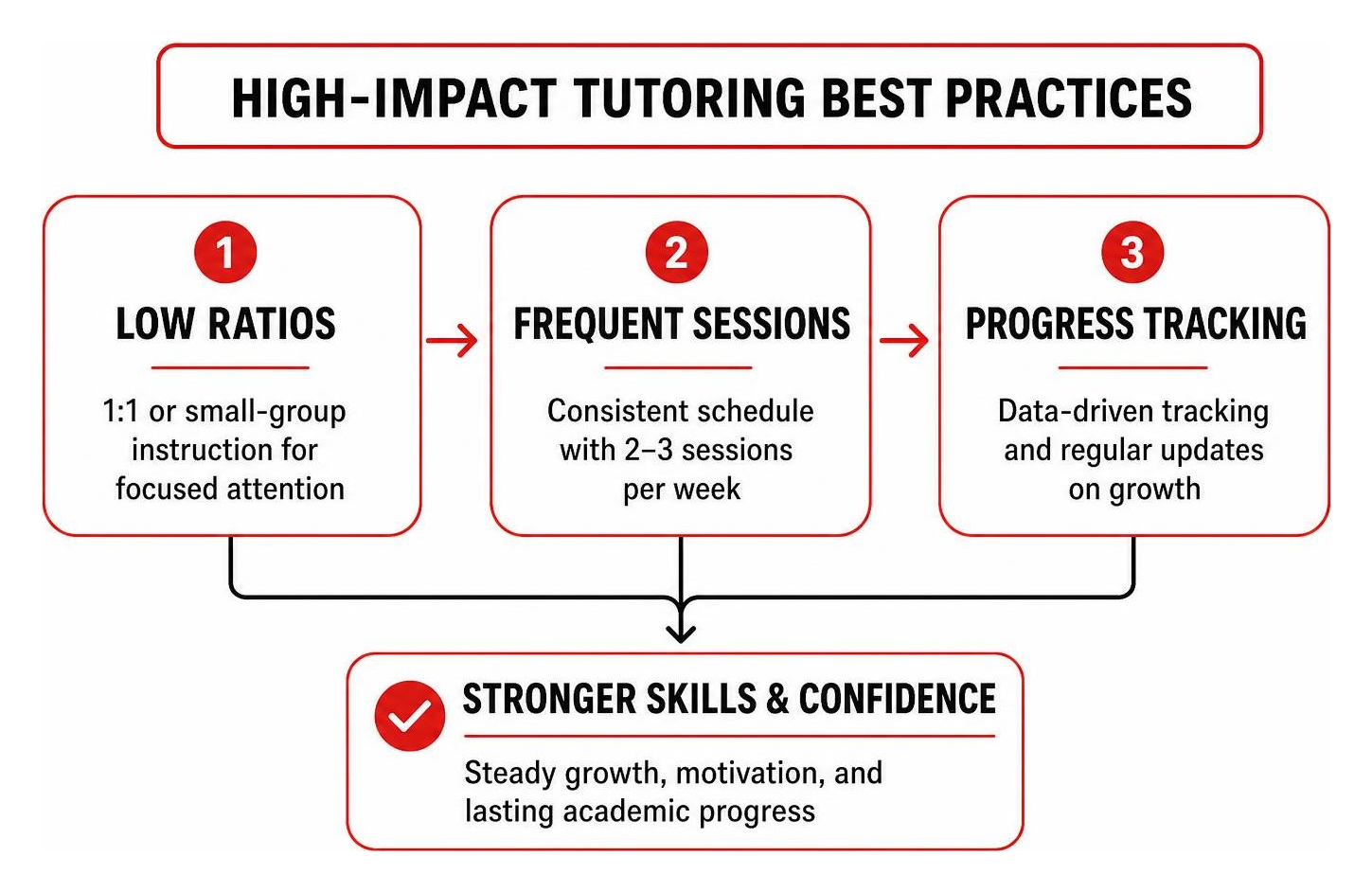
To maximize learning outcomes, look for programs that follow proven instructional best practices:
- Consistent Weekly Scheduling: Aiming for at least 2 to 3 sessions per week helps young learners retain foundational skills.
- Data-Driven Milestone Tracking: Ongoing assessments pinpoint exactly where a child needs reinforcement.
- Positive, Student-Centered Encouragement: Using games, rewards, and praise keeps elementary students motivated and engaged.
Families seeking well-rounded support can explore structured enrichment programs that balance academic practice with social and physical development.
Integrating Milwaukee Elementary Tutoring into Daily Childcare Routines
For working parents, driving between school, private tutoring sessions, and evening childcare can quickly lead to family burnout. A practical solution is choosing an enriching after school program with homework assistance built directly into the afternoon routine.
When children complete their reading practice and homework in a supportive after-school environment, evenings at home remain calm and stress-free. Families interested in learning how structured daily routines support whole-child development can review our admissions process to find an option that fits their schedule.
Frequently Asked Questions About Tutoring in Milwaukee
How much does elementary tutoring typically cost in Milwaukee?
As of October 2026, the average posted rate for private elementary tutors in Milwaukee is approximately $20.00 to $20.38 per hour, with specialized learning coaches charging between $25.00 and $40.00+ per hour depending on credentials. Families can also access free or subsidized literacy support through community-based volunteer reading programs and local school initiatives.
How often should an elementary student receive tutoring sessions?
Most elementary educators recommend 2 to 3 sessions per week, lasting 30 to 45 minutes each. Shorter, frequent sessions match young children's natural attention spans and promote better memory retention than a single long session once a week.
What is the difference between private tutoring and comprehensive after-school academic support?
Private tutoring focuses strictly on targeted, one-on-one instruction in a specific subject. Comprehensive after-school programs combine supervised homework assistance and reading time with peer socialization, physical play, and fresh meals in a safe, licensed setting. If you would like to discuss what kind of academic environment best supports your child, contact our team today.
Conclusion: Supporting Whole-Child Academic Growth
Academic success is about more than just test scores—it is about helping young learners grow curious, confident, and kind. When families, educators, and mentors collaborate as a team, elementary students develop the resilience and self-belief they need to flourish in the classroom.
At Humbled Hearts Child Development Center, we believe in treating every child and family like part of our own. The Parrett family founded Humbled Hearts as an in-home childcare program in 2014, and today we proudly operate a Wisconsin DCF-licensed group childcare facility licensed for up to 60 children at 6003 N. Teutonia Ave, Milwaukee, WI 53209.
Our mission is: “To nurture each child’s unique potential through personalized care, an engaging curriculum, and a supportive environment for academic, social, emotional, and physical growth.” We work every day toward our vision: “To be a leader in Early Childhood Education, ensuring that every child and family thrives through compassionate care, personalized learning, and community support—fostering a love for learning that lasts a lifetime.”
We focus on whole-child growth by blending academic readiness, intentional play, and predictable daily routines with gentleness, honesty, respect, and supportive moral grounding. We also provide:
- Free local transportation within our designated service radius
- Fresh daily meals and nutritious snacks
- Seamless communication via Procare updates for families
- Year-round field trips, including weekly summer adventures
- Inclusive support for children with exceptional or special needs
- Regular celebrations, birthdays, holidays, and themed enrichment
For families with younger siblings, our transparent tuition rates include $400/week full-time ($300/week part-time) for infants aged 4 weeks–1 year, and $380/week full-time ($290/week part-time) for children aged 2–3 years.
To learn how our structured afterschool enrichment and early childhood programs can support your family's educational journey, schedule a tour today!