Finding the Right After-School Tutoring for Elementary Students
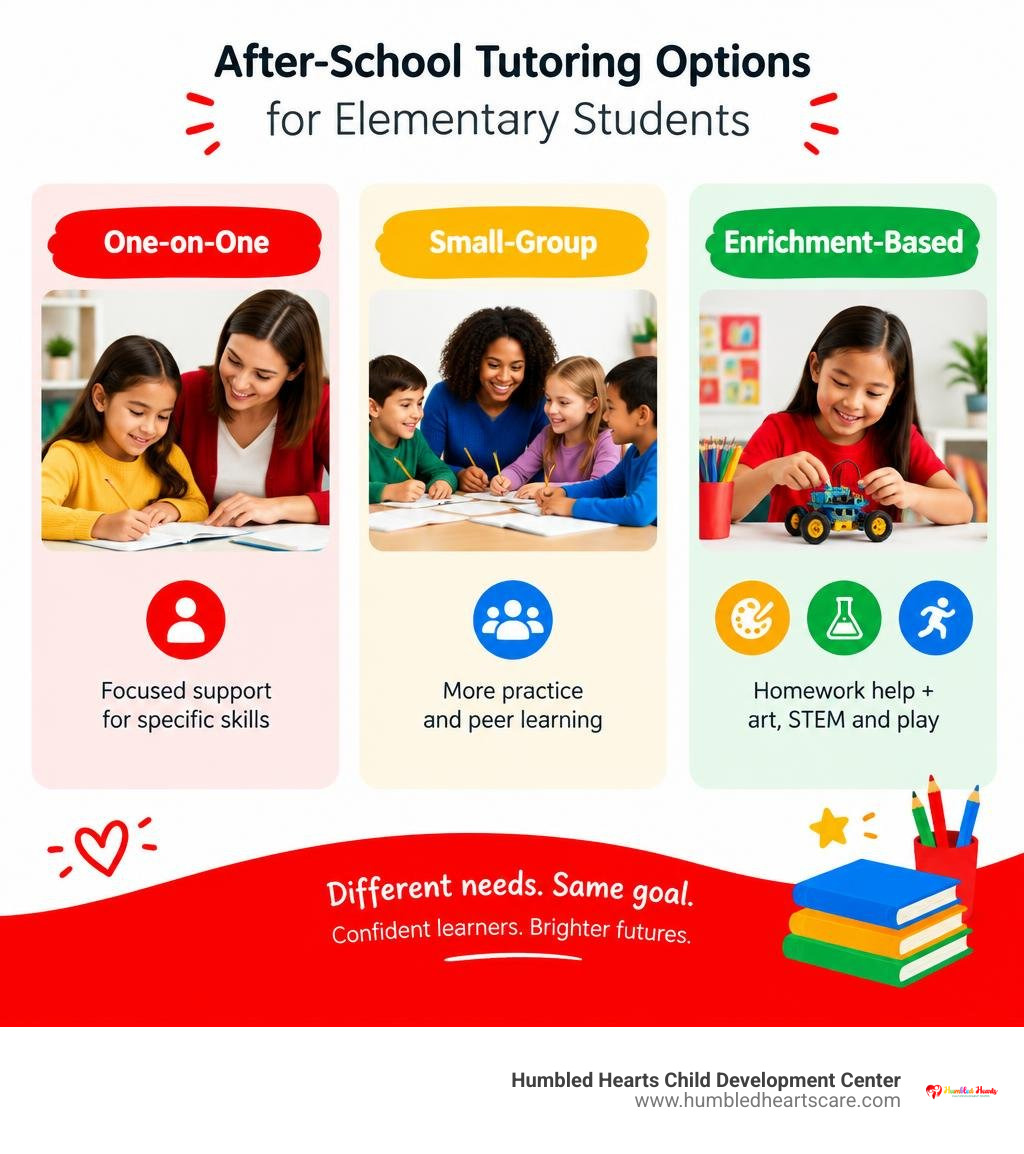
The best after-school tutoring option depends on what your child needs most. One-on-one tutoring offers focused help with a specific skill. Small-group programs add practice and peer learning. Programs that pair homework help with art, STEM, and play can support whole-child growth.
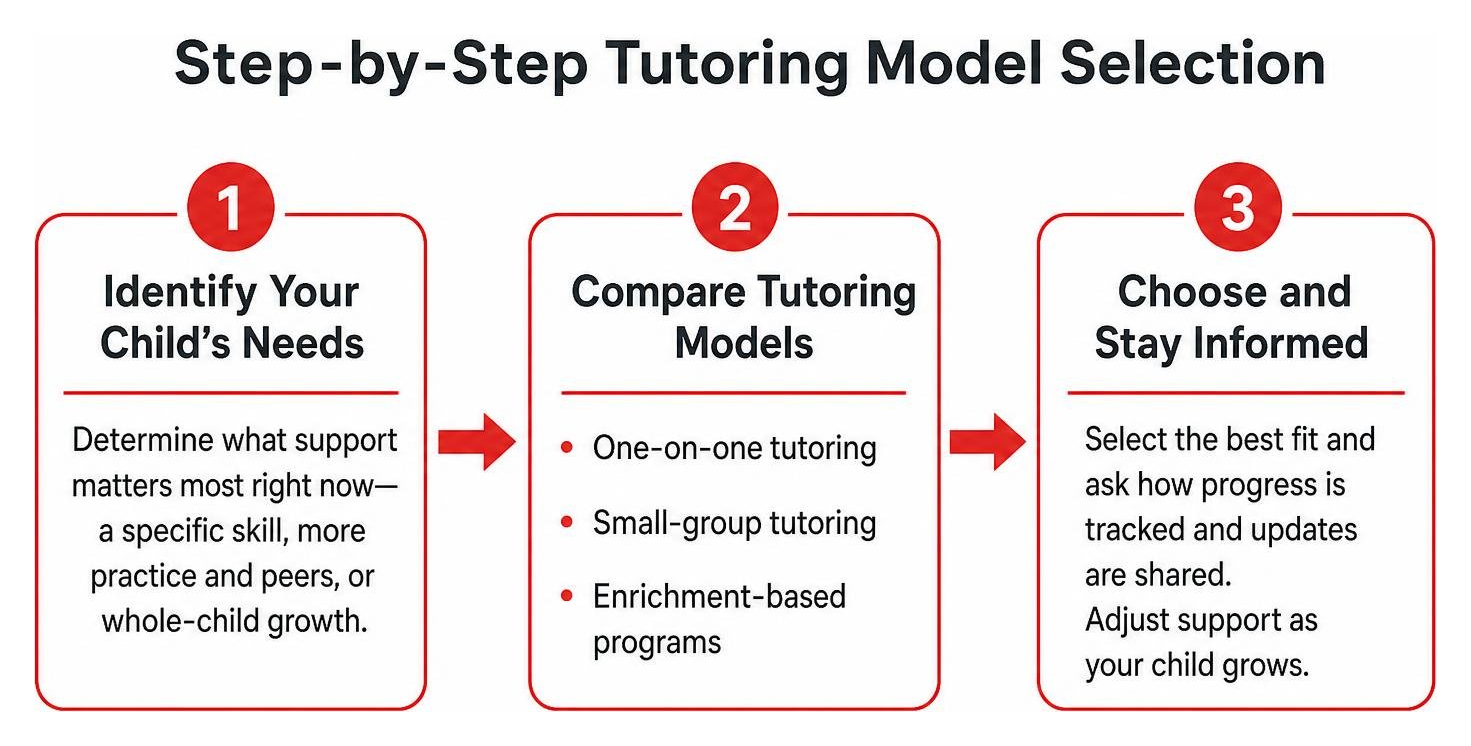
As you compare options, ask how tutors track progress and share updates with you. Parents and teachers work best as a team when they can adjust support as a child grows.
Every afternoon across the country, millions of working families face a familiar challenge: balancing demanding work schedules with their child's academic and emotional needs. The fifth edition of America After 3PM highlights that for every child enrolled in an after-school program, four more are waiting to get in. As we navigate the 2026 school year, closing foundational skill gaps and addressing learning loss remain top priorities for families everywhere.
Whether your elementary student is struggling with multi-digit subtraction, learning to read with phonics, or looking for an extra academic spark, choosing the right after school program tutoring format can completely transform their relationship with learning.
Core Models of After School Program Tutoring for Kids

Not all tutoring programs are structured the same way. Supplemental education typically falls into three main instructional models: private one-on-one tutoring, small-group learning centers, and holistic community-based programs. Understanding how these formats differ in student-to-teacher ratio, peer interaction, and pacing helps you select the environment where your child will thrive.
One-on-One After School Program Tutoring Approaches
One-on-one tutoring provides the highest level of individualized pacing. In this model, an educator designs every minute of instruction around a child’s specific diagnostic assessment.
- Targeted Diagnostics: Rather than moving through a fixed grade-level syllabus, tutors identify exact knowledge gaps—such as missing phonemic awareness skills or fraction fundamentals—and target them directly.
- Focused Attention: With zero peer distractions, students receive immediate feedback. If a concept clicks quickly, the tutor accelerates; if a student feels stuck, they pause and try an alternative explanation without feeling self-conscious.
- Confidence Building: For children experiencing math anxiety or reading fatigue, one-on-one sessions create a safe, low-pressure space to ask questions, make mistakes, and celebrate small victories.
Small-Group and Center-Based Tutoring Models
Small-group tutoring, usually featuring ratios between 1:3 and 1:6, combines targeted academic practice with peer collaboration. Children work on individualized worksheets or guided tasks while an educator circulates to provide instruction, answer questions, and check mastery.
- Peer Modeling and Motivation: Watching classmates tackle similar challenges encourages positive academic habits and healthy engagement.
- Social and Emotional Growth: Children practice taking turns, explaining their reasoning to peers, and developing communication skills that translate back into the standard classroom.
- Balanced Structure: These centers follow predictable daily routines, helping elementary students establish consistent study habits without the intensity of private one-on-one sessions. Exploring our structured early and school-age programs provides insight into how predictable daily schedules and collaborative learning benefit young minds.
Specialized After School Program Tutoring for Enrichment and STEM
Many comprehensive centers expand beyond worksheets to combine academic support with hands-on electives. These specialized programs blend core homework completion with experiential learning:
- STEM and Robotics: Hands-on science experiments, coding challenges, and robotics electives help kids apply abstract math and logic concepts to real-world problems.
- Creative Expression: Integrating studio art, creative writing, and music allows visual and kinesthetic learners to process academic material while building fine motor skills and creative confidence.
- Mental Math and Logic: Quick mental math games and logic puzzles turn skill reinforcement into an active, enjoyable experience rather than a tedious chore.
Community-based initiatives and youth development organizations illustrate how blending academic intervention with creative electives creates a rich, empowering environment for elementary students.
Comparing Academic Tutoring vs. Traditional Classroom Learning

During the regular school day, elementary teachers manage classrooms of 20 to 30 students. While educators work tirelessly to reach every child, the demands of standardized curricula often require the class to move forward regardless of whether every student has mastered a topic. After-school tutoring bridges this gap by offering flexible pacing and reduced academic stress.
| Feature | Traditional Classroom Instruction | After-School Program Tutoring |
|---|---|---|
| Student-to-Teacher Ratio | Typically 1:20 to 1:30 | 1:1 (Private) to 1:6 (Small Group) |
| Curriculum Pacing | Fixed district timeline and scope | Adaptive, diagnostic-driven pacing |
| Instructional Focus | Whole-class lectures and group benchmarks | Targeted skill gaps and homework support |
| Learning Environment | High stimulation, formal expectations | Relaxed, collaborative, and conversational |
| Immediate Feedback | Periodic quizzes, tests, and report cards | Real-time corrections and continuous tracking |
| Enrichment Integration | Limited by fixed daily school schedules | Seamless blend of STEM, play, and arts |
By removing the pressure of grades and whole-class pacing, after-school tutoring helps elementary children rediscover their natural curiosity. When students complete their homework alongside supportive mentors, evening family time shifts from stressful kitchen-table homework battles to restful connection.
Key Factors When Choosing an Elementary Tutoring Program
Choosing the best program for your child involves evaluating educational philosophy, logistics, and how well the provider collaborates with your family.
- Look for Verified Quality Indicators: Seek programs with certified, background-checked staff, structured learning pathways, and low child-to-staff ratios.
- Prioritize Clear Communication: A quality program treats parents and teachers as a collaborative team, offering transparent milestone tracking through digital platforms or regular check-ins.
- Assess Whole-Child Support: Ensure the environment balances quiet study spaces with opportunities for healthy movement, nutritious snacks, and downtime.
Curriculum Coverage and Grade-Level Readiness
A strong tutoring program supports both foundational catch-up and forward-looking enrichment.
- Foundational Reading and Phonics: Look for programs that emphasize phonemic awareness, vocabulary expansion, and reading comprehension to build independent readers.
- Mathematics Fluency: Effective math instruction moves from concrete manipulatives to abstract concepts, reinforcing mental math, fractions, and multi-step word problems.
- Report Card Benchmarks & Test Prep: Programs using diagnostic tools or standardized level testing help ensure your child meets grade-level standards. Systematic daily practice fosters long-term problem-solving fluency.
Support for Learning Differences and Test Prep
For neurodivergent learners—including children with ADHD, dyslexia, or sensory processing needs—after-school programs must provide tailored scaffolding.
- Individualized Pacing: Breaking complex instructions into bite-sized, visual steps prevents cognitive fatigue after a long school day.
- Positive Behavioral Scaffolding: Supportive educators use positive reinforcement and predictable routines to help children stay organized and regulated.
- Collaborative Support: When after-school educators align their methods with a child’s Individualized Education Program (IEP) or 504 Plan, students experience consistency across all learning environments. We believe in keeping families completely informed through regular parent communication and updates, ensuring that learning adaptations and daily wins are shared openly.
Program Costs, Logistics, and Transportation
For busy working families, program logistics and affordability are just as important as the academic curriculum:
- Transparent Pricing: Program rates vary widely depending on format. Private one-on-one tutoring across the country generally ranges from $25 to $80 per hour, while small-group enrichment centers often operate on weekly or monthly tuition structures.
- Transportation & Safety: Reliable pickup services directly from local schools eliminate transportation stress for working parents. Many quality programs provide school pickup and dedicated facility safety protocols to make enrichment accessible for working parents.
- Enrollment Simplicity: Clear admission steps, transparent policies, and accessible coordinators ensure a smooth transition for your child. You can review our clear enrollment and admissions process to see how straightforward securing supportive care can be.
Frequently Asked Questions About After-School Tutoring
What are the main signs of a high-quality tutoring program?
A high-quality program features a safe, licensed facility, background-checked and nurturing staff, transparent progress tracking, and structured daily routines. Look for an environment that balances academic rigor with warmth, gentleness, honesty, and respect. If you have specific questions about curriculum adaptation or daily schedules, our team is always available through our contacting program coordinators page.
How many hours per week should elementary students attend tutoring?
For elementary students (grades K–5), two to three sessions per week lasting 45 to 60 minutes each is typically ideal. Young minds have limited cognitive endurance after a full school day; keeping tutoring focused and pairing it with intentional play, healthy snacks, and creative arts prevents burnout while building consistent study habits.
How do programs balance homework help with enrichment activities?
Top-tier programs use structured activity rotations. A typical afternoon schedule dedicates the first 45 minutes to a healthy snack, physical movement, and decompressing, followed by 45 to 60 minutes of quiet, guided homework help or tutoring. The remainder of the afternoon is dedicated to hands-on enrichment, such as STEM labs, studio art, or social games.
Conclusion
Every child deserves an educational environment where they feel safe, capable, and excited to learn. Selecting the right after-school program tutoring option is about more than completing homework worksheets—it is about fostering whole-child growth, nurturing curiosity, and giving your child the tools to grow curious, confident, and kind.
At Humbled Hearts Child Development Center, we believe in treating every child and family like part of our own. The Parrett family founded Humbled Hearts as an in-home childcare program in 2014, and today we are proud to operate a Wisconsin DCF-licensed group childcare facility at 6003 N. Teutonia Ave, Milwaukee, WI 53209, licensed for up to 60 children.
Our mission is “To nurture each child’s unique potential through personalized care, an engaging curriculum, and a supportive environment for academic, social, emotional, and physical growth.” Driven by our vision “To be a leader in Early Childhood Education, ensuring that every child and family thrives through compassionate care, personalized learning, and community support—fostering a love for learning that lasts a lifetime,” our programs combine academic support with gentleness, honesty, respect, predictable daily routines, fresh daily meals and snacks, year-round field trips (including weekly summer field trips), and seamless communication via Procare. We also offer free local transportation within our designated service radius to support our working families.
Whether you have an elementary student needing homework reinforcement or are seeking care for younger siblings—with tuition for ages 4 weeks–1 year at $400/week full-time or $300/week part-time, and ages 2–3 years at $380/week full-time or $290/week part-time—we are here to walk alongside you as a collaborative team.
Give your child the academic support, warm care, and community they deserve. Enroll your student in our supportive afterschool environment today or contact us to schedule a visit!