Finding Safe, Reliable Infant Daycare
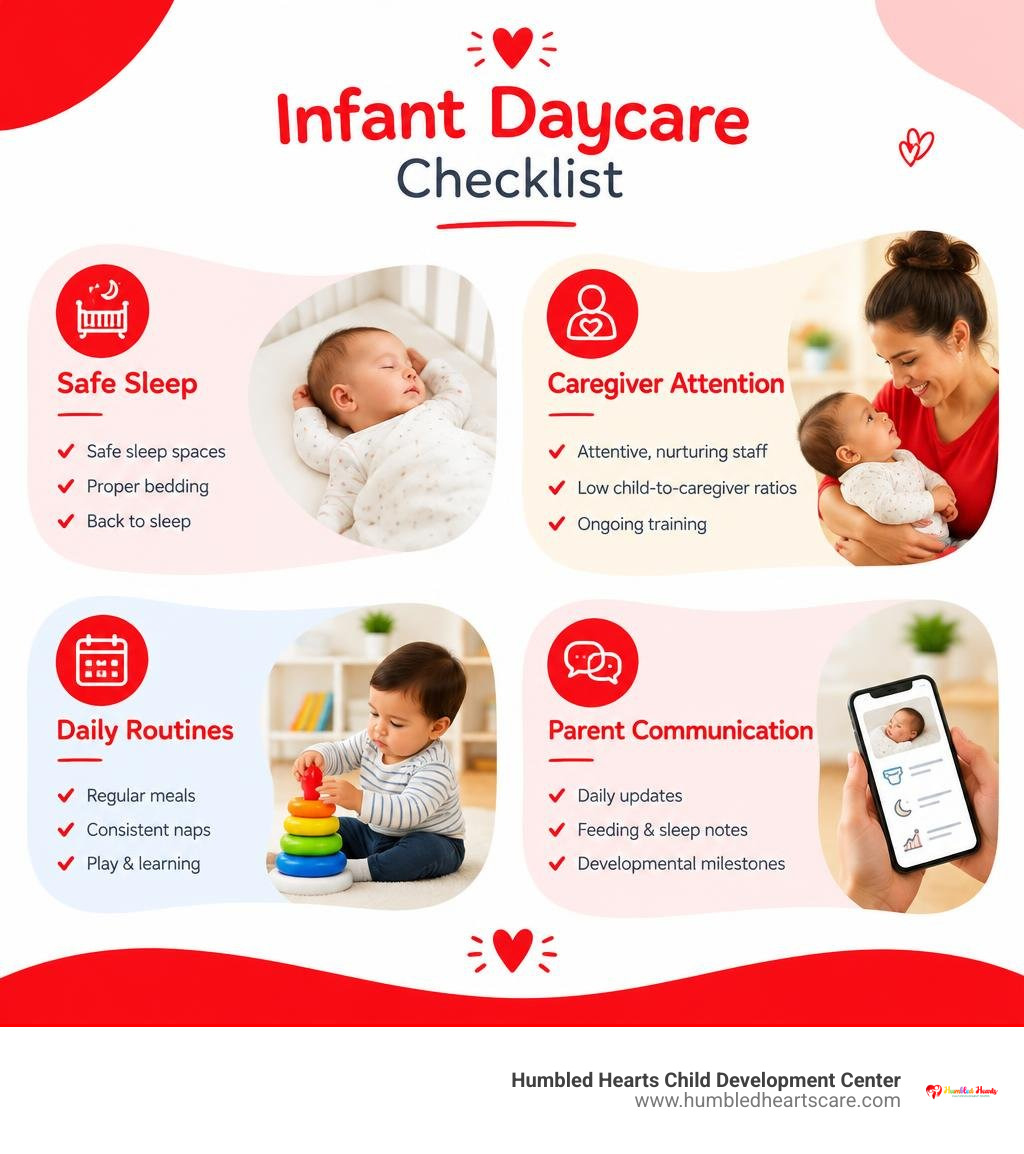
Infant daycare should offer safe sleep, attentive caregivers, steady routines, and clear communication with parents. Many programs begin care at six weeks, but starting ages vary. Before enrolling, ask about licensing, caregiver-to-infant ratios, staff training, and how teachers share feeding, sleep, and developmental updates. A tour can help you see whether the setting feels safe and welcoming for your baby.
At Humbled Hearts Child Development Center, parents and teachers work as a team to support whole-child growth. Founded by the Parrett family as an in-home childcare program in 2014, Humbled Hearts now operates a Wisconsin DCF-licensed group childcare facility for up to 60 children at 6003 N. Teutonia Ave, Milwaukee, WI 53209.
For ages 4 weeks to 1 year, tuition is $400 per week full-time or $300 per week part-time. For ages 2 to 3 years, it is $380 per week full-time or $290 per week part-time.
Our mission is: “To nurture each child’s unique potential through personalized care, an engaging curriculum, and a supportive environment for academic, social, emotional, and physical growth.” Our vision is: “To be a leader in Early Childhood Education, ensuring that every child and family thrives through compassionate care, personalized learning, and community support—fostering a love for learning that lasts a lifetime.”
Exploring Different Types of Infant Daycare and Starting Ages

Choosing the right care setting for your baby is one of the most significant early decisions your family will make. Every family balance work demands, travel routines, and early learning philosophies differently. Fortunately, there are diverse licensed daycare options created to meet these varied household needs.
| Care Model | Setting & Group Size | Typical Age Ranges | Key Focus & Environment |
|---|---|---|---|
| Center-Based Programs | Dedicated early learning facilities; classrooms grouped by developmental stage (up to 60+ children facility-wide) | 4–6 weeks through preschool & school-age | Structured learning environments, strict regulatory oversight, multi-teacher support, and specialized nursery spaces |
Exploring Care Settings
When comparing care formats, families typically evaluate three primary structures:
- Center-Based Nurseries: Licensed child care centers offer dedicated classrooms designed exclusively for young infants. These environments provide strict adherence to state ratios, structured daily schedules, and multi-staff oversight. Parents can find local centers accepting infants that offer robust early childhood curricula.
Starting Ages and Eligibility for Infant Daycare
Most infant programs across the United States accept babies beginning at 6 weeks of age, coinciding with standard postpartum parental leave windows. However, specialized centers with experienced infant teams are equipped to accept infants as young as 4 weeks old, providing critical support for parents who must return to work sooner.
Between 6 weeks and 12 weeks, infants undergo rapid physiological adjustments. High-quality comprehensive daycare programs for infants adapt daily pacing around each baby's natural biological clock rather than enforcing an artificial group schedule. Families can ask prospective providers how they support individual feeding, sleep, and communication routines.
Why Licensing Matters
Choosing a licensed program helps protect your infant's well-being:
- Licensed Facilities: Fully regulated programs undergo regular, unannounced state inspections, comprehensive background checks for all personnel, and rigorous audits covering indoor air quality, toy sanitation, building security, and staff education.
Critical Safety Standards, Ratios, and Sleep Protocols

Nothing matters more than safety when entrusting your baby to an early childhood team. Reputable centers build their daily care routines around clinical evidence and state health mandates, such as the standards established in the Wisconsin Child Care Licensing Rules.
Recommended Caregiver Ratios and AAP Safe Sleep Guidelines
The American Academy of Pediatrics (AAP) sets clear safe sleep practices to eliminate sleep-related hazards in early childhood settings:
- Back to Sleep: Every infant is placed flat on their back for every nap.
- Bare, Firm Sleep Spaces: Sleep areas must consist solely of a safety-approved crib or pack-and-play with a firm, tight-fitting mattress and a secure fitted sheet. Blankets, pillows, bumper pads, plush toys, and positioners are strictly prohibited.
- Direct Visual Monitoring: Caregivers maintain continuous visual observation and document active sleep checks at frequent intervals.
- Low Ratios for Attentive Care: National best practices mandate low staff-to-infant ratios—typically 1 caregiver for every 3 to 4 infants—ensuring quick response times for feedings, diapering, and soothing.
Staff CPR Training and Daily Sanitation Protocols
A clean, responsive classroom environment protects vulnerable infant immune systems through several standard measures:
- Pediatric CPR and First Aid: Every infant teacher maintains active certification in infant-specific CPR, rescue breathing, and emergency airway clearance.
- Medical-Grade Diapering Procedures: Sanitization takes place after every diaper change using approved disinfectants, accompanied by proper caregiver hand hygiene.
- Continuous Toy and Surface Disinfection: High-touch surfaces, sensory toys, and floor activity mats undergo scheduled daily sanitizing with child-safe, non-toxic products.
- Air Quality and Wellness Protocols: Facilities utilize active ventilation and health screening protocols to isolate infectious illnesses before they spread through the classroom.
How High-Quality Care Supports Early Childhood Development
The first year of life represents a window of profound neurological expansion. High-quality infant care is far more than passive babysitting; it is an active developmental setting designed to nurture whole-child growth.
Developmental Benefits of an Infant Daycare Routine
- Intentional Tummy Time: Supervised floor play strengthens neck, back, core, and shoulder muscles, building the foundation for rolling, sitting, and crawling.
- Sensory and STEM Play: Tactile soft blocks, high-contrast visual patterns, and musical instruments spark early cognitive connections.
- Language-Rich Environments: Caring educators narrate daily activities, read stories, sing lullabies, and practice conversational turn-taking, which accelerates early language acquisition.
- Predictable Daily Rhythms: Consistent sequences of feeding, play, and resting foster emotional stability and confidence in growing babies.
Fostering Social-Emotional Growth Through Responsive Care
Infants develop a secure sense of self when their non-verbal cues—cries, coos, smiles, and eye contact—are met with warmth and immediacy. Our teachers use responsive caregiving to co-regulate infant emotions, helping babies feel safe, valued, and understood. When parents and educators treat each other as partners, babies experience a seamless bridge between home and school, helping them grow curious, confident, and kind.
Evaluating Providers, Subsidies, and Enrollment Steps
Finding the right provider involves careful research, direct questions, and clear evaluations of each center's safety records and financial options.
Using Quality Rating Systems and Referral Resources
When researching local daycares accepting infants, look beyond glossy brochures by utilizing verified public databases:
- State Quality Rating and Improvement Systems (QRIS): Wisconsin YoungStar rates licensed centers based on learning environments, teacher qualifications, and family engagement.
- Resource and Referral Agencies: Regional Child Care Resource & Referral (CCR&R) agencies can offer guidance to help parents locate licensed providers with infant openings.
- State Public Licensing Portals: State regulatory websites publish detailed compliance records, annual inspection results, and any documented health or safety violations.
Navigating Daycare Costs, Subsidies, and Financial Assistance
Infant care requires high teacher-to-child ratios, making it the most resource-intensive stage of early childhood education. Understanding weekly infant care rates and costs helps families plan their monthly budgets effectively.
Working families have access to several financial support programs:
- State Child Care Subsidies: Wisconsin Shares Child Care Subsidy may provide tuition assistance based on household income and employment status.
The Enrollment Process and Addressing Program Concerns
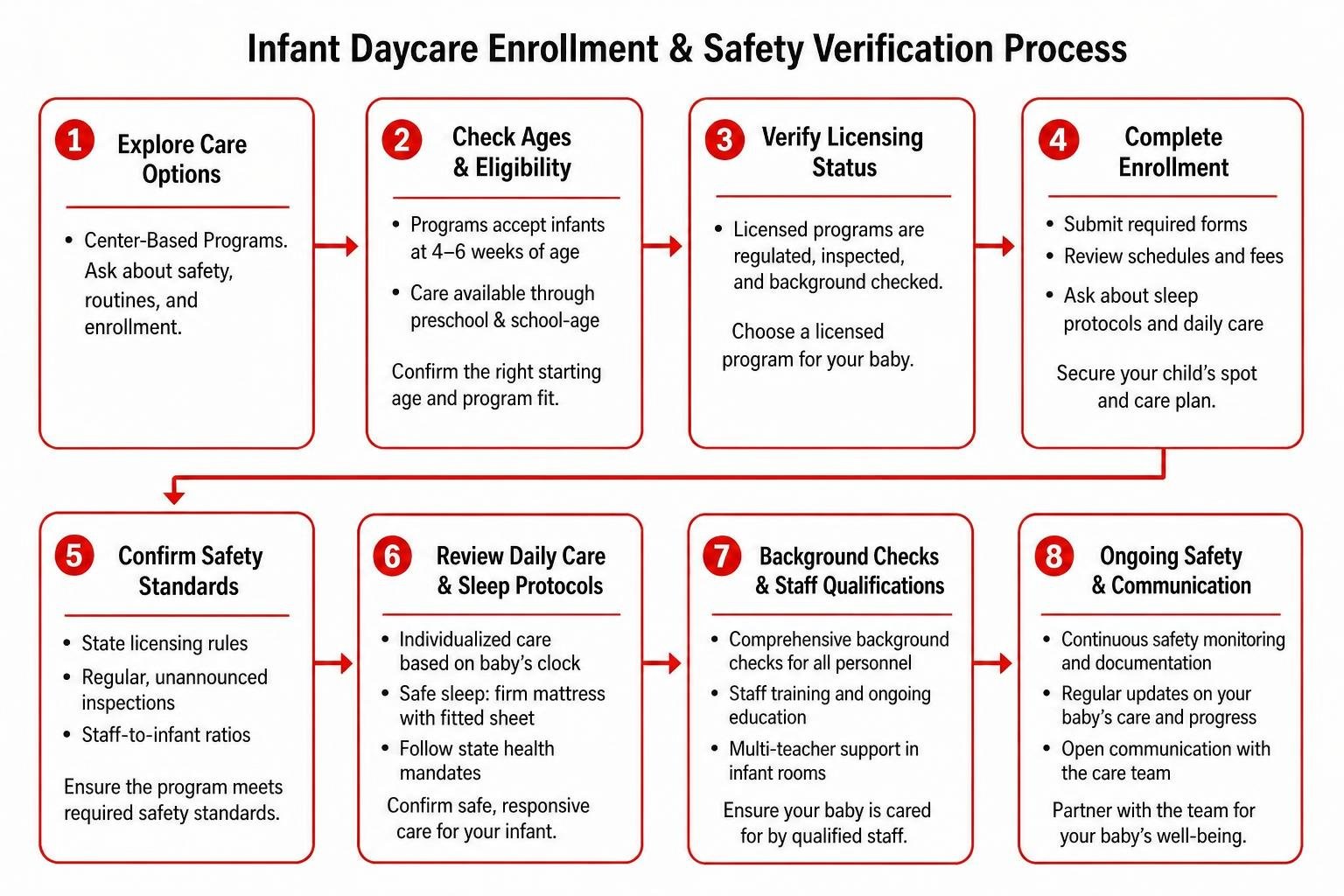
Once you select a licensed center, enrollment generally follows these clear steps:
- Schedule an On-Site Tour: Observe infant-teacher interactions, check crib spaces, and evaluate classroom cleanliness firsthand.
- Submit Admissions Documentation: Complete your family intake forms, emergency contacts, authorized pickup lists, and health history via the center’s admissions documentation portal.
- Provide Immunization Records: State health laws require up-to-date pediatric vaccination records signed by your child's physician prior to attendance.
- Establish Daily Communication: Connect to digital tools like Procare to receive real-time updates regarding feeding quantities, diaper changes, milestone photos, and nap durations.
- Address Any Safety Concerns Promptly: If you ever notice safety violations or policy lapses, speak directly with the center director. If a concern remains unresolved, you can contact your state’s child care licensing bureau or file an official report through state compliance hotlines.
Families ready to begin their journey can easily apply online to secure a place on the center’s enrollment roster.
Frequently Asked Questions About Early Care
At what age can my baby begin attending child care?
Most licensed group centers accept infants starting at 6 weeks old, though select programs accept babies as early as 4 weeks. This accommodates standard family leave schedules while ensuring the baby is developmentally ready for group care settings.
How can parents check a daycare center's safety records and violations?
Parents can visit their state's Department of Children and Families or Department of Early Childhood online portal. These databases allow the public to search licensed providers by name or address to view unannounced inspection summaries, substantiated complaints, and verification of staff background checks.
What safety rules should an infant sleep area always follow?
Every infant sleep area must adhere strictly to American Academy of Pediatrics (AAP) safe sleep protocols. Infants must be placed flat on their backs on a firm, tight-fitting mattress with a fitted sheet in a bare crib or bassinet. No blankets, pillows, sleep positioners, or toys are permitted in the sleep space, and staff must maintain regular visual monitoring.
Conclusion
Finding the right early education partner gives your baby a safe, joyful foundation while giving your family complete peace of mind. High-quality infant care bridges the gap between home life and early learning, surrounding your child with gentle guidance, developmental activities, and healthy routines.
At Humbled Hearts Child Development Center, we are dedicated to treating every child and family like part of our own. Founded by the Parrett family in 2014, our Wisconsin DCF-licensed center at 6003 N. Teutonia Ave in Milwaukee provides personalized care for up to 60 children. We offer fresh daily meals and snacks, seamless communication via Procare, free local transportation within our service radius, inclusive support for children with exceptional needs, year-round field trips (including weekly summer field trips), and joyful holiday celebrations. Grounded in gentle moral values, respect, and honesty, we partner with parents every day to support lasting academic readiness.
We invite you to contact our team today or call 414-539-6513 to schedule a tour, meet our dedicated teachers, and explore early learning with Humbled Hearts.